John Preston's subject is the respectable Englishman who decides that something absurd is the sensible course. Television has been good to his books; we have not seen enough of his own scripts to know if it will be as good to those.
Fi1m perspective
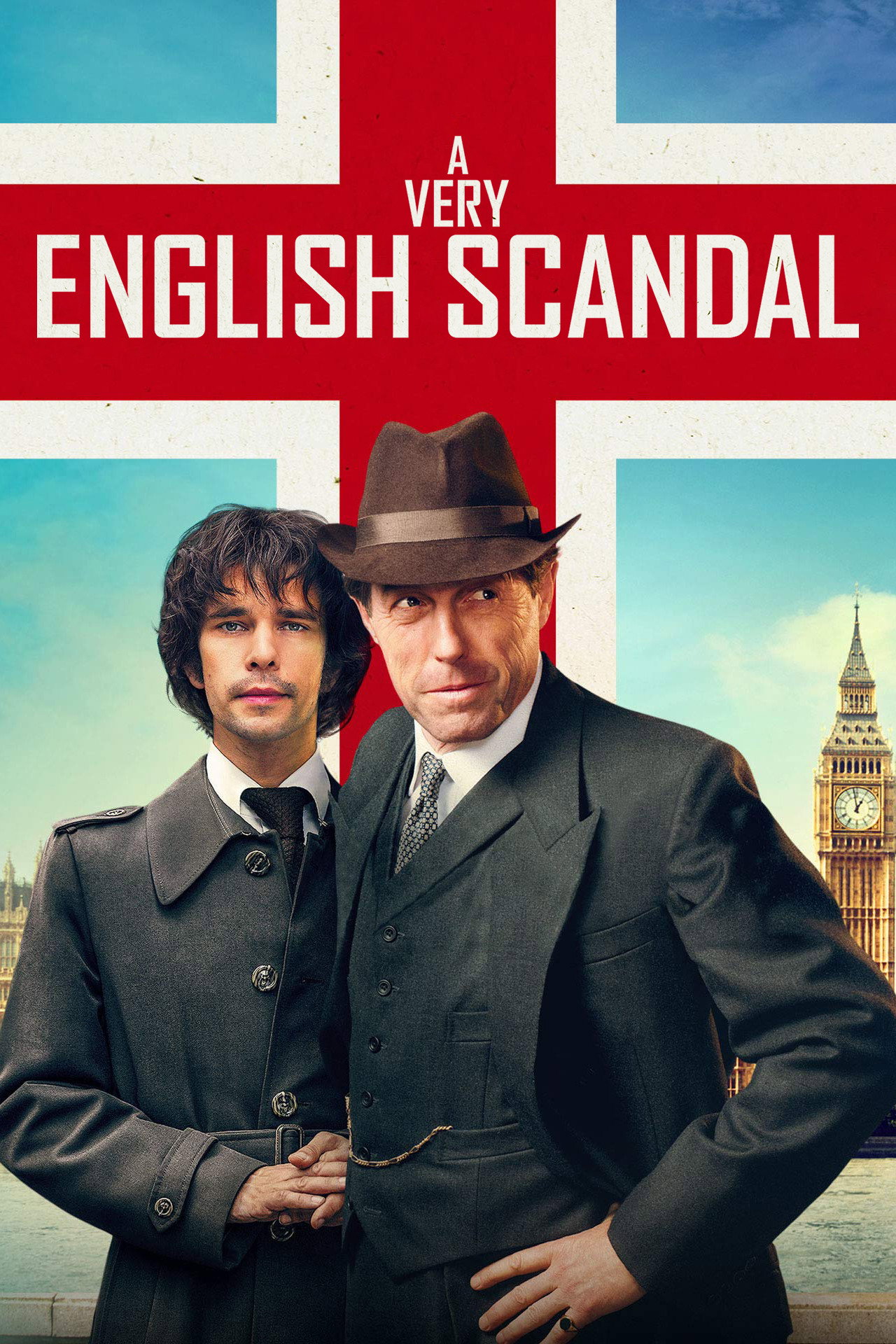
Somewhere in every John Preston story a man in a good suit decides that the sensible thing to do is something no sensible man would do. Jeremy Thorpe, leader of the Liberal Party and a man some expected to end up in Downing Street, spends the better part of two decades trying to make a former lover disappear. That is the engine of A Very English Scandal (2018), which Russell T Davies adapted from Preston's book and Stephen Frears directed in three hour-long episodes, and we rated it highly. Our one reservation was how much fun it was having. The story itself is Preston's, and it is the kind a script editor would send back for being implausible.
He came to it late, and sideways. Preston spent years as a newspaper arts editor and ten of them as a television critic, published four novels between 1996 and 2007, and only then turned to the non-fiction that made his name: A Very English Scandal in 2016, then Fall (2020) on Robert Maxwell. The Thorpe book went to television within two years. The Dig (2007), a novel about the 1939 Sutton Hoo excavation in which his aunt took part, was filmed in 2021. By Stonehouse (2023), about the disgraced politician John Stonehouse, he was writing the scripts himself. A man who spent a decade telling the country what was wrong with its television is now making some of it, which is a fair test of anyone.
What he brings is research, and a nose for who to ask. "I've always operated on the assumption that the people with the best stories are often those who tend to get overlooked," he said of the Maxwell book, and the Thorpe affair is exactly that: a story about a man the most powerful Liberal in the country wanted overlooked, and who would not be. The narrative drive Preston is praised for on the page comes across intact on screen. Three hours pass quickly, and Hugh Grant, as a man who never raises his voice, is remarkable.
The complaint against the books is polish, the suspicion that the topspin on some of these anecdotes is a little too good to be strictly true. On screen that becomes a tone. We laughed a great deal at A Very English Scandal, at the sheer administrative effort of a party leader trying to make a man disappear, and then caught the coldness underneath and stopped laughing. The farce has a body count. The series knows this and is still enjoying itself, and we suspect that instinct is partly Preston's.
He has not run out of material. The English establishment produces a scandal a decade at least, and Preston has shown he can find the one with the paperwork to match. What we have not yet seen enough of is what he does with a blank page rather than a full archive. Stonehouse is the test, and we will get to it.
Biography
John Preston is an English journalist, novelist and screenwriter. He attended Marlborough College from 1967 to 1971 and worked as Arts Editor of the Evening Standard and The Sunday Telegraph, serving as the latter's television critic for ten years and as one of its chief feature writers.
Preston wrote four novels set in recent English history, including The Dig (2007), a fictionalised account of the Sutton Hoo excavation. His non-fiction book A Very English Scandal (2016), an account of the Jeremy Thorpe affair, was adapted into a 2018 BBC miniseries for which he is credited as creator and novelist. His 2020 non-fiction work Fall: The Mystery of Robert Maxwell won the Costa Book Award for biography in 2021.