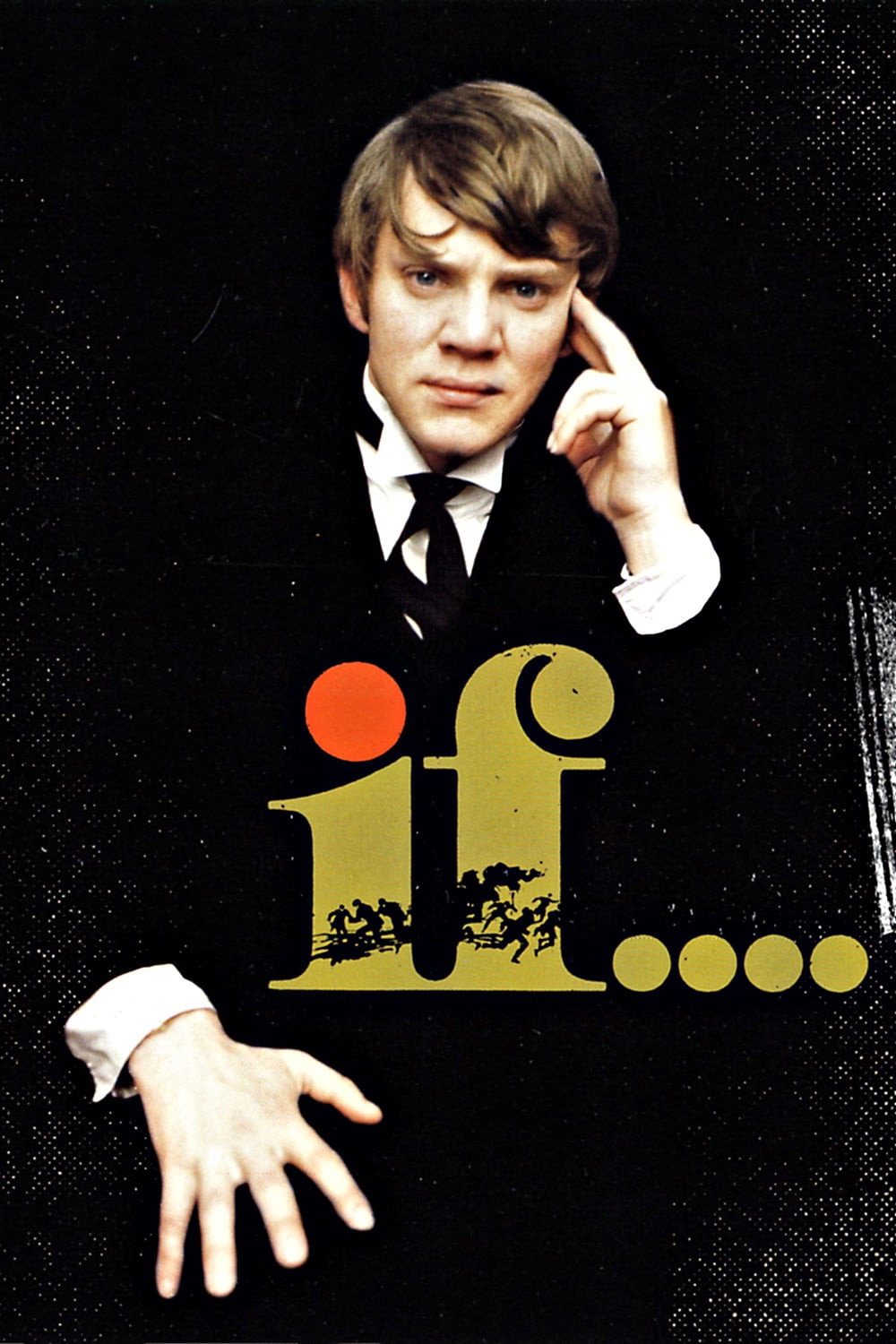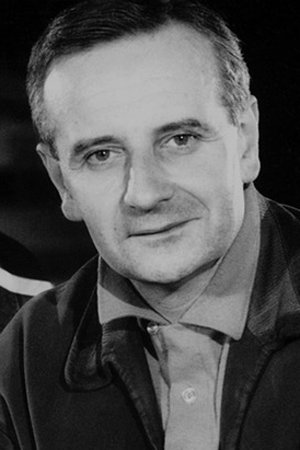
Lindsay Anderson makes authority look ridiculous without letting us forget who gets hurt. We rate him most highly when his satire stays close to ordinary behaviour; the bullying in if.... is more disturbing than its surreal departures.
Fi1m perspective
In the school of if.... (1968), nobody in charge feels much need to explain themselves. Lindsay Anderson watches that confidence closely, finding comedy in the routines and cruelty in what they permit. His satire works because the place remains credible even when the behaviour becomes strange. Malcolm McDowell gives the defiance a persuasive face, but Anderson is just as interested in how obedience is learnt. We felt angry at the bullying between boys, and angrier at how readily the school accommodates it.
Anderson had been making documentaries since 1948 and helped define Free Cinema before directing his first feature, This Sporting Life (1963). That David Storey adaptation belongs to British social realism and shows Anderson's strength with actors. With if...., he turns towards satire without abandoning his close attention to how people behave together. The progression matters: his anger is more convincing when we can see the habits that provoke it.
In if...., David Sherwin's screenplay shows how the school teaches obedience and aggression together. Miroslav Ondříček's cinematography makes its daily life convincing, while Jocelyn Herbert's production design gives the rules a setting that looks long accustomed to them. Neither needs to underline the absurdity. Marc Wilkinson's music keeps the comedy uneasy. These contributions let Anderson take liberties with reality without immediately losing our belief in the school.
David Gladwell's editing has to join those observed routines to the surreal passages, and the joins do not always hold. We admire Anderson's unwillingness to explain every departure, but some of those passages lose force. Some critics found the later institutional satire of Britannia Hospital (1982) too didactic. That is a danger with this kind of filmmaking: we would rather watch people behave badly than have their faults explained to us, and the school scenes show how much Anderson can achieve without the explanation.
The late The Whales of August (1987) also took him beyond British satire. There is more to explore than the films in which he takes institutions to task. Start with if...., and give its everyday school routines as much attention as its stranger episodes; that is where we found the most to be angry about.
Biography
Lindsay Anderson (1923–1994) was a British film and theatre director, producer, and critic. Born in Bangalore, India, he was educated at Cheltenham College and Wadham College, Oxford, and served in the British Army during the Second World War. He began his career making documentaries and co-founded the film journal Sequence before becoming a leading figure in the Free Cinema movement and the British New Wave.
Anderson is best known for directing This Sporting Life (1963), if.... (1968, which he also produced and which won the Palme d'Or at Cannes), O Lucky Man! (1973), Britannia Hospital (1982), and The Whales of August (1987). He maintained a long collaboration with playwright David Storey, directing both his films and stage premieres at the Royal Court Theatre. Anderson also acted in a minor role in Chariots of Fire (1981).