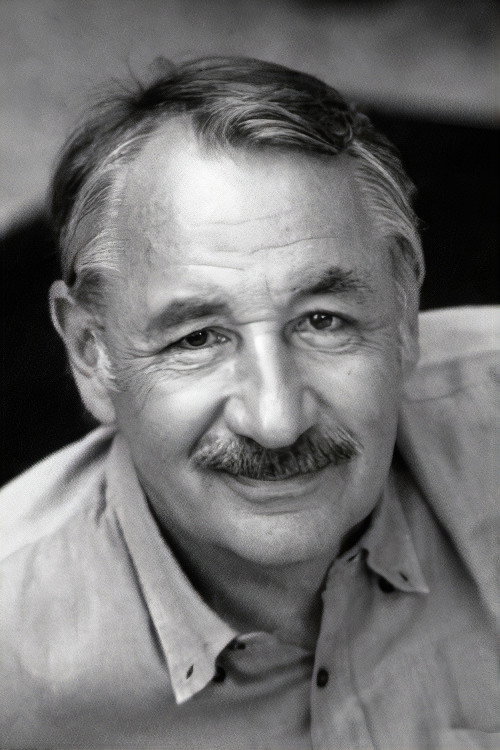
Philippe Noiret could give another actor room without losing our attention. We value his quiet authority most when it makes affection credible, as in Cinema Paradiso, though his willingness to play unpleasant men matters just as much.
Fi1m perspective
In Cinema Paradiso (1988), Philippe Noiret lets Salvatore Cascio’s young Totò be the eager one. His Alfredo responds patiently, leaving the boy’s delight room to register without competing for our attention. We were moved by that patience, because he makes Alfredo’s affection feel like a response to this particular child. Giuseppe Tornatore’s film is sometimes too sweet, but its central friendship persuades us to stay with it.
That restraint was not confined to kindly older men. His early success in Zazie dans le Métro (1960) drew on his comic abilities, before Alexandre le Bienheureux (1967) and Le Vieux Fusil (1975) established him as a star. Tall and heavily built, with a deep, recognisable voice, he had the physical means to impose himself. He worked across comedy and drama, often playing ordinary middle-aged men or bourgeois figures, with little need to exaggerate.
The long collaboration with Bertrand Tavernier began in 1974 and gave that reassuring presence less reassuring work to do. In Tavernier’s Coup de Torchon (1981), he played Lucien Cordier, one of the unsympathetic characters he was prepared to take on. La Grande Bouffe (1973) had already made that willingness clear. The international recognition brought by Cinema Paradiso and Il Postino (1994) should not obscure those less gentle choices.
There is a fair reservation about an actor so recognisable: familiar habits can begin to look like repetition, and Noiret was sometimes accused of playing variations on himself. In Cinema Paradiso, though, the quietness works because Cascio gives him so much excitement to answer. Their exchanges are funny, and that humour stops the friendship becoming solemn even when Tornatore presses too hard for tears. We recommend it with that caveat, particularly for the way Noiret allows the younger performer to be engaging without turning their scenes into a display of adult indulgence. Start there, but do not mistake Alfredo for the whole actor.
Biography
Philippe Noiret was a French actor. Born in Lille on 1 October 1930, he died in Paris on 23 November 2006. After failing his baccalauréat examinations, he studied theatre and joined the Théâtre National Populaire in 1953, where he met the actress Monique Chaumette, whom he married in 1962. He made his screen debut in an uncredited role in Gigi (1949) and appeared in Agnès Varda's La Pointe Courte (1955) before gaining wider attention in Louis Malle's Zazie dans le Métro (1960).
Noiret appeared in more than 100 films. He is known for roles including Alfredo in Giuseppe Tornatore's Cinema Paradiso (1988), for which he received a BAFTA, Pablo Neruda in The Postman (1994), and leads in Bertrand Tavernier films such as The Old Gun (1975) and Life and Nothing But (1989). He won two César Awards for Best Actor. He also worked with directors including Alfred Hitchcock on Topaz (1969) and Marco Ferreri on La Grande Bouffe (1973).