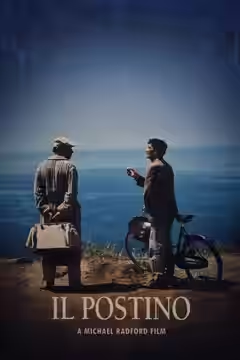
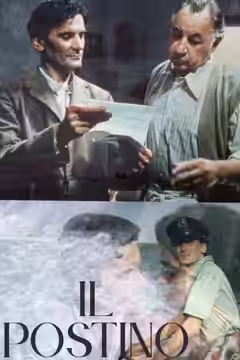
A slow, sunlit film about an exiled poet and his postman, carried almost single-handedly by Massimo Troisi. It is slight in places and over-scored at the end, and worth an evening all the same.
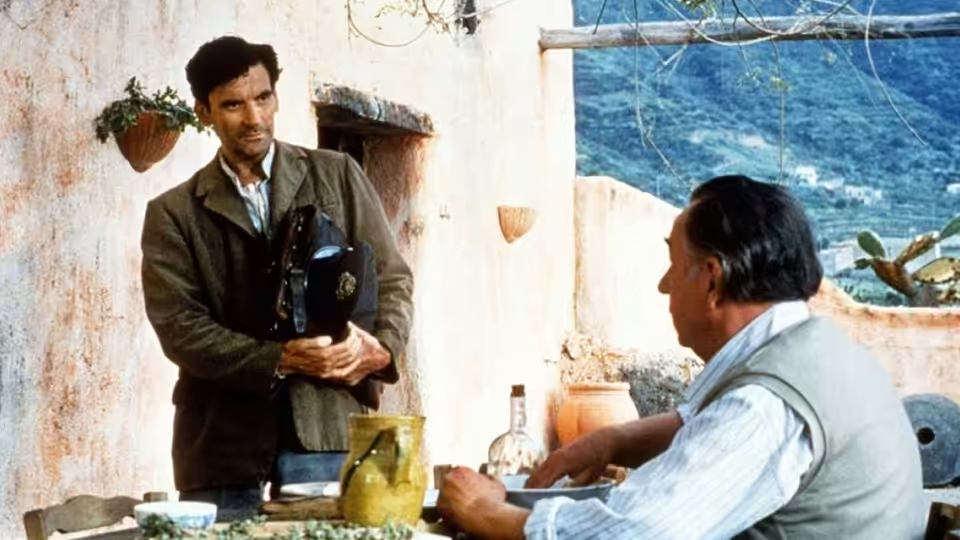
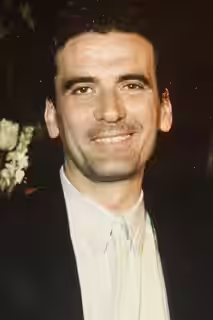
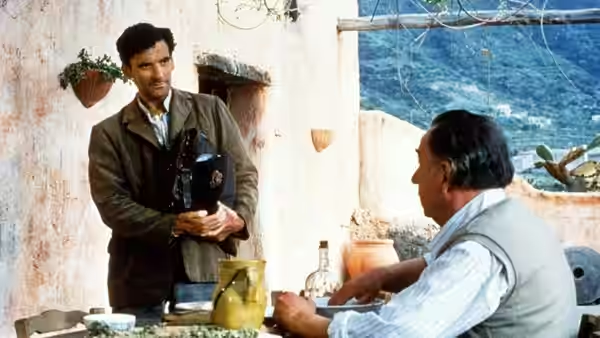
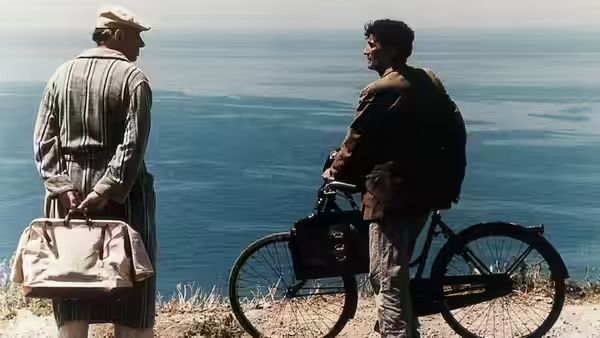
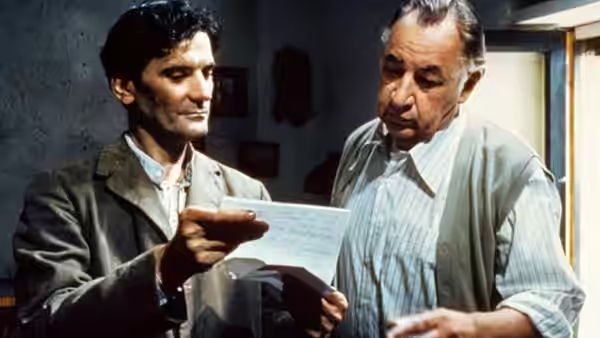
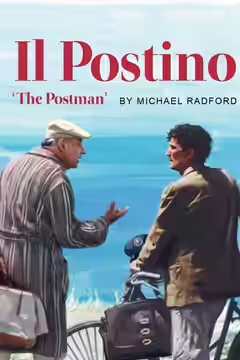
Michael Radford takes Antonio Skármeta’s novel about Pablo Neruda in exile, moves it from Chile to a small island off Italy in the early 1950s, and hands the whole thing to Massimo Troisi. Mario Ruoppolo (Troisi) is a fisherman’s son who wants no part of his father’s boat, and the only work going is delivering letters to the one man on the island who receives any: the poet Neruda (Philippe Noiret). The Postman is gentle, slow and sunlit, and it has a single idea, that poetry belongs to people who never went to school. It is a good film rather than a great one, and nearly everything good in it is Troisi.
He plays Mario as a man who has never been in a hurry. He slouches, blinks slowly, holds his cap as if it might be taken off him. He moves little and sits when he can, and Radford and Troisi, who wrote the screenplay together, built the film around that stillness. Mario listens harder than anyone else on screen, and when he finally speaks the words arrive one at a time.
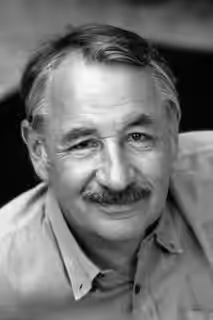
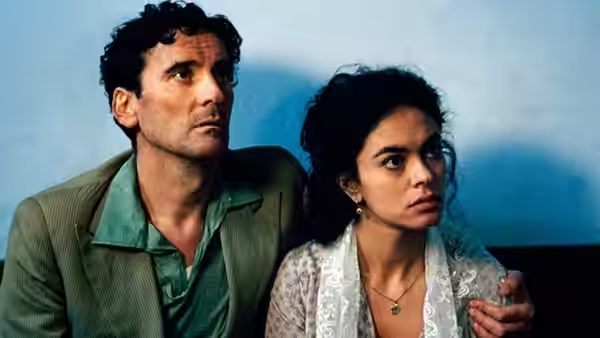
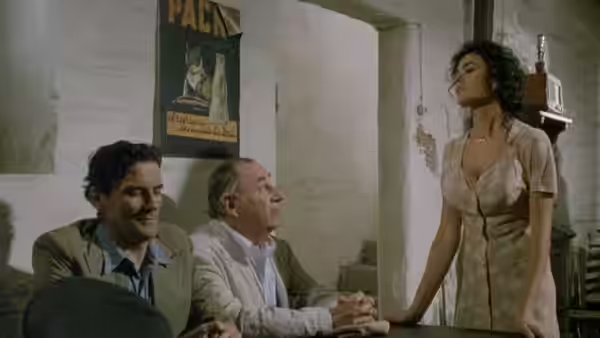
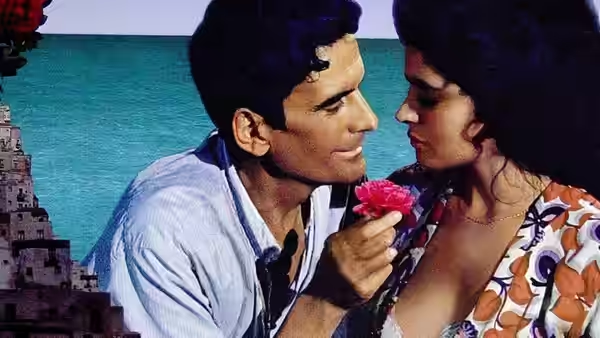
Noiret plays Neruda as a large, amused man who enjoys being admired. The best scenes are the two of them on the beach talking about words. Mario asks what a metaphor is, Neruda tells him, and Mario decides within a minute that the whole world is probably a metaphor for something else. Then he sees Beatrice Russo (Maria Grazia Cucinotta) across a table-football game at the inn, and metaphors become a practical matter. We laughed, then felt slightly guilty about laughing at a man in love.
Franco Di Giacomo shoots the island at noon, whitewashed walls and a sea so flat and bright it looks like a second sky, and the poet’s house in cool shade with the shutters half closed. Lorenzo Baraldi gives the inn a bar, a table-football game and not much else, so that the girl behind the counter is the only thing worth looking at. Gianna Gissi keeps Mario in the same cap and jacket for the whole story, which tells you what the job means to him. Roberto Perpignani cuts slowly and lets a conversation run out of things to say while the camera stays on it.
Luis Bacalov’s score is the film’s other star and its chief liability. The theme, an accordion waltz, is lovely the first six times. By the end it is being asked to do the feeling for us, and it obliges. The second half takes a turn we will not describe; what we can say is that Radford’s direction, plain and unhurried when the story is about two men and a bicycle, has nothing extra to offer when the story gets larger, and the music fills the gap.
The women are thinner than they should be. Cucinotta’s Beatrice is looked at a great deal and written hardly at all. Linda Moretti’s Donna Rosa, the aunt who runs the inn, is the better part, a woman who reads the poems Mario sends and knows exactly what they are for. Renato Scarpa’s telegrapher, who worships Neruda for his politics rather than his verses, and Mariano Rigillo’s Di Cosimo, the politician, are sketched in a few lines each and then leaned on late.
Against Radford’s own record this is the odd one. Nineteen Eighty-Four (1984) was grey, cold and controlled; this is warm, loose and content to point the camera at its lead and get out of the way. That is probably the right decision.
There is a scene in which Mario carries a tape recorder round the island collecting sounds for the poet: waves, wind, a church bell, his own held breath. Troisi holds the microphone out to the sea the way you would offer a drink to a friend. It moved us more than a man with a microphone should, and it says what the film is trying to say without a word of dialogue. Give it 114 minutes on an evening when you are in no hurry either.