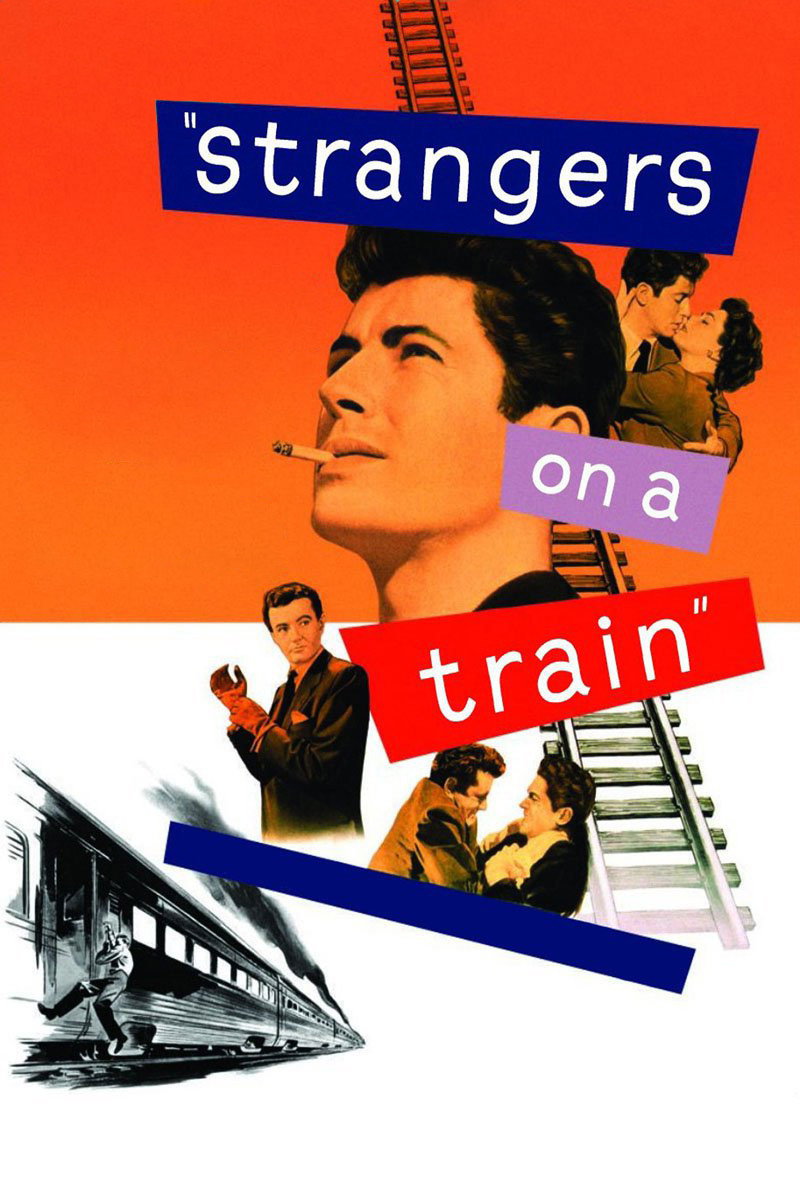
Ruth Roman makes steadiness worth watching, with a worldly assurance that leaves room for vulnerability. We welcome her sympathetic presence, but the romantic-interest parts too often ask for less than she seems capable of giving.
Fi1m perspective
In Strangers on a Train (1951), Ruth Roman's Anne Morton offers a steady presence beside Robert Walker's unsettling Bruno. We felt reassured by her calm because Walker makes charm itself a reason to worry. Alfred Hitchcock's thriller needs someone who can hold our sympathy without competing with him for eccentricity, and Roman supplies that. We value her ability to make a sensible character welcome, even when the writing gives her less to work with than the man proposing murder.
That was only one of the jobs her early films gave her. She played a strong-willed avenger in Belle Starr's Daughter (1948), then a murderess in The Window (1949) and Kirk Douglas's sympathetic wife in Champion (1949). The latter two films brought her breakthrough, followed by a Warner Bros. contract and leading roles. The mix is telling: her worldly manner could accommodate vulnerability, and her sympathetic parts did not require her to seem innocent of experience.
The limitation is clearest when Anne must be interesting without Bruno. Farley Granger gives Guy Haines enough discomfort to sustain the encounter with Walker, but neither Guy nor Anne proves as compelling on their own. Our enthusiasm for Strangers on a Train comes with that reservation: its respectable characters cannot always hold our attention unaided. Roman's restraint serves the thriller, but we should not mistake a restricted part for proof that she had nothing else to offer.
Westerns offered other uses for her strong will, including the saloon owner Ronda Castle opposite James Stewart in Anthony Mann's The Far Country (1954). Joe MacBeth (1955) gave her Lily MacBeth, a Lady Macbeth figure in a gangster setting. Freelance film and television work followed her departure from Warner Bros. in the mid-1950s, though romantic-interest roles and later supporting parts often limited the opportunities. Start with Hitchcock, then try The Far Country before deciding that dependable was all she could be.
Biography
Ruth Roman (born Norma Roman) was an American actress of film, stage and television. She was born on 22 December 1922 in Lynn, Massachusetts, and died on 9 September 1999 in Laguna Beach, California.
Roman began her career with bit parts before gaining notice for roles in The Window (1949) and Champion (1949). She appeared as Anne Morton in Alfred Hitchcock's Strangers on a Train (1951) and worked under contract at Warner Bros. in the early 1950s. Later credits include appearances in The Far Country (1954), Mission: Impossible (1966) and Murder, She Wrote (1984). She received the Sarah Siddons Award in 1959 for stage work and a star on the Hollywood Walk of Fame for her television contributions.