David O. Selznick’s home-front picture is handsome, warmly acted and about an hour too long. Colbert, Woolley and Temple keep it honest; the script keeps stopping to tell us how to feel, and Max Steiner’s orchestra tells us again.
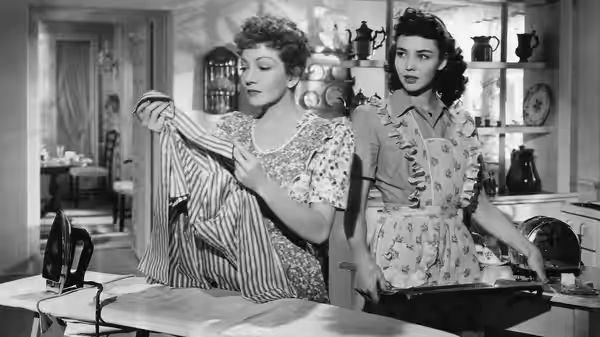
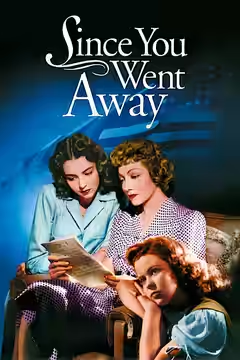
David O. Selznick produced and wrote Since You Went Away, and it runs 177 minutes, and both facts matter. It opens by calling itself the story of the American home, then spends nearly three hours proving that home can absorb any amount of orchestra. Anne Hilton (Claudette Colbert) has just seen her husband off to the war. She comes home to an empty house, and the film’s method is all in that scene: John Cromwell holds on her, Max Steiner’s strings come up, and we are told what to feel a few seconds before we have felt it.
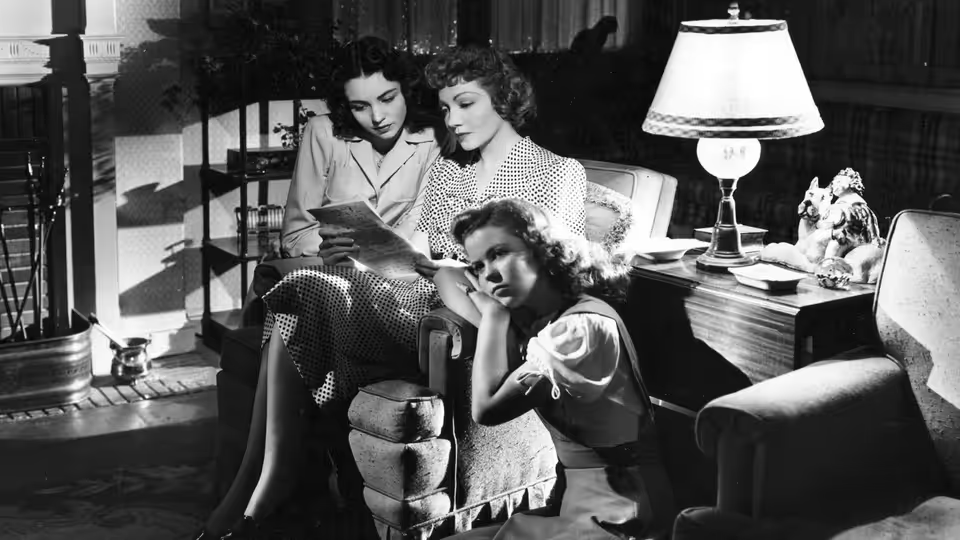
The cast is the reason it works when it does. Colbert plays Anne without fuss, a woman who deals with the household accounts before she permits herself to cry, and she is better the less the film helps her. Monty Woolley’s Colonel Smollett arrives as the lodger and is the film’s sense of humour: a man who treats a spare bedroom as an inspection and the dog as an insubordinate. Shirley Temple, as the younger daughter Bridget, is loud, funny and unsentimental, which the film needs more of. Joseph Cotten drifts in on leave as Tony Willett, the family friend a little in love with Anne, and plays it as a man who knows better than to say so.
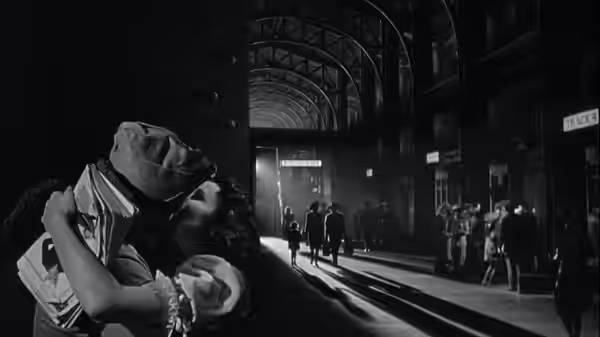
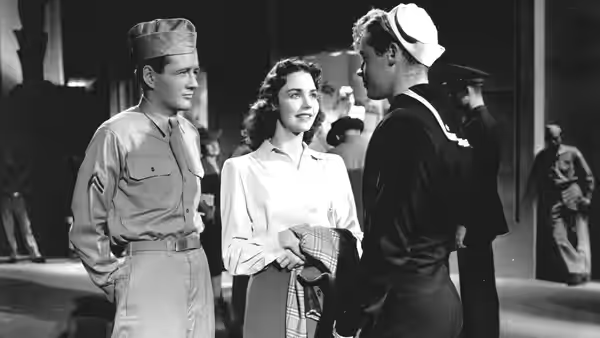
Jennifer Jones, as the elder daughter Jane, gets the one real story. She falls for the Colonel’s grandson Bill (Robert Walker), a shy corporal who has disappointed his grandfather by being gentle, and Walker is awkward in the right way. Their scenes, a bowling alley, a dance, do not need the score, and Cromwell lets them go quiet. A farewell on a railway platform, which we will not describe, got us against our will: Jane running, the train gathering pace, and Cromwell cutting to Walker’s face a moment longer than is comfortable. We had had our arms folded for an hour by then.
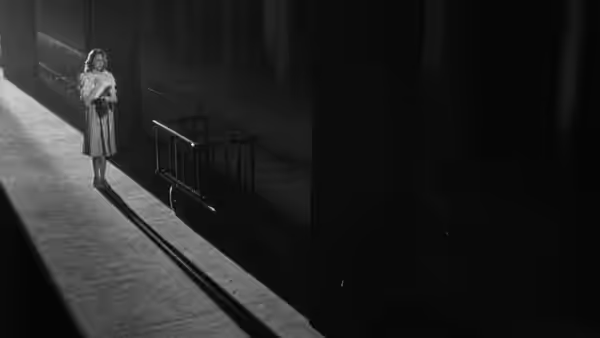
It is handsome. Stanley Cortez and Lee Garmes share the camera credit and light the Hilton house as a place someone has just left: long shadows across the hall, a bedroom lit only by the window, Anne alone on the bed while a car’s headlights sweep across the wall and go. William Pereira’s house is exact down to the coat hooks, with enough rooms for a lodger and enough clutter to look lived in. Steiner’s score is the problem. It is on for most of the three hours, it returns to the same theme every time anyone looks at the husband’s photograph, and it does not trust a single silence.
Selznick’s script is a series of episodes with sermons between them. Agnes Moorehead’s Emily Hawkins, the neighbour who hoards and complains about the servants, is there to be corrected, and is. Alla Nazimova’s Zofia, a refugee Anne meets when she takes a job at the shipyard, is handed one speech about America that plays like a poster. Lionel Barrymore’s clergyman has a sermon, literally. Hattie McDaniel’s Fidelia is let go when money runs short and comes back to work for her keep, and the film presents this as the sweetest thing in it without asking what it costs her. We found it hard to watch, and not for the reasons intended.
Selznick had produced Gone with the Wind and Rebecca before this, and you can see him trying to do for the home front what he had done for the Old South: one house, one family, the war kept outside the windows. Those films had someone else’s story underneath the production. This one has Selznick’s own script, and title cards that tell us what we have just seen. Against the other home-front pictures of the same years it is grander, softer and less true.
It is worth an evening if you have the whole evening. Watch it for Colbert, for Woolley and the dog, for Jones and Walker’s few quiet scenes, and for the light in that house. The reviews have been split, between those who found it warm and those who found it phoney, and the film is both, usually in the same scene.