William Wyler’s picture of an English village at war is glossy, earnest and made in Hollywood by people who had mostly only read about the place. For one long night in its second half it is as frightening as anything made about the war.
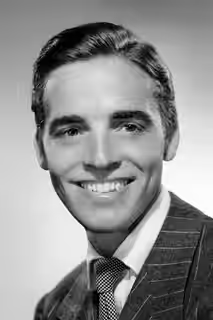
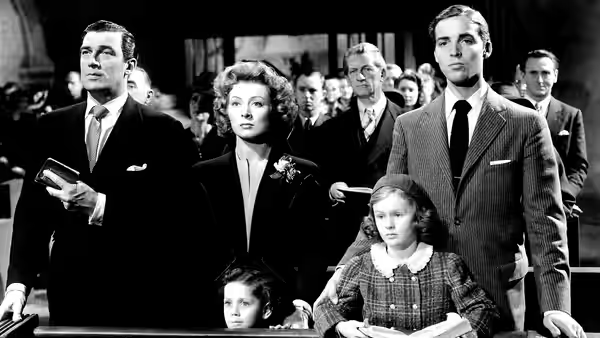
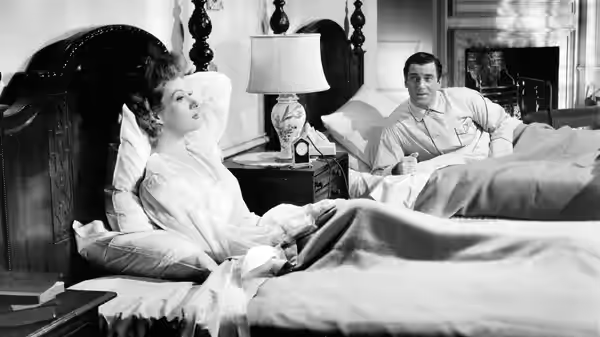
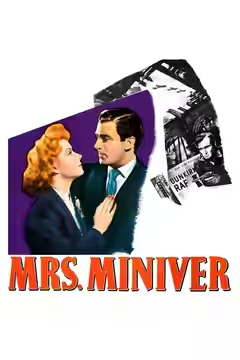
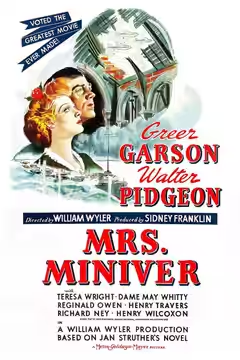
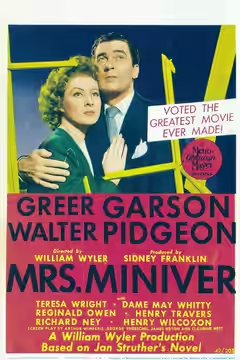
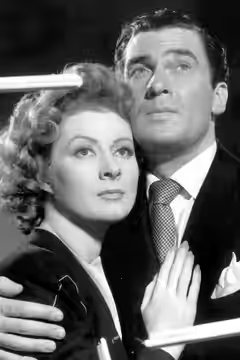
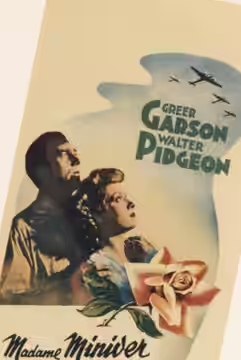
Summer 1939, and Mrs. Miniver (Greer Garson) has bought a hat she cannot quite afford. Her husband Clem (Walter Pidgeon) has bought a car he cannot quite afford either. They forgive each other before bedtime, and that is the film’s England: comfortable, a little silly about money, about to be tested. Mrs. Miniver was made in Hollywood in 1942, from Jan Struther’s book, to show Americans what the English were going through and to make them like them for it. It is propaganda, it is good propaganda, and it works best when it forgets to argue.
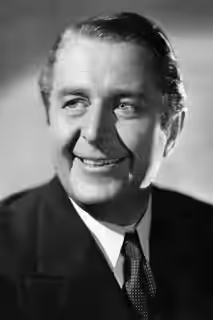
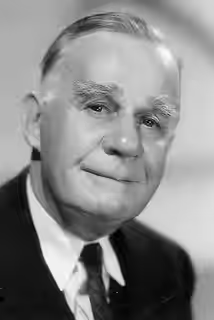
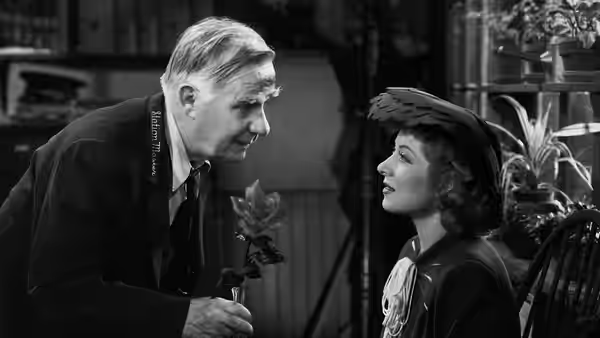
Garson is playing contentment, and she does it through small pleasures: the hat, the car, a rose that Mr. Ballard (Henry Travers), the stationmaster, has grown and wants to name after her. Pidgeon does not attempt an English accent, and it matters less than it should, because he and Garson have made a marriage between two adults who plainly like each other. Their son Vin (Richard Ney) comes down from Oxford full of opinions about the class system and delivers them to Carol Beldon (Teresa Wright), whose grandmother always wins the flower show. Wright lets him finish and then takes him apart in four sentences. Ney is stiff, and the film does not miss him when he joins the RAF.
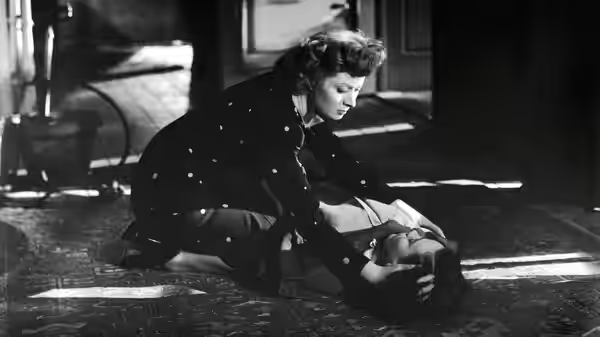
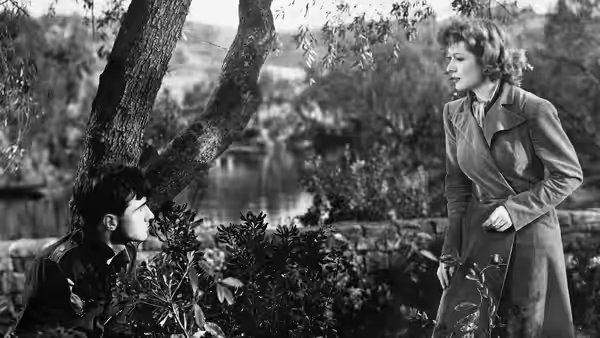
Joseph Ruttenberg shoots the village by day as a place that has never known weather. It is an England assembled from picture books, and the critic who complained that none of it rings true is right about the daytime. Ruttenberg is another cameraman after dark. The night scenes in the house are lit from one lamp with a great deal of shadow around it, and Garson, in them, is doing something other than smiling. Herbert Stothart’s score, thick with hymn tunes all afternoon, has the sense to stay out of those rooms.
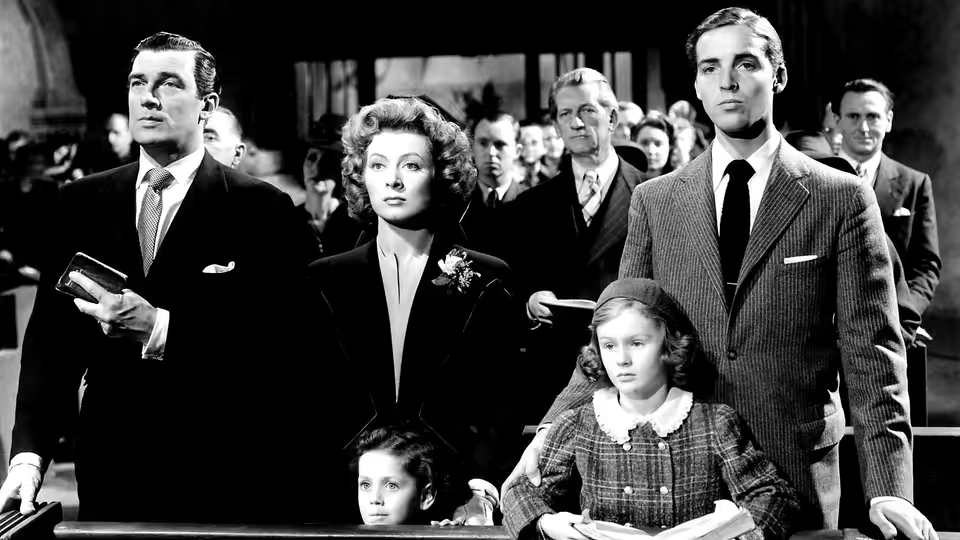
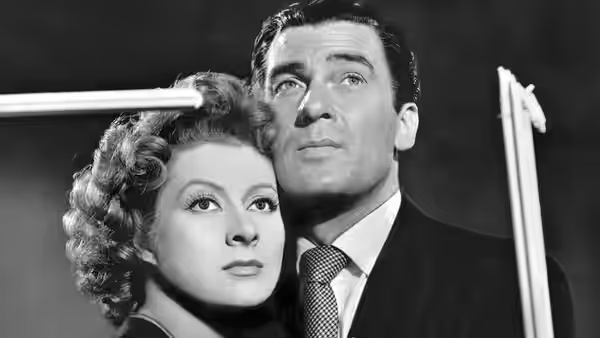
The war comes to the house in the second half, in ways we will leave you to find. What we can say is that Wyler stages the worst of it without showing us the war at all. There are no aircraft and no battle. Harold F. Kress cuts between faces and nothing else, and the sound does the rest. We were frightened, and it took us a moment to see why: Wyler has staged an attack as nothing but the faces of people listening to one.
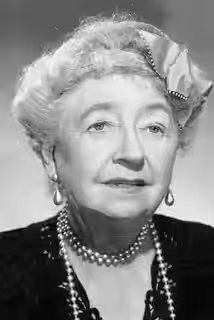
The rest of the village is nicer than any village has ever been. Lady Beldon (May Whitty) does not see why a stationmaster should be allowed to enter the flower show; Whitty gives her a dry, upright disdain, and the script cannot wait to melt it. The vicar (Henry Wilcoxon), the maid Gladys (Brenda Forbes) and the cook Ada (Marie De Becker) are all decent, all seen from a visiting producer’s height. Robert Kalloch and Gile Steele dress Garson in gowns that would have caused talk at a real flower show in 1940. At 134 minutes the flower show is a long time coming.
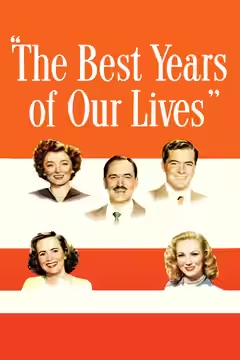
Most critics at the time called it the best film the war had yet produced, and at least one recent critic would not have you bother. We are nearer the first. Wyler went on to make The Best Years of Our Lives, about the men coming home, and you can see him practising here: the patience with a face trying not to give anything away. The film ends with a sermon, addressed less to the village than to the cinemas across the Atlantic. It is plainer than the speeches before it, and better for it.
Watch it for the marriage and for the night scenes, and let the village be as nice as it likes. The people who made it were being kind to a country most of them had only read about, and for one long night they got it exactly right.