Film review

The Best Years of Our Lives

1946 · Directed by William Wyler · 2h 51m · MPA NR

In a sentenceThe homecoming is the easy part; it is the next morning nobody trained them for

DramaRomanceWar

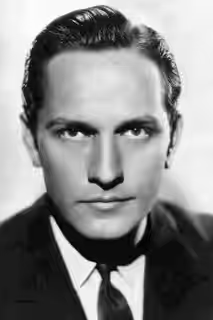
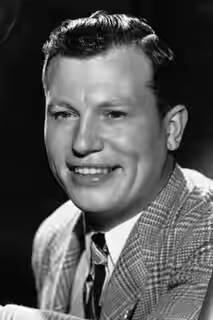
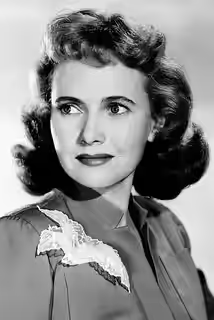
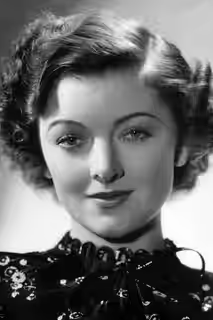
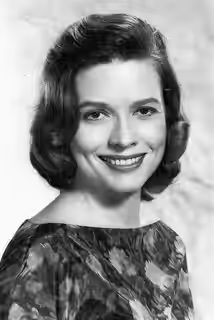
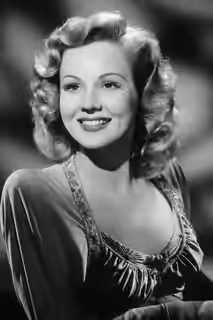
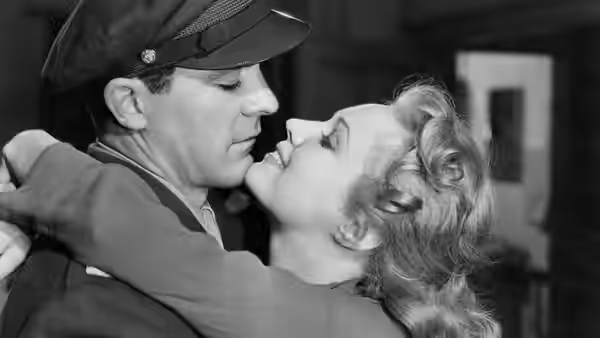
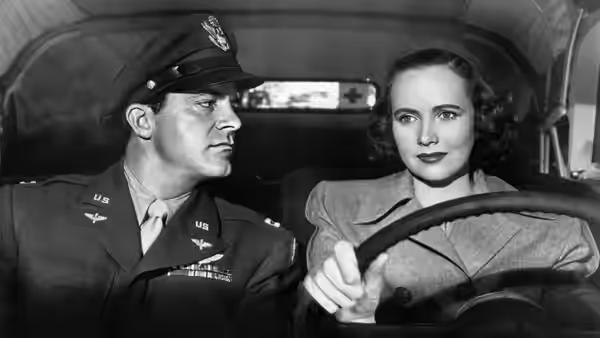
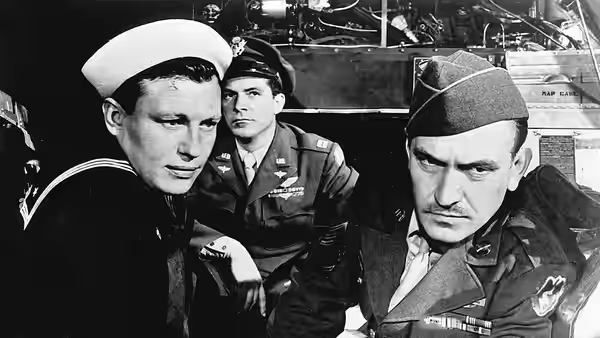
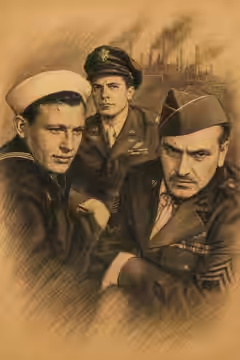
Three servicemen fly home to Boone City in the nose of a bomber and share a cab from the airfield. Homer Parrish (Harold Russell), a sailor who lost both hands and now uses steel hooks, is dropped first, to his parents and to Wilma Cameron (Cathy O’Donnell), the girl next door he is no longer sure he should marry. Al Stephenson (Fredric March) goes back to a bank job, a smart flat, his wife Milly (Myrna Loy) and a daughter, Peggy (Teresa Wright), who has grown up while he was away. Fred Derry (Dana Andrews) finds his wife Marie (Virginia Mayo) has left his parents’ house for a nightclub job. All three end the night at Butch’s bar.

Fi1m review

William Wyler’s drama about three servicemen coming home to one small town is long, patient and as good as anything Hollywood made about the war it had just fought. The wife written as a villain is its one cheap note.

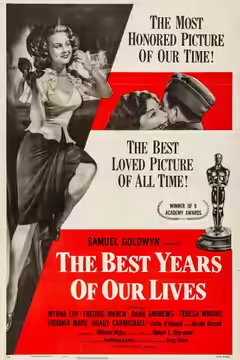
Three men share a cab from the airfield into Boone City, and each of them, with his own front door in sight, would rather go to Butch’s bar first. Robert E. Sherwood’s screenplay, from MacKinlay Kantor’s novel, gets the whole film into that ride. Home is a street away and they would like another twenty minutes. William Wyler made The Best Years of Our Lives for Samuel Goldwyn the year after the war ended, and it is still the American film we would reach for about what happens after the parade.

We would send a stranger to see it. What decided us was Homer’s homecoming, and not for the reason we expected. Harold Russell had lost both his hands and was not an actor, and his stiffness is the performance: a sailor who has learned his hooks and now has to learn the people. But it was Minna Gombell, as his mother, who got to us. She sees the hooks for the first time on her own front step, makes one sound, and Wyler does not cut away. Cathy O’Donnell’s Wilma runs across the lawn from next door and Homer does not know where to put his arms.

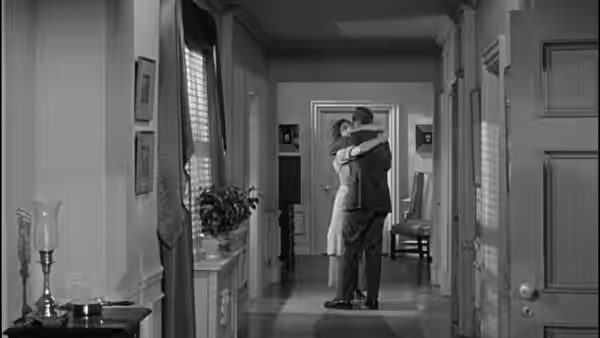
Al Stephenson’s return is done in one shot. Fredric March comes through the door of the flat, hushes his children, and Gregg Toland holds the hallway in deep focus so that Myrna Loy’s Milly, at the far end, appears in the kitchen doorway and stops. Loy has the least showy part in the film and we think she is the best thing in it; the morning after, watching her husband nurse a hangover and a fixed grin, she plays a woman deciding how much to mention. March plays Al’s drinking as a habit picked up abroad, quicker than having an opinion. Back at the bank, Ray Collins’s Mr. Milton puts him in charge of small loans and reminds him, gently, that the bank is not a charity.

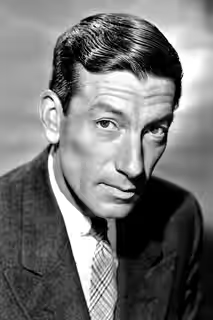
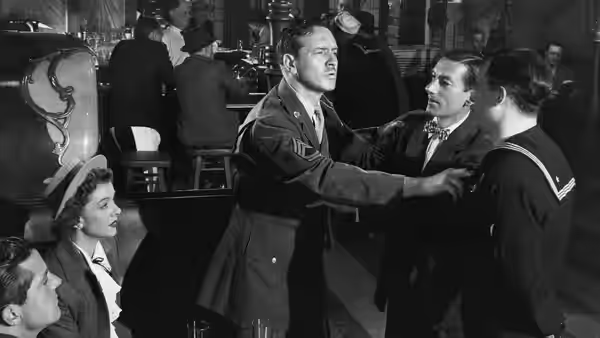
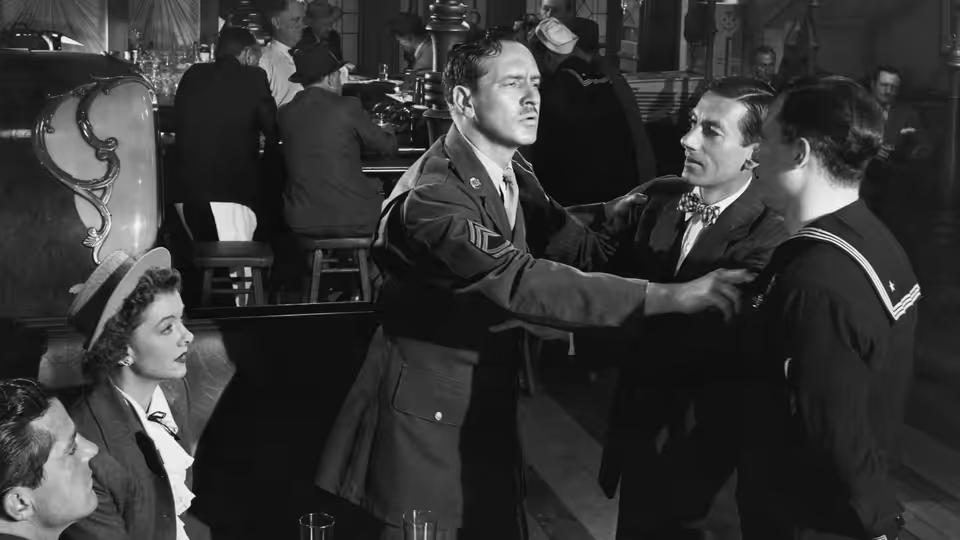
Toland’s deep focus is the reason critics still write about this film. The famous shot in Butch’s bar puts Hoagy Carmichael and Homer at a piano in the foreground while, in a phone booth at the far end of the bar, another man makes a call we will not describe. Everything is sharp, so you choose where to look, and you will look at the booth. Daniel Mandell cuts as little as he can and lets scenes run until somebody leaves the frame. Irene Sharaff dresses Teresa Wright’s Peggy in plain skirts and Virginia Mayo’s Marie in sequins, which tells you what the script thinks of both before either has spoken. Hugo Friedhofer’s score has a homecoming theme it uses sparingly and otherwise stays out of the bar, where Carmichael’s piano does the work.

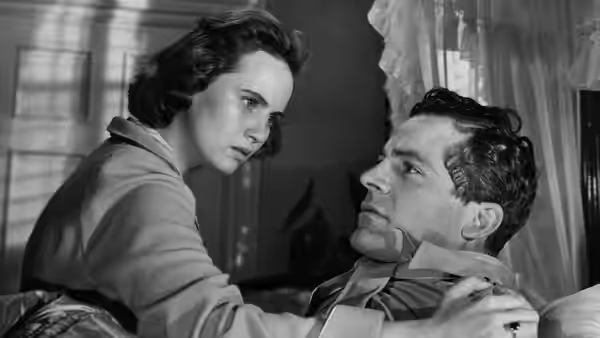
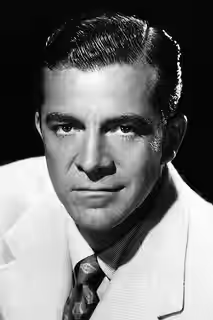
Dana Andrews’s Fred is the hardest part and the least sentimental. He was good at one thing, at altitude, and the drugstore that employed him before the war will have him back behind the perfume counter. Andrews plays him with his jaw set and his eyes elsewhere. The nightmare Peggy hears through a bedroom door on his first night home is the film’s first admission that these men brought something back with them, and it is played without a flashback: a man shouting, and a young woman sitting on the edge of the bed until he stops.

The flaws are real. Marie is written in one colour, a wife who wants the uniform and the nightlife and nothing else, and Mayo is left with nowhere to take her. A customer at the drugstore turns up to tell Homer the war was fought for the wrong reasons, and for a minute the film is making a speech. At 171 minutes it could lose a reel and nobody would miss it. One reviewer at the time thought the whole thing heavy. We did not, but we understood the complaint by the third hour.

Late on there is a scene in a field of scrapped bombers and a scene in Homer’s bedroom, and we will say nothing about either except that we have not forgotten them. Wyler had made Mrs. Miniver in the middle of the war, to a purpose. This one was made afterwards, with nobody left to reassure, and it is the better film for it.

It is a U certificate. Watch it with someone older than you, and let them tell you afterwards which of the three they knew.
Critical consensus AI synthesised

79
Positive
8
Mixed
0
Negative
1

Most critics admire this film, and the warmth is consistent across nearly eighty years: the notices from 1946 and the reappraisals since 2000 land in almost the same place. The praise clusters on two things. Harold Russell, a non-professional who lost both hands in the war, is singled out by nearly every review as the film’s centre, his performance described as naturalistic and painful to watch. Gregg Toland’s deep-focus photography draws the second wave of admiration, several critics crediting its long takes with the film’s realism and emotional pull.

Reservations are few and mild. Time Out finds it overlong and not quite the film it sets out to be, though still a model of studio craftsmanship. The one outright dissent is The New Yorker’s 1946 notice, which finds the picture heavy and sodden despite good dialogue and a large budget. Otherwise the spread is narrow, with eight of nine reviews positive and none mixed.

Los Angeles Times
26 December 1946 · Edwin Schallert
90*

It attains a sound, solid, real impression of life that is unusually human, appealing and frequently diverting; the presence of Harold Russell as the ex-paratrooper who lost both hands endows it with factual power and is the most moving and central development.

Read the full review →
Sight and Sound
21 December 2016 · Christina Newland
90*

The postwar drama from Wyler and Goldwyn mirrors the readjustment struggles of returning WWII veterans through three interconnected stories, using deep-focus photography to explore complex relationships. Audiences of the era found it cathartic and true, with standout moments like Russell’s painful monologue and Andrews’ reverie in a junked fighter jet making it as poignant now as ever.

Read the full review →
The New York Times
24 November 1946 · Bosley Crowther
90*

The film is a superior, thrilling exception that catches the drama of veterans returning home from war as no other film has, reflecting delicate tensions, deep anxieties and gnawing despairs with heart, understanding and tremendous talent.

Read the full review →
Variety
26 November 1946 · Abel Green
90*

It is one of the best pictures of our lives; the realism is graphic, the story compelling, the romantic frailties and human little problems typical of the headlines, with inspired casting and all performances equally good.

Read the full review →
Empire
1 January 2000 · David Parkinson
85*

The review highlights the film's focus on three veterans readjusting to civilian life after WWII, using long deep-focus takes for realism and emotional involvement. It describes the work as an audacious, intelligent achievement that influenced cinema worldwide.

Read the full review →
Slant Magazine
1 June 2014 · Eric Henderson
80*

The critic praises the film's portrayal of returning WWII veterans' struggles with readjustment, PTSD, disability, and the burdens of patriotism through its three central characters. It singles out Gregg Toland’s deep-focus cinematography and Harold Russell’s non-professional performance for particular note.

Read the full review →

Cast

Awards

BAFTA Film Awards, 1949

Won
Best Film

Academy Awards, 1947

Nominated
Best Sound
Won
Best Actor
Won
Best Director
Won
Best Film Editing
Won
Best Original Dramatic or Comedy Score
Won
Best Picture
Won
Best Supporting Actor
Won
Best Writing, Adapted Screenplay

If you liked this, try…

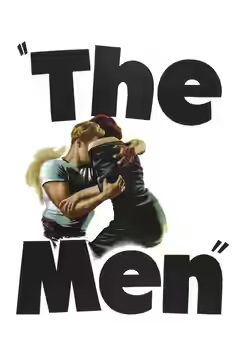
The Men poster

The Men

1950 · Brando’s first film, as a paralysed veteran learning the ward, and it is unsparing.

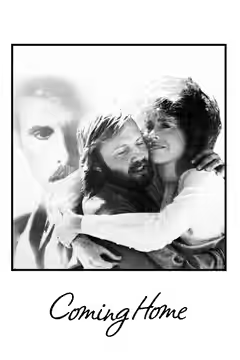
Coming Home poster

Coming Home

1978 · The Vietnam version, angrier, with Jon Voight in the wheelchair and Jane Fonda visiting.

Germany Year Zero poster

Germany Year Zero

1948 · Rossellini in the rubble of Berlin; the other side’s homecoming, with no home left.

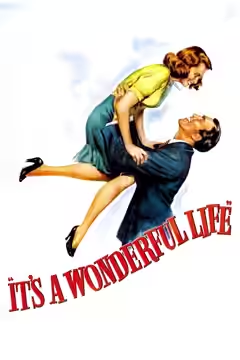
It's a Wonderful Life poster91

It's a Wonderful Life

1946 · Same year, same kind of small town, and a darker film than its reputation admits.

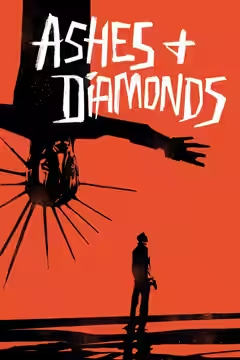
Ashes and Diamonds poster

Ashes and Diamonds

1958 · Poland, the first night of peace, and a young man who cannot stop being a soldier.