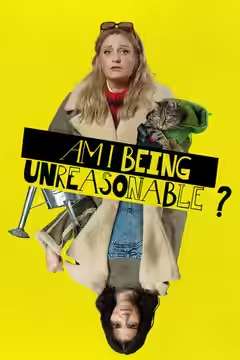
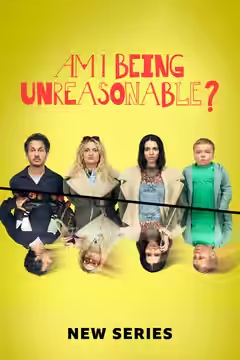
Daisy May Cooper and Selin Hizli make the first series of this uneven comedy-drama worth trying. The darker scenes often persuade, but the mystery sometimes interrupts feelings the performances have made convincing.
The first series of Am I Being Unreasonable? is worth trying for Daisy May Cooper and Selin Hizli, with some patience reserved for the plotting. The writers and stars want laughter, unease and sympathy to arrive close together. Six half-hour episodes give them a manageable amount of time to attempt it. For a while, the switches between humour and darker character drama keep the programme lively. The difficulty comes when finding out what has happened becomes more important than caring about the people involved.
Cooper plays Nic with an abrasiveness that makes even the less successful comedy watchable. Her delivery gives the writing a considerable advantage, while her moments of vulnerability feel awkward enough to resist easy sentiment. We were moved more than we expected when that aggression gave way to hurt. Having laughed at Nic’s manner, we found ourselves concerned for her. Those changes in Cooper’s performance give the darker material a reason to be here beyond keeping the audience uncertain about what sort of programme it is watching.
Hizli’s Jen gives Cooper someone worth watching closely, and the chemistry between them makes their scenes feel less laboured than some of the surrounding plot. Both performers can sustain interest when there is no immediate joke to reward it. Lenny Rush, playing Ollie, is another substantial reason to stay: his comic timing feels unforced, without the insistence that can make a young performer exhausting. The casting is the most consistently successful part of the programme, and frequently makes its changes of mood persuasive.
Director Jonny Campbell has to accommodate comedy, darker character scenes and a mystery without making each change feel like the start of another programme. At its strongest, the direction allows unease to remain after a laugh, leaving us unsure how warmly to regard these people. The darker passages are often more assured than the openly comic ones. Some jokes feel like interruptions, particularly when the actors have already made a difficult feeling worth staying with for a little longer.
The less satisfying choices belong to Cooper and Hizli’s writing, which is too keen on keeping us guessing. Delayed information can make a character intriguing, but repeated uncertainty also makes it harder to invest in what they are going through. Here the puzzle sometimes takes attention away from the hurt that the performances have made convincing. There are stretches when the next change of direction seems to interest the writers more than the consequences of the previous one, and the emotional scenes suffer for it.
As dark comedy, the series has the advantage of performers who make difficult company worth spending time with. Its willingness to allow unpleasantness and vulnerability into the same performance gives it more interest than a succession of neatly delivered insults would have. It is less reliable at making the jokes and the mystery work together. Too often, one has to wait while the other gets its turn, producing an uneven rhythm that the short episodes cannot entirely disguise.
This is for those who like their comedy uncomfortable and can forgive an erratic mystery. The humour will not work every time, and the plotting occasionally asks more patience than it earns. Cooper, Hizli and Rush are worth that patience, particularly when the programme gives their performances time to register. Watch for the people; treating every exchange as a clue would make this a rather tiring evening.