Pedro Almodóvar’s family melodrama finds humour in hard work and grief, with Penélope Cruz giving its warmth a practical, impatient edge. It occasionally makes forgiveness too comfortable, but we recommend it warmly.
Volver is a warm, funny melodrama that takes the work of looking after a family seriously, and we recommend it with one reservation: Pedro Almodóvar sometimes makes reconciliation come too easily. The women here have plenty to endure, but they also have things to get done, and he gives those demands equal attention. Domestic labour continues alongside violence, secrecy and the possibility of ghosts. The humour comes from the practical response to extraordinary trouble, without pretending that the trouble does not hurt.
Penélope Cruz plays Raimunda with the impatience of someone who cannot afford to stop and examine every feeling. Her care for her daughter is fierce, but Cruz makes the effort of that care visible; the performance never settles for looking maternal. There is humour in her briskness, and strain beneath it, which is why the film can move between comedy and distress without making her seem inconsistent. She keeps Raimunda’s exhaustion present even when the story becomes fanciful.
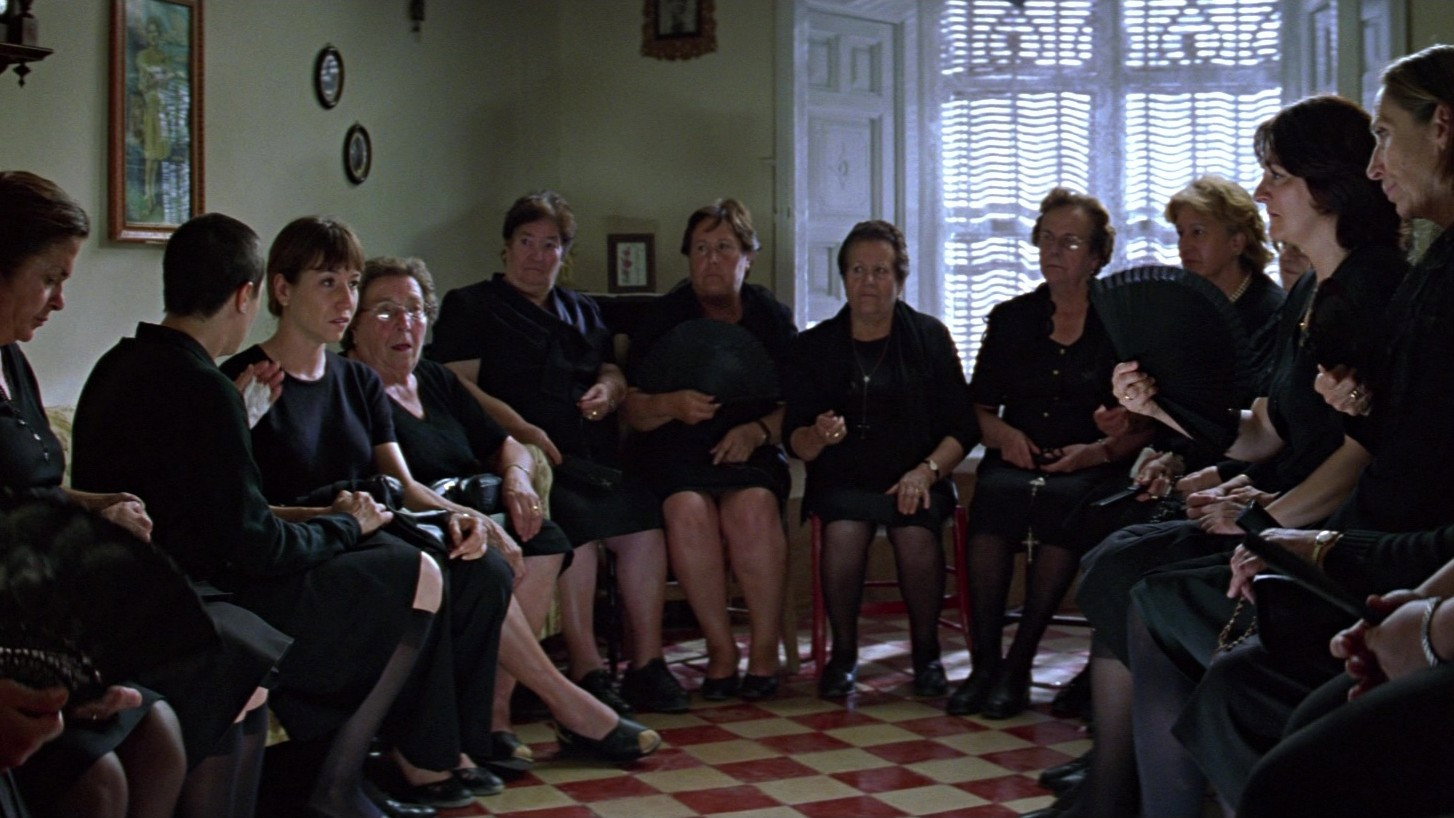
Carmen Maura’s Irene and Lola Dueñas’s Sole keep the film from becoming a display built around its leading performance. Maura brings an unforced familiarity to the family material, while Dueñas allows uncertainty to complicate the comedy. Blanca Portillo’s Agustina makes us attend to another person’s troubles without wishing we could get back to Raimunda. Almodóvar gives the ensemble time to establish how these women behave with one another, so their willingness to help feels like an existing habit.
José Luis Alcaine’s cinematography gives the colours force without making the domestic work seem less tiring. In the close-up of Cruz singing, Raimunda seems unable to keep her feelings private. We were moved more than we expected. The attention to her face lets us register a vulnerability that her busyness elsewhere keeps hidden. Almodóvar allows the song to take its time, and Cruz makes that time feel necessary.
José Salcedo’s editing handles the movement between domestic comedy and disturbing family material without making the changes feel imposed. The pace slackens as suspense gives way to a slower study of the women, though the actors largely justify that choice. Alberto Iglesias’s music suits the heightened emotions, helping the comic and unsettling passages belong together without requiring the performances to become broader. At 121 minutes, the film allows us to spend time in these women’s company, even when there is less urgency about what happens next.
The difficulty is how readily affection seems able to settle painful questions. Almodóvar’s screenplay gives its women such dependable reserves of mutual help that their differences can feel less troublesome than they ought to be. We can accept coincidence and unlikely events in a family melodrama, but we still want the people involved to be capable of disappointing each other. The film’s kindness occasionally makes those relationships feel arranged for our reassurance.
There is little here for anyone who needs a family drama to behave like a tightly plotted thriller. Give the slower conversations time: the actresses have more to do than keep a secret or get the story moving. See it for Cruz, but give the quieter performances your attention too.