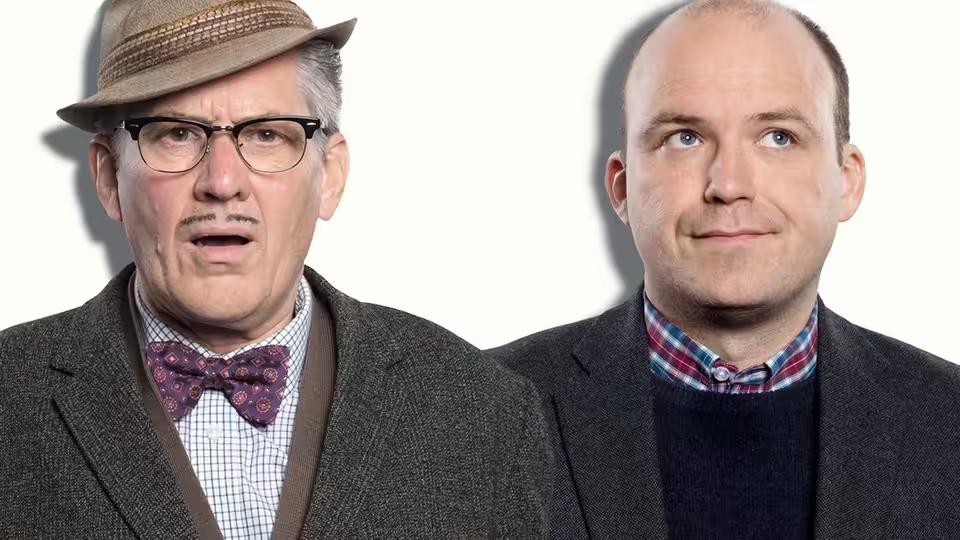
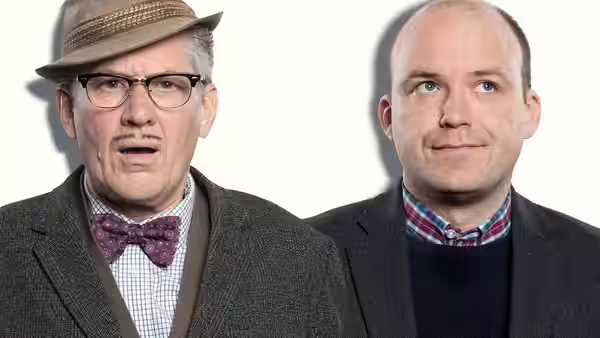
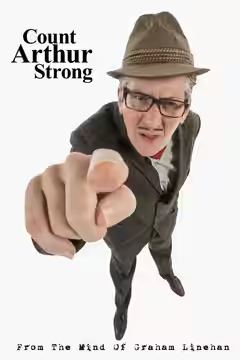
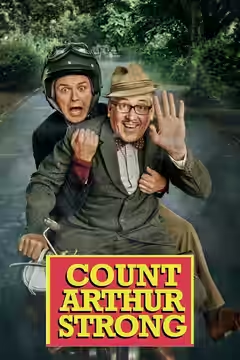
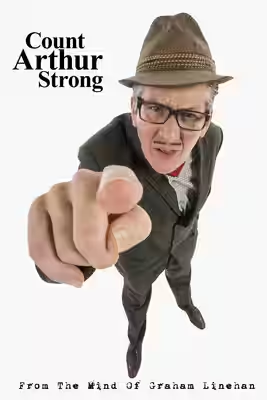
Steve Delaney’s precise physical performance gives Count Arthur Strong its appeal, but the comedy is an acquired taste. There is warmth here, and reason to persevere, provided Arthur himself makes us laugh.
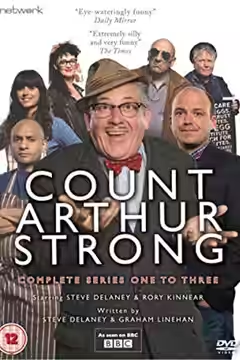
Count Arthur Strong is worth trying for Steve Delaney, with a substantial caveat: an appreciation of carefully performed comedy does not necessarily produce a laugh. This is a programme whose appeal depends heavily on our response to its central performer. Delaney gives Arthur enough physical precision to reward attention, and the warmth matters. We would recommend a cautious introduction rather than committing to all three series on the strength of its admirers’ enthusiasm.
Delaney’s performance is the clearest reason to take that chance. Physical comedy asks an actor to make deliberate choices look involuntary, then repeat the feat without letting the effort become the joke. The precision attributed to his Arthur is important because a broadly comic character can otherwise become exhausting remarkably quickly. A performer needs control even when the person being played appears to have none. That distinction is a useful measure of the work here, though admiration for technique can only take a comedy so far.
There is also a persuasive case for its tenderness. Comedy built around an eccentric can grow unpleasant when everyone else exists merely to point out the eccentricity. The warmer assessment of this programme describes something more generous, with emotional depth alongside the physical humour. We find that prospect appealing: affection gives a recurring character somewhere to go beyond another demonstration of the same comic habits. It does not, however, excuse a joke that fails to land, and comfort alone is a modest reason to keep watching.
The disagreement about the series is unusually stark. Of the two critical accounts available, one finds it unfunny and diminished by the move from radio to television; the other finds it funny, comforting and unexpectedly moving. Two assessments cannot establish what most critics think. They do identify the question that matters here: does seeing Arthur give the comedy something essential, or does it narrow what an audience could previously imagine? Praise for Delaney’s physical performance makes the strongest case for putting him on screen.
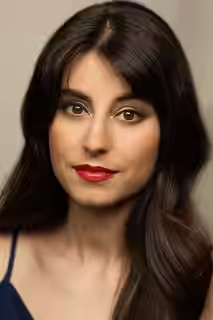
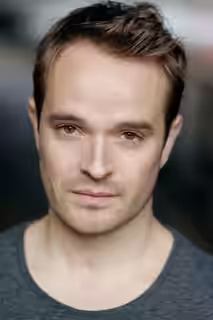
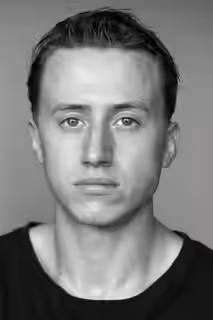
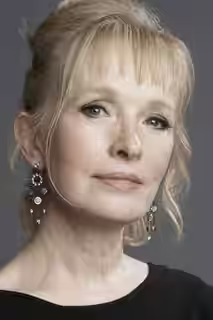
Graham Linehan and Steve Delaney share the creator credits, and the cast includes Rory Kinnear as Michael Baker, Chris Ryman as Bulent and Zahra Ahmadi as Sinem. Those names establish the ensemble, but they should not substitute for an assessment of how its members work together. Nor should the programme’s thirty-minute format be mistaken for evidence of brisk pacing. The useful distinction is between enjoying time with a character and waiting for that character to become funny; this series appears capable of prompting sharply different answers.
Our recommendation is therefore limited but not dismissive. The enthusiasm for Delaney’s performance and the programme’s warmth gives the interested viewer a sound reason to investigate, while the severity of the opposing response deserves more than a shrug. We cannot honestly turn those accounts into a first-hand claim that we laughed or cried. Try an episode for Arthur; if his physical comedy leaves us cold, perseverance is unlikely to be a sensible evening’s work.