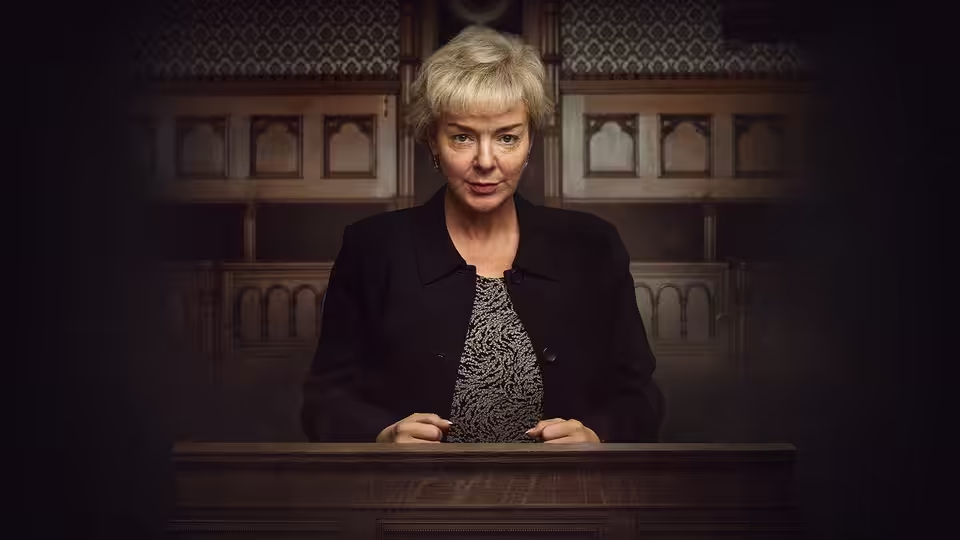
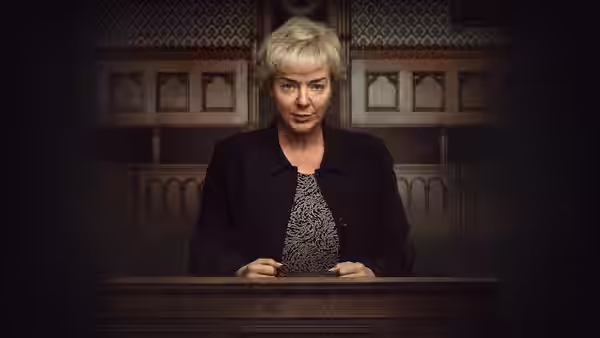
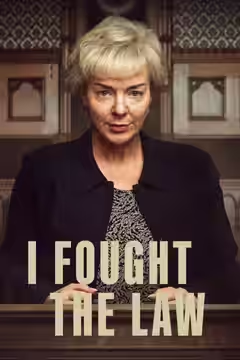
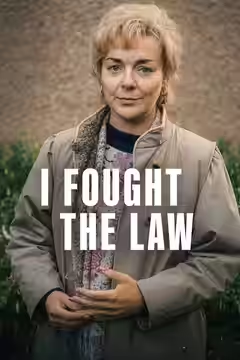
Sheridan Smith plays Ann Ming, the Teesside mother who took on the double jeopardy rule after her daughter’s murder, and she is the reason to watch. The series around her is built from the standard true-crime kit, and it knows it.
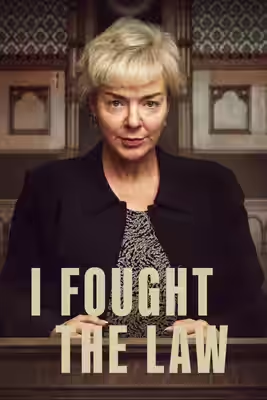
I Fought the Law is a four-part drama about Ann Ming, written by Jamie Crichton, directed by Erik Richter Strand, and created by Crichton with Ann Ming herself. That last credit tells you most of what you need to know about its intentions. This is her account, told her way, and it does not pretend otherwise. It is a good programme, worth four evenings if British true-crime drama is a genre you can bear, and Sheridan Smith is the reason it is more than that.
Smith plays Ann as a woman who was never going to be a campaigner and becomes one because nobody else will. She is small and quick and ordinary, a nurse with a kitchen to run, and the performance is built out of plain actions: making tea, answering the door, telling a sergeant he is wrong. There is very little big acting in it. When Ann is frightened she goes quiet, and when she is furious she goes quieter, and Strand has the sense to keep the camera close and let her do it.
The scene in the bathroom horrified us, and not because of what is shown, which is almost nothing. It is the time it takes. Ann has been told the house is clear, she is cleaning it so the family can let it go, and she notices the panel. Smith does not scream. She makes a sound we had not heard from her before and had not expected, and then she does the practical thing, which is worse. We thought about it for the rest of the night.
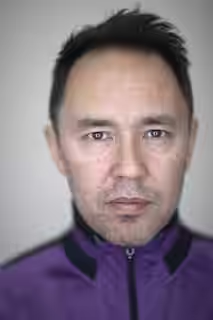
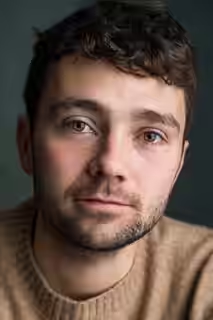
Around her the cast is solid and the writing less so. Daniel York plays Charlie Ming with great patience, a husband who holds the house together while his wife is on the phone to lawyers, and the script gives him almost nothing to want for himself. Jack James Ryan is careful as William Dunlop, never playing him as a monster and never asking for sympathy either, which is the right choice and a brave one. Luke Cinque-White and George Potts, as Sergeants Murphy and Wilkinson, have the thankless job of being the police who got it wrong, and they play it straight. Jake Davies, as Matthew Hogg, gets a handful of scenes and makes them count.
The trouble is the shape. Once the series leaves the house and goes to court, it reaches for the usual furniture: the montage of letters, the sympathetic politician, the lawyer who explains that this is simply how it is. We have seen each of these beats in a dozen other programmes, and Crichton does not find a way to make them new. A strand about the racism the Mings face, Charlie being Chinese and Billingham being Billingham, is raised in the first episode and then put down, as if someone had noted it was important and then run out of hours. Smith carries these stretches on her own, and they are the only parts of the series where you can feel her carrying.
There is also the matter of the argument. Double jeopardy, the rule that a person acquitted cannot be tried again for the same crime, exists for reasons, and they are not stupid ones. The series gives those reasons to men in wigs who are there to be overcome. Ann Ming was right, in our view, and the law agreed with her in the end, but a drama that had let the other side make its case properly would have made her victory look harder and so larger. With the subject in the creators’ chair, that was never likely.
Still, we were moved more than we expected, and we are not easily moved by this genre. It was the kitchen that did it, the four of them around the table with a child who does not understand why his mother is not coming back, and nobody making a speech.
Watch it in two sittings rather than four, and resist looking up the real case until you have finished. The programme is in no hurry to tell you how it comes out, and neither are we.