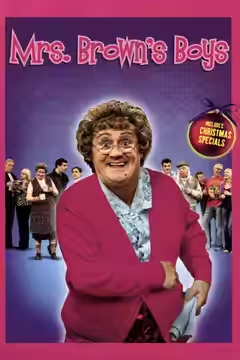
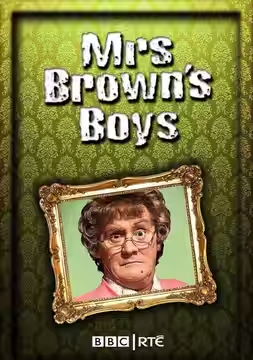
Brendan O’Carroll’s Dublin matriarch is a stage act dropped into a studio sitcom, and the audience on the night loves her more than the scripts deserve. The corpsing is the best thing in it; the jokes are the oldest.
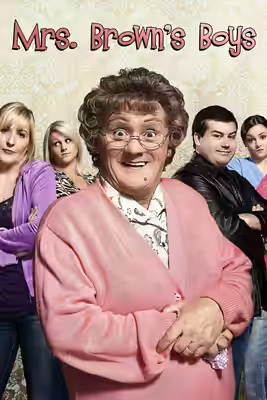
Brendan O’Carroll created Agnes Brown on stage, and Mrs Brown’s Boys is what happened when television cameras were pointed at the act without asking it to change. Each episode runs 30 minutes and is recorded in front of a studio audience that is never hidden. When a line is fluffed, the fluff stays in. When O’Carroll wants to comment on a scene, he turns and talks to us. The first series of six episodes began on 1 January 2011; there have been five series in all, the fourth and fifth arriving more than a decade after the third and running to four episodes each. The attempt is plain enough: a pantomime dame in a Dublin kitchen, with the audience as one more member of the family.
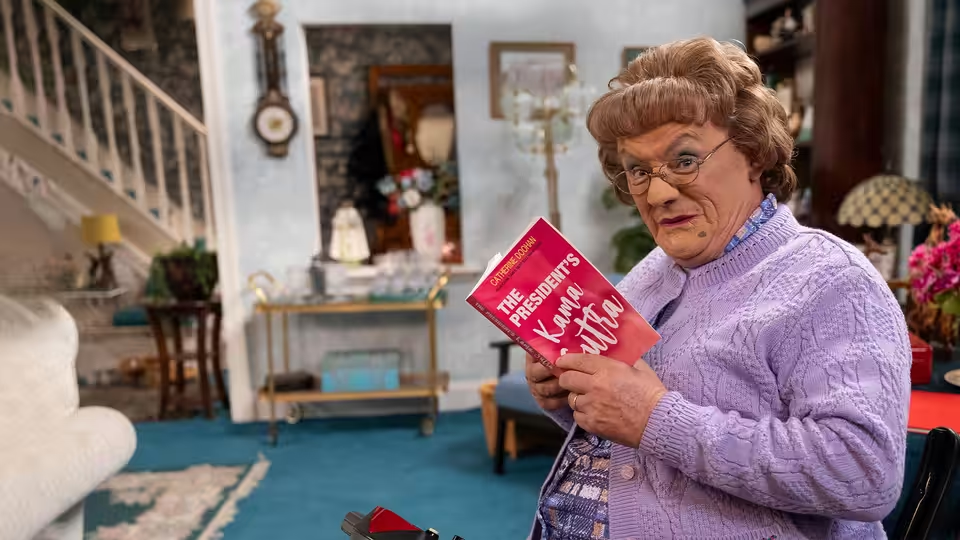
O’Carroll plays Agnes as a widow in a grey wig and a flowered apron who has never had a thought she did not say aloud, and his timing, worked up over years of saying these lines to paying crowds, is faster than the writing around it. Jennifer Gibney, as the daughter Cathy, is the one person on set who must stay straight while he goes to pieces, and she does it well. Dermot O’Neill’s Grandad has one job, which is to be told to shut up, and Eilish O’Carroll’s Winnie McGoogan has another, which is to come in from next door and misunderstand everything. We laughed, twice in one episode, hard enough to surprise ourselves. Both times it was at a mistake: a prop that failed, a line that came out wrong, and O’Carroll standing there in the wig grinning at the audience until it recovered. Then we felt slightly ashamed, because the show had done nothing to earn the laugh except not cut it out.
That is the problem, and it does not go away. O’Carroll writes every episode and he writes the same one. A word is misheard as a dirtier word. A household chore turns into an innuendo. Somebody arrives with news, Agnes gets the wrong end of it and spends twenty minutes hitting the wrong end with a tea towel. Near the close, the laughter stops and Agnes says something kind to somebody, and the audience goes quiet in the way it has learned to. By the third episode we knew where every scene was going before the kettle boiled, and by the fourth we were bored, and a little cross, because the man in the apron can plainly do more than this.
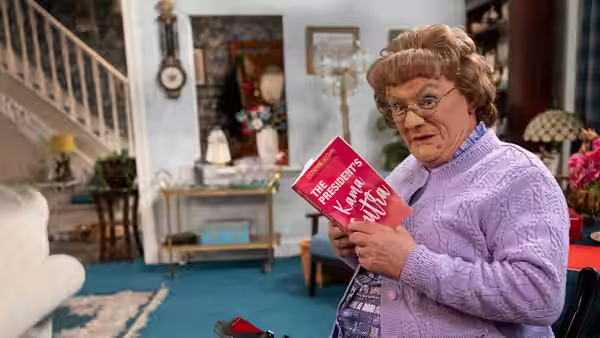
The costume, credited across the run to Yvonne Simpson, Hannah Goldinger, Helen Spain and Katherine Hyland, is doing something cleverer than it looks. Agnes’s cardigan, apron and wig are a silhouette built to be read from the back of a theatre, and the camera gets no closer to her than the stalls would. The rest of the family are dressed as ordinary Dubliners who have wandered into a pantomime, which is more or less the joke. Andy O’Callaghan’s theme is a brisk, cheerful tune that tells you nothing bad will happen, and nothing does. It carries a 15 certificate, and the swearing accounts for most of it.
The supporting cast are given functions rather than parts. Paddy Houlihan’s Dermot and Danny O’Carroll’s Buster Brady are the designated idiots and play it with energy. Pat Shields and Amanda Woods, as Mark and Betty, are handed whatever marital trouble the week needs. Sorcha Cusack’s Hilary Nicholson is the snob, deflated once an episode with good grace. Fiona O’Carroll’s Maria and Fiona Gibney’s Sharon do what the script allows, which is not much. The cast list is full of O’Carrolls and Gibneys, and the ease between them is real; it is the warmest thing on screen.
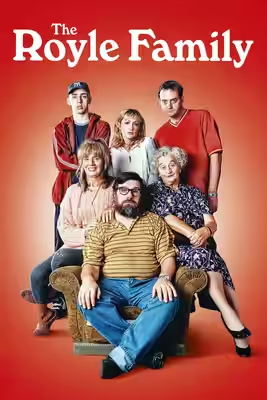
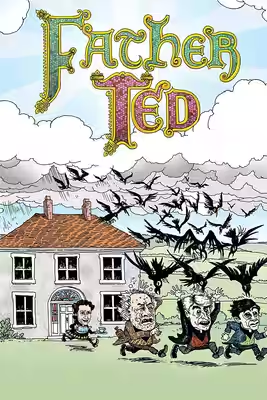
The studio sitcom with a live audience was pronounced dead some time ago, and this one did not get the letter. Against the best of the form it falls a long way short. The Royle Family found more in a sofa and a television than this finds in a whole house, and Father Ted took the same Irish rhythms and gave them jokes with a second idea in them. What this has instead is a man who loves an audience and an audience that loves him back, and for half an hour at a time neither of them pretends otherwise.
If you already know what you think of it, you are right. For anyone in between, the dose is one episode, watched with company on the sofa, and the volume up for the mistakes.