Andrew Daly’s comedy about a critic who reviews life starts as a sketch idea and becomes, over three seasons, a slow tragedy played for laughs. Few American comedies are built this carefully, and the rules are the point.
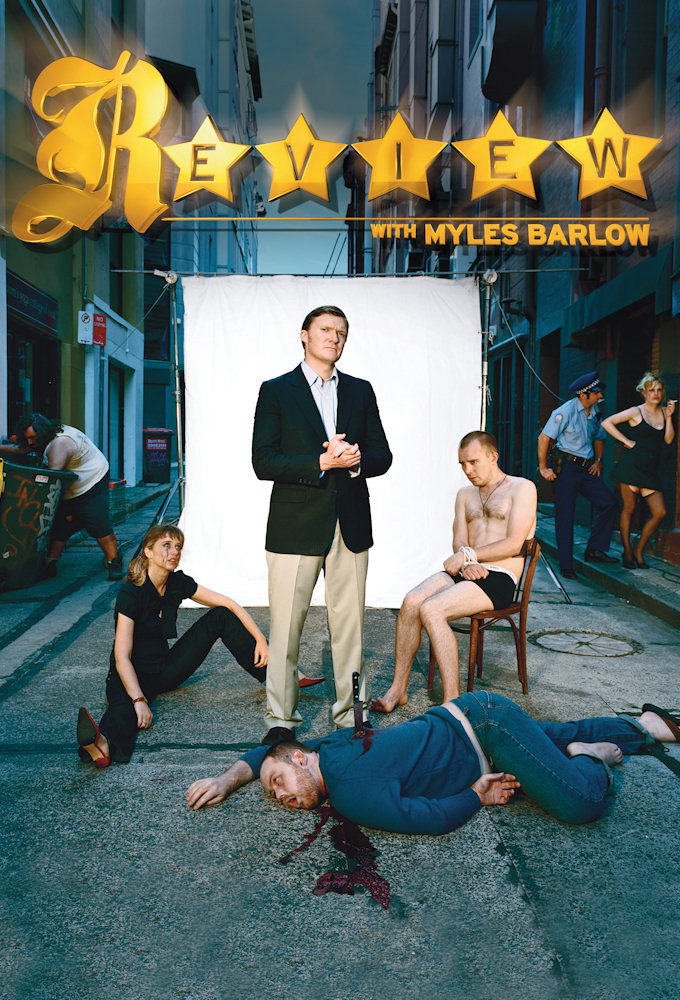
Forrest MacNeil reviews life. Viewers send in questions, his co-host reads them aloud, and he goes out and finds the answer, then comes back to a sofa and holds up a number of stars. Andrew Daly created the series, adapting an Australian original, and plays Forrest himself, and the whole thing rests on him. Review is a fine comedy and a better story, and the story is the reason to watch it all the way through.
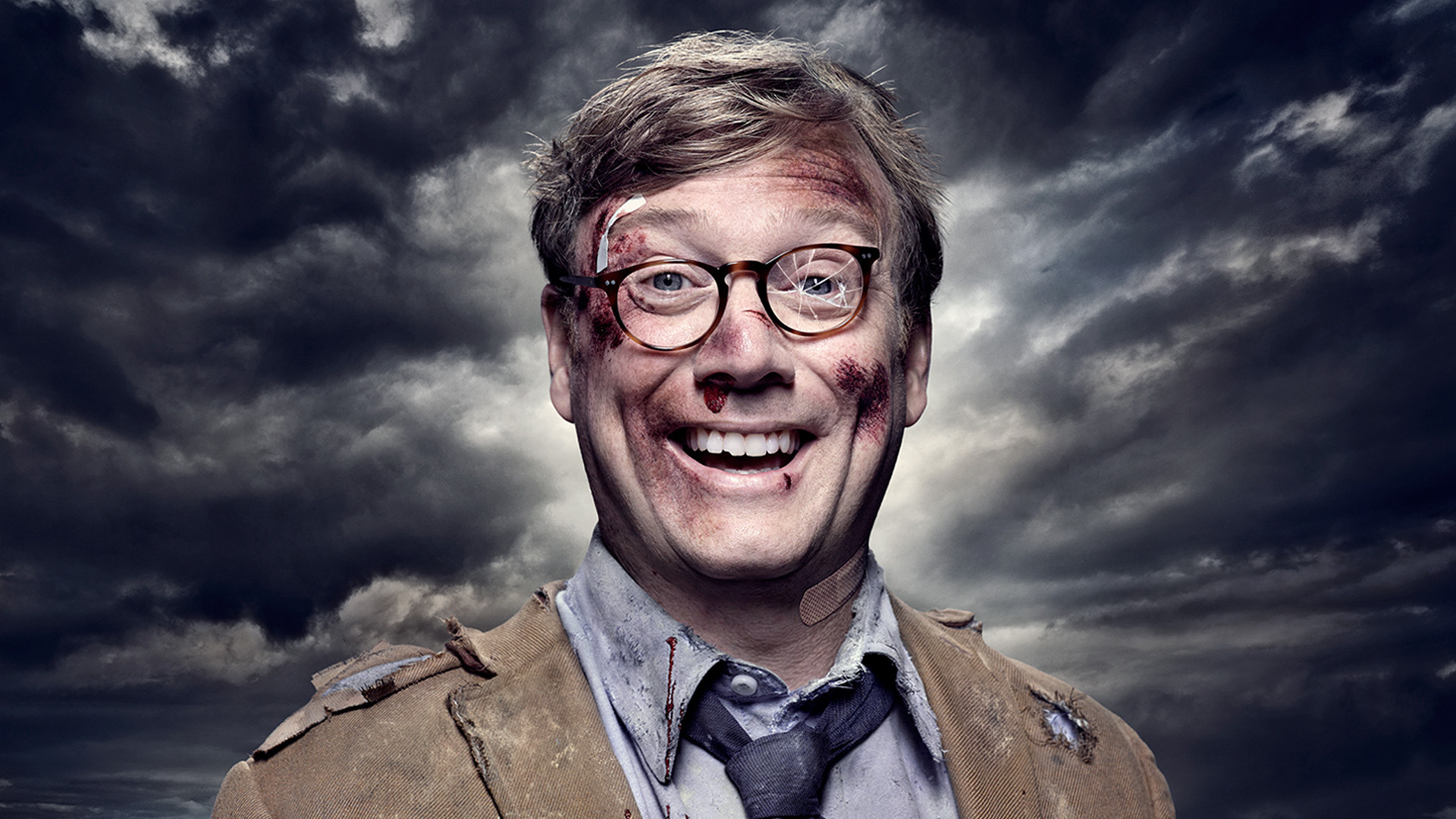
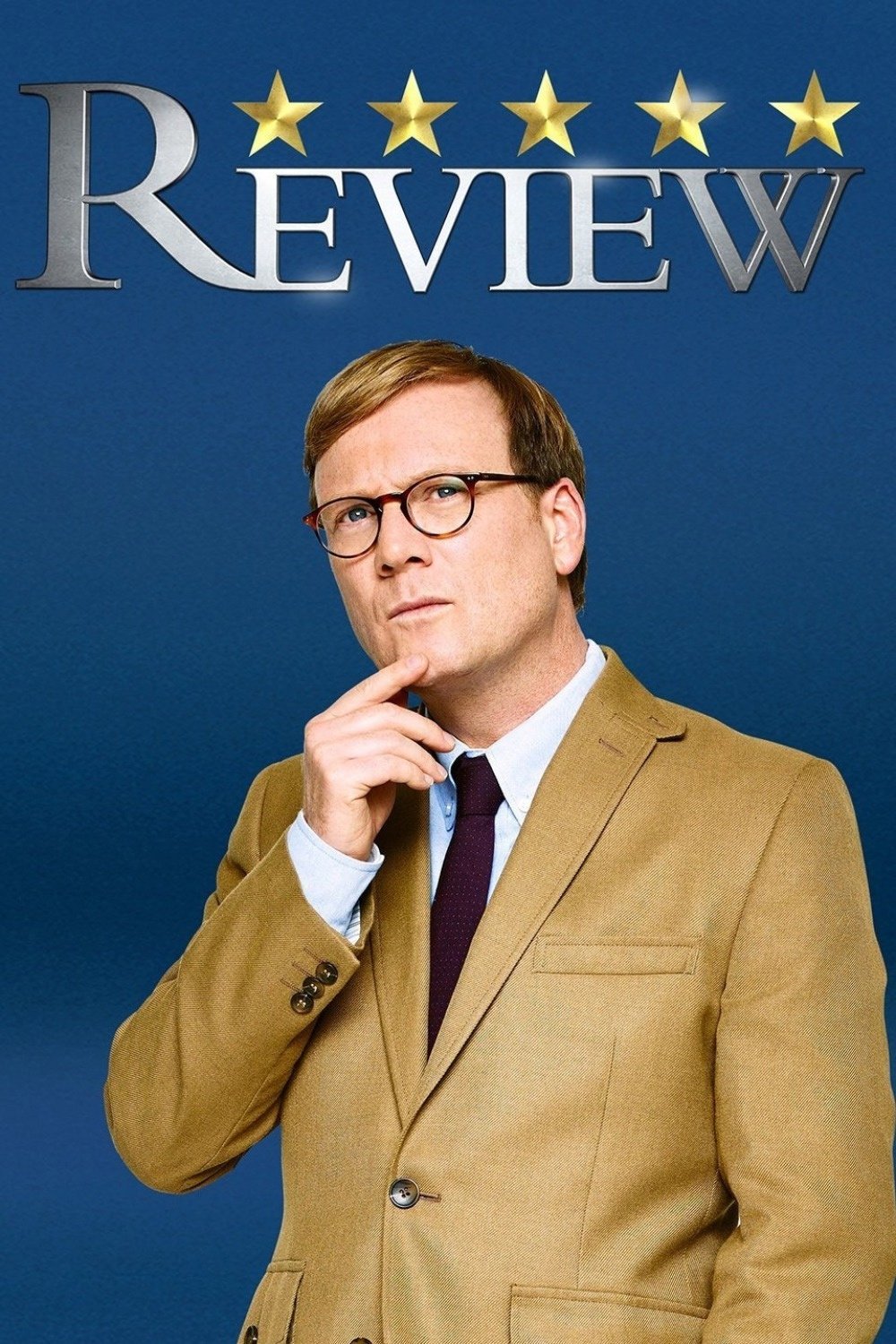
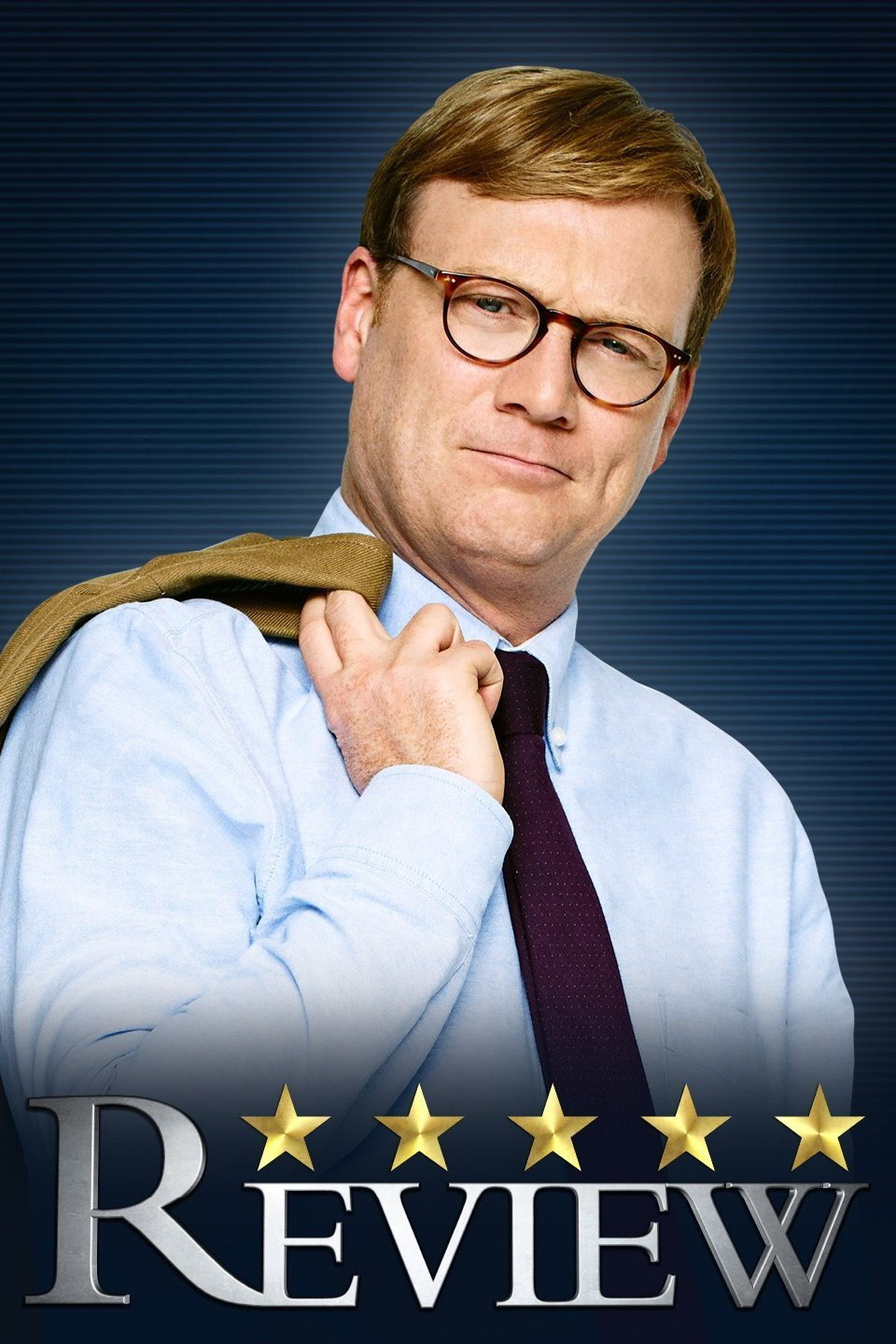
Daly plays Forrest as a local weatherman who has been promoted beyond his understanding. He wears a cardigan and a grin that does not move, and he delivers the programme’s slogan, “Life: it’s literally all we have. But is it any good?”, as though it were a perfectly reasonable thing for a grown man to say into a camera. The joke is that he means it. Nothing he is asked to do strikes him as a thing he might refuse, because the programme has asked, and the programme is his life’s work. Watch how little his face changes across nine episodes while everything around it does.
The structure is rigid, and it is the engine. Each episode runs 23 minutes and Forrest reviews three things in it, some trivial, some not, in the order the cards come up. Grant Grunderschmidt (James Urbaniak), the producer, appears whenever Forrest wavers, to remind him in a low, patient voice what he agreed to. Lucille (Tara Karsian) and Josh (Michael Croner) fetch what he needs and clean up afterwards. Suzanne (Jessica St. Clair) is at home with Eric, and she has the misfortune of being married to a man whose job it is to do what strangers tell him. The second episode asks him about divorce. We will say only that Forrest takes every assignment seriously.
The programme has two looks. The studio is bright, flat and daytime, a sofa, a graphic of five stars, A J Gibbs (Megan Stevenson) at his side. The field segments are handheld and rough, with the crew occasionally in shot and the sound of Forrest’s own narration laid over footage of him doing something unwise. The roughness is deliberate and mostly works; once or twice, in the early episodes, it is only rough, and a chase or a fall is hard to see.
Here is what happened to us. For three episodes we laughed the way you laugh at a man walking into a door. Somewhere in the middle of the first season we noticed we had stopped laughing at the events and started watching the returns to the sofa, where Forrest sits down after each catastrophe, smiles, and gives it two stars, and Stevenson reads the next card without a flicker. That indifference is the series’ cruellest running joke and its saddest, and Stevenson plays it with such ease that we were angry with her before we realised she was the only sane person on screen. We laughed less. We did not stop watching.
Not all of it holds. Three reviews an episode means a few of them are only sketches, and a sketch about, say, eating too many pancakes has to sit beside something that ends a friendship. The rhythm sometimes goes flat in the middle segment. Some critics found the series unfocused and wanted to know more about why Forrest is like this. We think the not knowing is right. He has no wound and no reason; he has a contract, and that is worse.
The second season, from 30 July 2015, escalates in ways we will not describe. The third, from 16 March 2017, is three episodes long, which makes it a farewell rather than a season, and it knows it. Watch in order, do not skip, and take it two episodes at a time, because at 23 minutes each you will want another and at three or four you will need a walk.