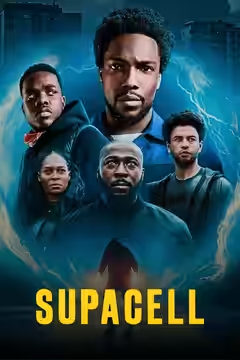
Rapman’s superhero series is at its best when nobody is using a superpower: five people in South London with jobs, debts and families, played by a cast worth the six hours. The conspiracy chasing them is the dullest thing in it.
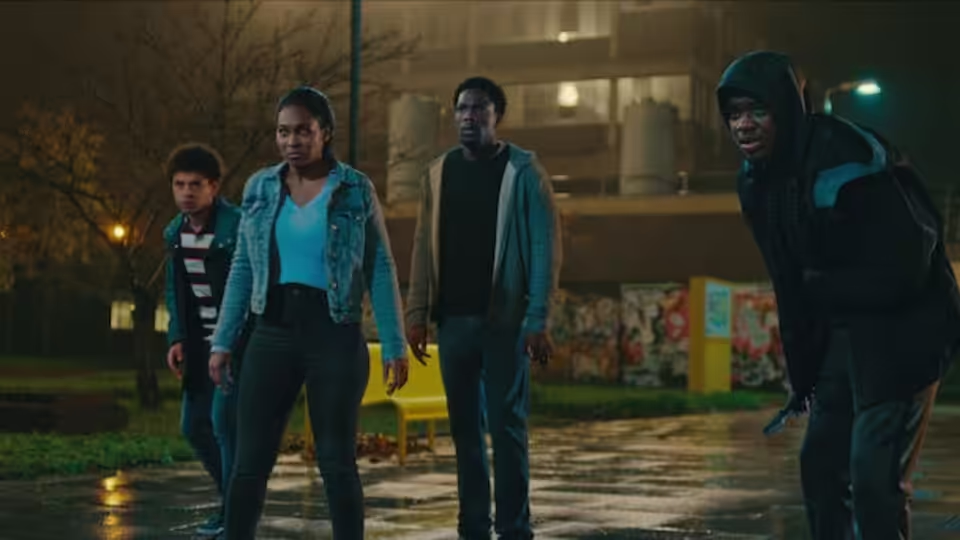
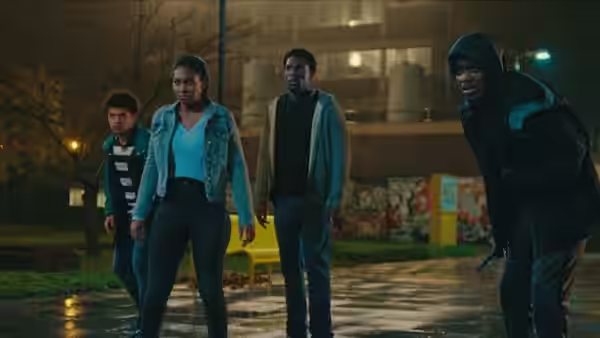
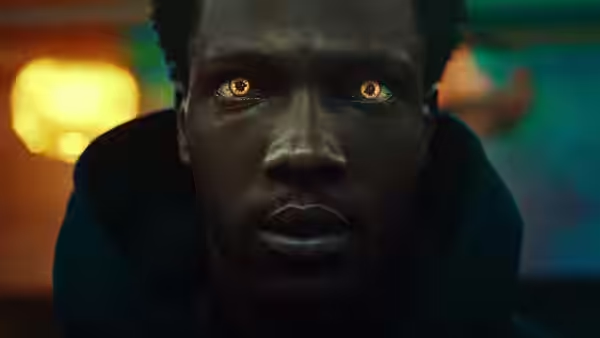
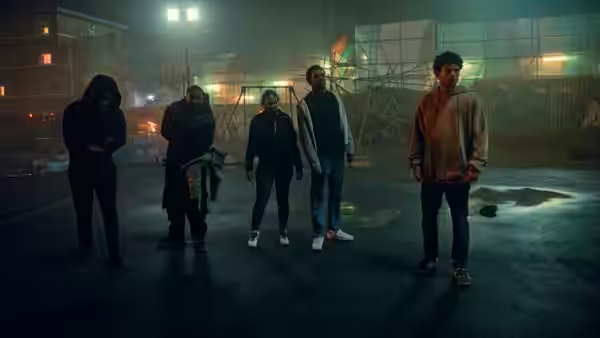
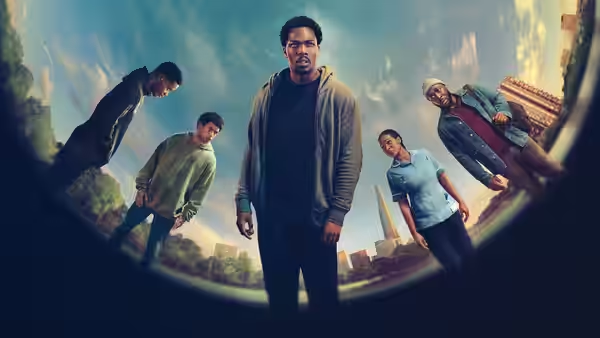
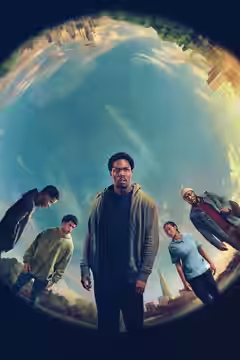
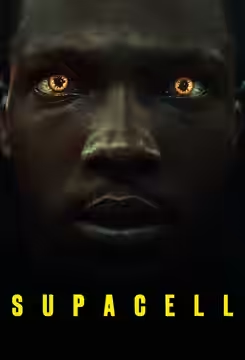
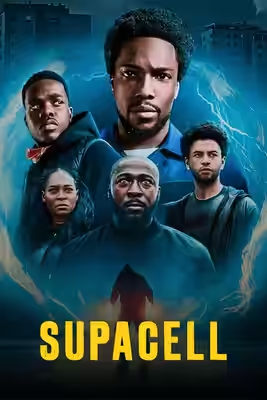
Supacell takes the oldest superhero idea, ordinary people wake up with powers, and puts it on estates in South London where the powers are the least of anyone’s worries. Michael Lasaki-Brown (Tosin Cole) can stop time, and what he saw while it was stopped is keeping him awake. Sabrina Clarke (Nadine Mills) can move things with her mind and still has a shift to finish. Andre Simpson (Eric Kofi Abrefa) can lift a cash machine and still cannot get a job interview. The series, created by Rapman and directed by him with Sebastian Thiel, runs six episodes and is good for most of them. Its people are far better than its plot.
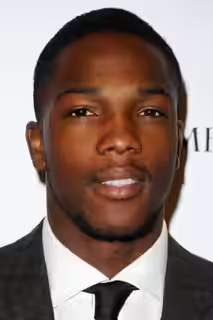
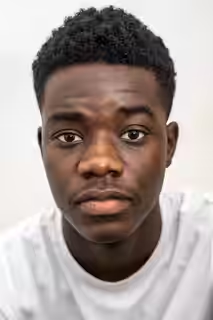
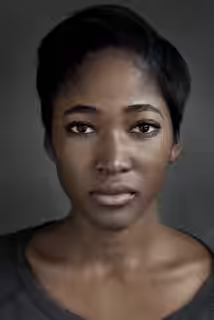
The heart of it is Michael and Dionne Ofori (Adelayo Adedayo), and this is where we were moved more than we expected. Cole plays Michael as a decent, slightly boring man who has never had to be anything else, and the series makes him carry a secret he cannot explain without sounding mad. Adedayo gives Dionne a quick intelligence that makes his evasions hopeless; she knows something is wrong by the second scene. Their kitchen conversations, about money, about his mother, about whether he is lying, are written and played as if the superpowers did not exist. When he flinches at a question he cannot answer, we flinched with him.
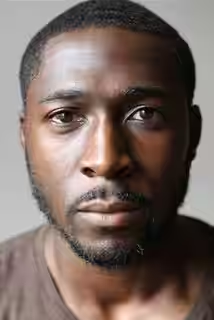
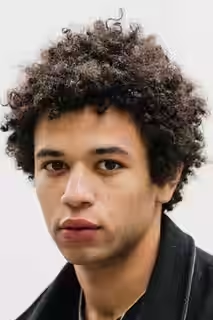
The other strands are nearly as strong. Mills plays Sabrina as someone who has been responsible for other people so long that a power is just another job. Abrefa’s Andre is the one we would follow into a spin-off: a big man made small by a criminal record, trying to be a father to a boy who has stopped expecting him. Calvin Demba makes Rodney, the dealer who can suddenly outrun a car, properly funny, and Josh Tedeku, as the gang leader Tazer, has the hardest part and does not soften it.
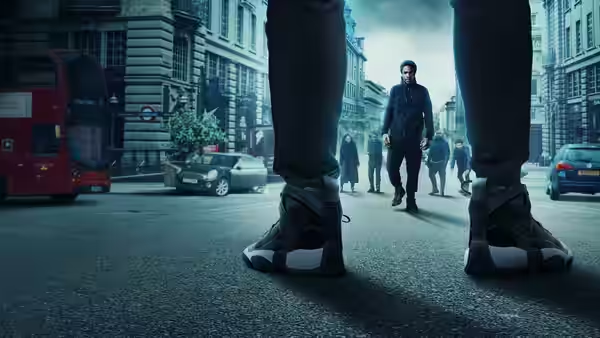
Rapman and Thiel shoot the area as a place people live rather than a backdrop. Chicken shops, stairwells, a barber’s, a nurses’ station, buses at night; the camera stays at head height and lets the streets fill the frame. The powers are shown plainly, with little noise. Sabrina stops a glass mid-air, Michael walks through a frozen room, and the series trusts that this is enough. When the action does arrive, it is cut so you can see who is where, which is rarer than it should be. The soundtrack leans on British rap, and Ghetts turns up in front of the camera too, as a gangster called Krazy.
The trouble is the thing that is supposed to hold it together. Somewhere above the estates there is an organisation, there are men in hoods with torches, there is a laboratory, and there is a reason for all of it that the series keeps back for far too long. We were bored, in the fourth episode, watching people in a white corridor exchange meaningful looks about files, and then we were irritated, because the scene before it, Andre at a job centre, had been as good as television gets. The hooded men are not frightening and they are not interesting. They are there to make the plot move, and it moves slowly even so.
The pace is a real flaw. Six episodes is not long, and the five do not stand in the same room until most of them are gone. The series wants each life established before the lives collide, which is the right instinct, but it leaves the back half rushed and the front half waiting.
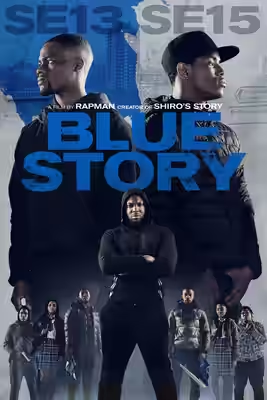
What stayed with us was Tazer’s strand, and it horrified us, as it is meant to. The gang scenes are boys on bikes stabbing other boys over postcodes, filmed without music and without glamour, and the series does not pretend a superpower makes any of it less stupid or less sad. Rapman covered this ground in Blue Story (2019) and knows it well.
Set beside Misfits, the last British attempt at this, Supacell is less funny and much more serious about where its characters come from. It is also, in its people, more convincing. Watch it over two nights, forgive the hoods, and stay for the kitchens.