Johan Renck makes an absorbing crime drama from insurance recoveries, war and finance. The six-part series rewards attention, though its complicated plotting sometimes leaves the people involved less clear than their business connections.
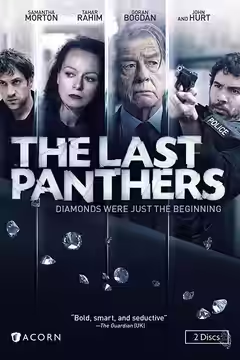
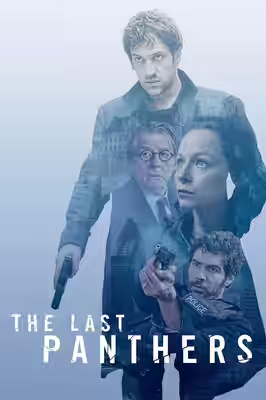
The Last Panthers is absorbing crime television, though it sometimes makes following the story harder work than it needs to be. Created and written by Jack Thorne, the series looks beyond the robbery to the business of recovering the losses. Insurance recovery gives it a different set of priorities from a drama concerned only with catching thieves. The question of who gets their money back proves a useful way into a wider account of crime, war and finance.
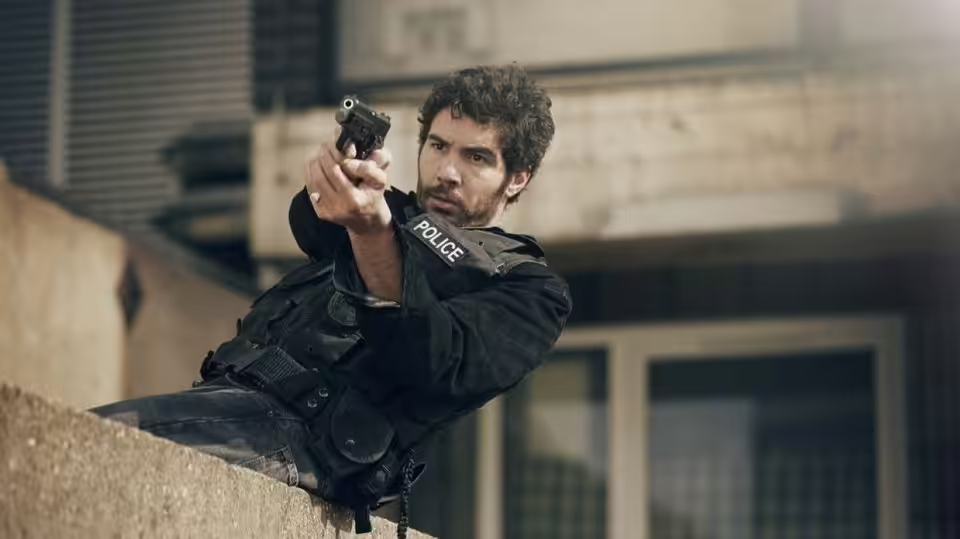
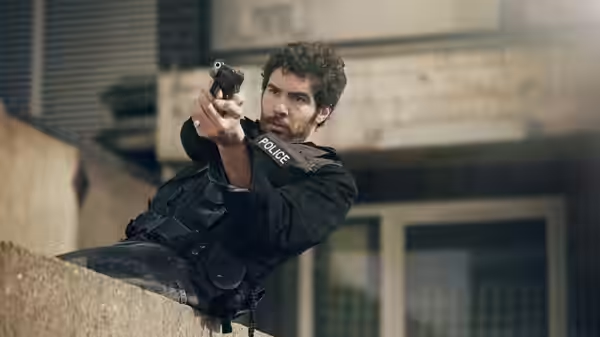
Johan Renck’s direction is most persuasive when the danger is immediate and there is no need to untangle everyone’s connections. We were tense during the heist sequences, because the danger to the people involved is easier to grasp than the dealings around them. That directness is welcome, and the politically charged dialogue keeps the violence from feeling like an isolated spectacle. The links between private lives and the consequences of war give the criminal business a reach beyond the robbery.
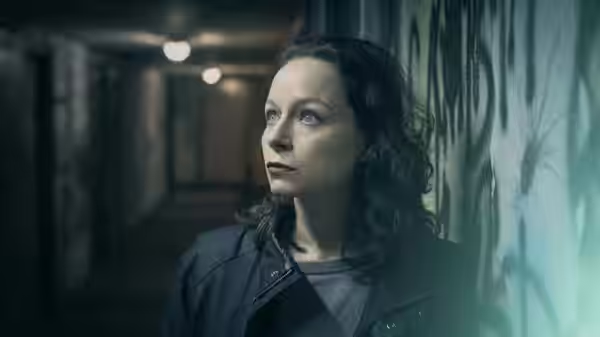
Tahar Rahim is the strongest reason to stay with the complications. As Khalil, he gives us someone to watch with interest even when the writing has not made his thinking sufficiently clear. Samantha Morton as Naomi and Goran Bogdan as Milan also help keep the separate strands from becoming an exercise in tracing connections. Yet the script sometimes seems more interested in putting these people in difficult positions than in giving us enough time to understand their choices.
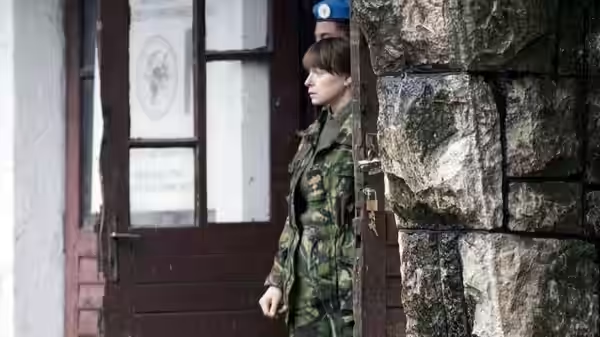
The production design by Jan Houllevigue supports the grounded sense of place: the settings feel used, rather than selected to lend importance to a conversation. Hearing the drama move between languages also matters; the people seem to belong to the places where they do business. The music credited to Clark Roll The Dice adds to the tension, though we are seldom short of reasons to feel uneasy about these dealings.
Editors Luke Dunkley and Yorgos Lamprinos keep the separate strands moving, but the cutting cannot always stop the story becoming confusing. We can enjoy being asked to join things up; the trouble comes when a connection seems to require information the drama has barely allowed us to register. The slow opening also asks for a measure of faith before the stakes feel personal. Six episodes give the story room to develop, yet a little more time spent on a person’s reasoning would sometimes serve it better than another complication in the pursuit.
For a crime drama, paying this much attention to insurance is a useful choice. An arrest and a recovered loss are different results, and Jack Thorne finds tension in the interests behind the pursuit. The series is worth staying with because those interests complicate our response to the crime, even when the people remain harder to understand. We recommend it to patient crime-drama viewers, with no promise that close attention will make every decision convincing.