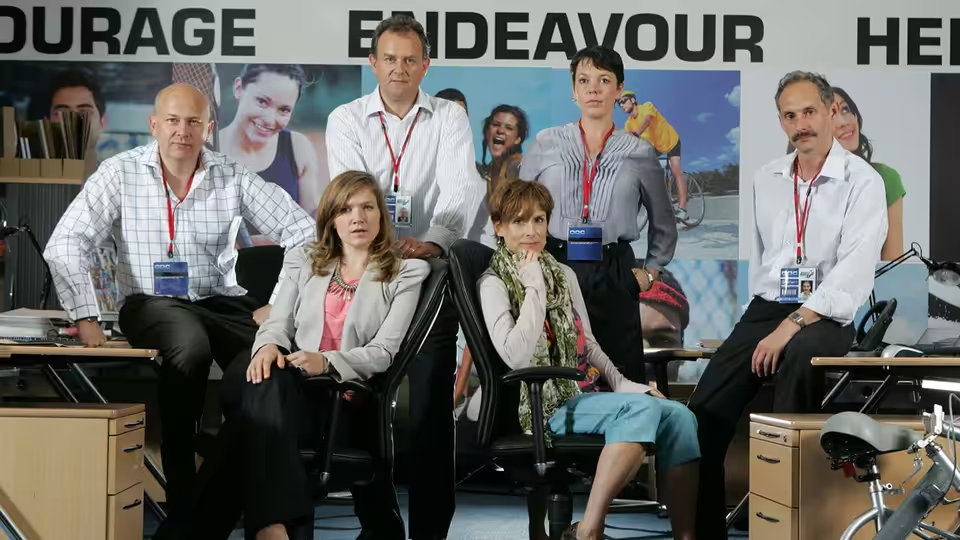
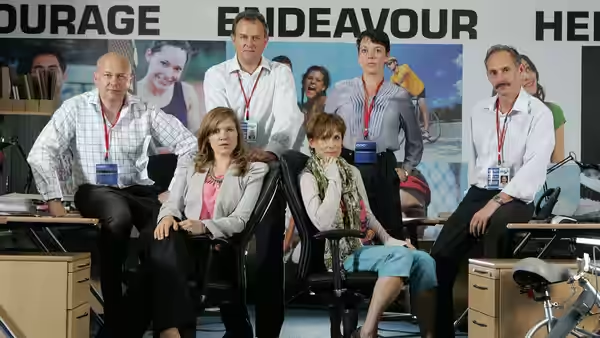
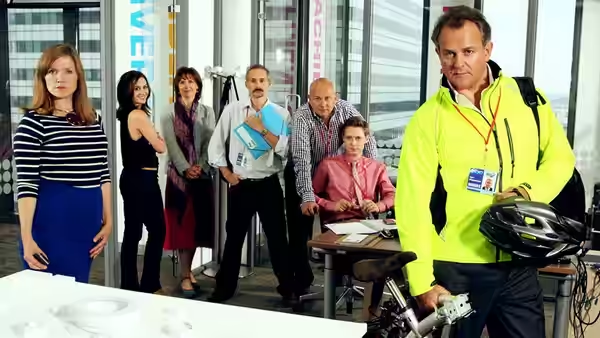
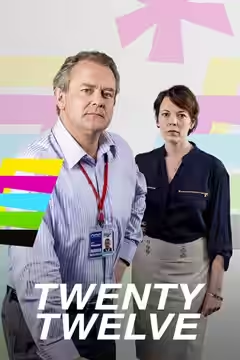
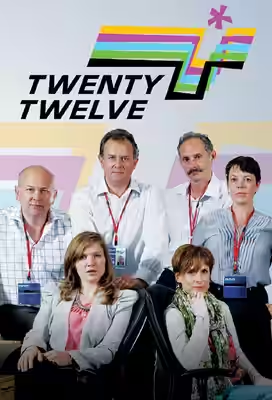
John Morton’s Twenty Twelve is a good workplace comedy with an exact ear for people talking themselves away from a decision. Its forgiving view of the committee helps the performances, but sometimes softens the jokes.
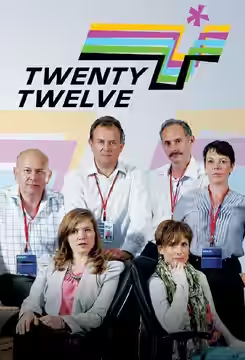
Twenty Twelve has a subject well suited to dry comedy: the committee charged with Olympic preparations. There is important work to do, which makes every discussion about how to discuss it a little more exasperating. We recommend it for the dialogue and the cast, with one reservation: the people responsible are often let off rather easily. It is good company, though anyone hoping for a sustained attack on institutional incompetence should lower their expectations.
As writer and director, John Morton is interested in the capable person having a bad professional day. This is a useful choice for a workplace comedy, where making everyone hopeless can soon become tiresome. Here, competing responsibilities and the difficulty of agreeing on terms are enough to occupy intelligent people unproductively. The dialogue makes those discussions recognisable without requiring any specialist interest in sport.
Jessica Hynes, as Siobhan Sharpe, is particularly good at making public relations language sound convincing until we try to work out what it means. The confidence matters: hesitation would suggest that she can hear the problem herself. We keep waiting for a usable answer, and the language keeps providing another reason to continue the conversation. Her baffling PR-speak is the clearest example of how carefully the programme listens to professional language.
The debate about legacy and sustainability is a particularly well-chosen piece of bureaucracy. We laughed because the care spent distinguishing the terms is so recognisable: people can turn choosing the right word into an obstacle to doing anything. The joke has room for a real disagreement, which makes it sharper than a simple complaint about jargon. Each position can sound reasonable, and the discussion can still be absurd.
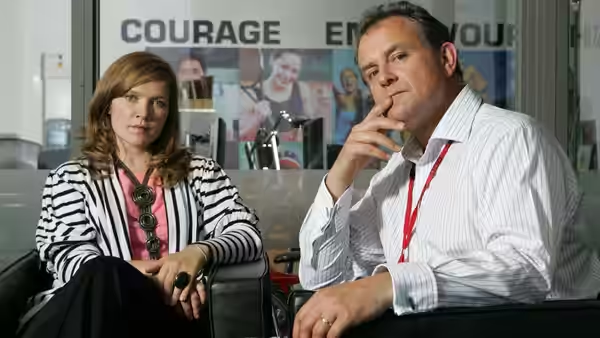
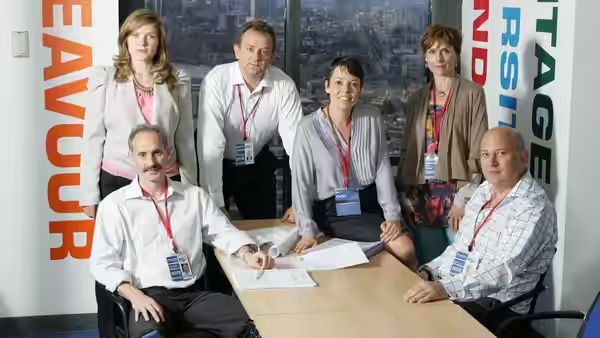
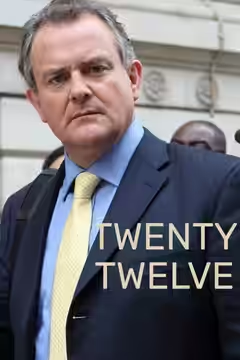
Hugh Bonneville as Ian Fletcher and Olivia Colman as Sally Owen help keep the committee’s difficulties worth caring about. The ensemble gives us people worth spending time with, rather than a procession of incompetents introduced solely to delay the next decision. This matters in a series built around an organising committee: contempt would soon make another crisis hard to care about. David Tennant’s narration is part of that restraint: the joke is funnier when the voice describing the committee does not sound astonished by it.
The cost of that generosity is a certain mildness. The writing sometimes seems satisfied that we have recognised a familiar evasion, when recognition alone does not supply much of a laugh. John Morton has a fine ear for the sentence that explains nothing; he is less consistently ruthless about the consequences of speaking that way. For a comedy about an organisation with so much to get done, it can leave us surprisingly untroubled by the failure to make progress.
The 30-minute running time suits this level of irritation. We would start with an episode rather than treating the series as a long sitting; repeated evasions are easier to enjoy in small doses. There is enough wit here to make us want another encounter with the committee, though not necessarily straight away. If the day has already contained one meeting too many, we would leave it for another evening.