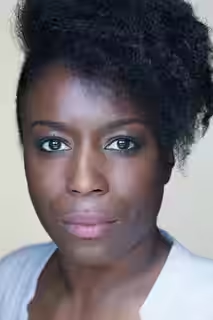
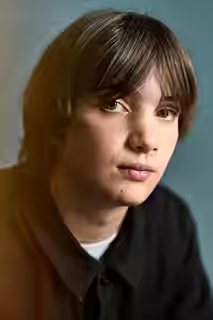
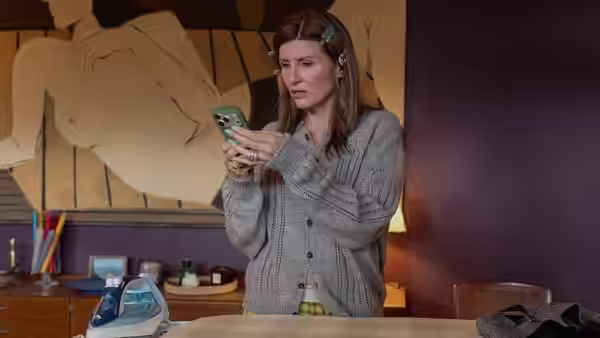
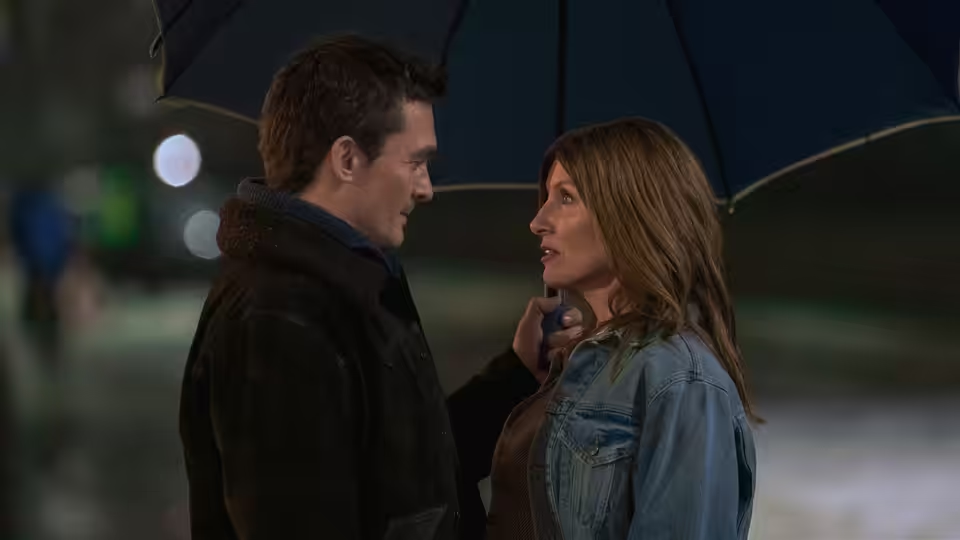
Sharon Horgan and Rupert Friend stand close under a blue umbrella at night
Series review

Youth

2026 · Created by Sharon Horgan · Series

In a sentenceSharon Horgan hits fifty and her body files a formal complaint; the series is the appeal

Sharon Horgan plays a woman arriving at fifty with her life more or less intact and her body no longer taking instructions. The eight episodes follow her through the physical business of menopause, a job that still expects things of her, a family with its own opinions, and a romantic life she keeps restarting without a plan. Horgan created the series and writes herself a woman who knows exactly how badly she is behaving and does it anyway. Rupert Friend, Sharlene Whyte, Aran Murphy and Robbie Gee are the people in her orbit, some of them helping and some of them not. The tagline is “Not wasted yet”, and the first episodes set out to test whether that is true.

Plays from YouTube when you press play; nothing loads from them until then.

Fi1m review

Sharon Horgan turns the menopause into a comedy of bad decisions and has the nerve to play it without asking for sympathy. It is funny, honest about the body and slighter about the heart, and it is best when she is on screen, which is most of the time.

Sharon Horgan has spent twenty years writing women who make poor decisions in full knowledge that they are poor. Pulling did it in a flat share, Catastrophe did it in a marriage, Bad Sisters did it with a corpse. Youth, which she created and leads, gives her the subject those shows were circling all along: a woman at fifty whose body has stopped cooperating and whose judgement was never much good to begin with. It is good, often funny, and worth your evening if you have ever been fifty or worried about becoming it. It is also lighter than it looks, and we will come to that.

The pitch is the tagline, “Not wasted yet”, and the series takes it as a dare. Horgan’s woman is not in crisis in the way television usually means it. Nobody has died and nobody has left. What has happened is smaller and less dignified: her body has started doing things at inconvenient moments, her work still expects her to turn up sharp, her family has views, and she has decided, against most of the evidence, that romance is still available to her. The show treats each of these as a comic problem first and a sad one second, which is the right order.

Horgan the performer is the reason it works. She has always been good at playing intelligence badly applied, and here she plays a woman who can see her own mistakes coming and makes them anyway, out of appetite. She does not soften the physical stuff. She lets a joke about her own body run on past the laugh, until it stops being a joke and becomes a fact she has to live with, and then she moves on without comment. We laughed more than we had expected to, and then, once or twice, we went quiet, because the show had not cut away when we assumed it would. That is the honesty the reviews so far have praised, and they are right about it.

Rupert Friend, Sharlene Whyte, Aran Murphy and Robbie Gee are around her, and the writing is generous to them without ever being about them. This is a one-woman show with company, and it knows it. The supporting parts are drawn well enough that you would happily spend more time with any of them, and thinly enough that you rarely do. Friend in particular is used sparingly, and the series is slightly better when he is in it than when he is not.

The weakness is that the romantic flailing, which is the spine the series has chosen for itself, is the least interesting thing in it. The scenes about work and about the body have something to tell you that television has mostly avoided. The scenes about dating tell you things you have heard before, and Horgan knows it; she plays them quickly, as if slightly embarrassed to be there. The result is a series that is easy to like and easy to put down. Eight episodes go past briskly, and a few of them leave nothing behind. Most critics have called it breezy as a compliment. We would call it breezy and mean it both ways.

Set against Horgan’s own work, it sits below Catastrophe, which had Rob Delaney across the table to argue with. Here she is arguing with herself, and she wins too easily. It is warmer than Pulling and less ambitious than Bad Sisters, and it has something neither of those had, which is a subject that most of its audience is going through or dreading and that television has treated, until recently, as a punchline for other people.

Watch it two episodes at a time, with someone who is either your age or frightened of it. Do not expect it to stay with you long. Expect to laugh, and to recognise a good deal more than is comfortable.

Critical consensus AI synthesised

83
Positive
8
Mixed
0
Negative
0

All eight reviews are positive, and the praise gathers around Sharon Horgan. Critics find the series sharply funny and unusually frank about menopause, sex in one’s fifties, divorce and the years spent caring for both a teenager and ageing parents. Several read it as a coming-of-age story for a woman of 50, and most credit Horgan’s writing and screen presence for keeping the indignities sympathetic rather than cruel. The Times places it as the third part of a loose run that began with Pulling and Catastrophe.

The spread is narrow, from the mid-70s to 90, and nobody dislikes it. Reservations are mild. IndieWire finds the premise familiar and says the specific insights and steady laughs are what carry it; Variety calls it light and breezy, which reads as a limit as much as a compliment. Radio Times, the lowest, still calls it agonisingly honest. The AV Club’s grade rests on the premiere alone, so its warmth comes with a caveat about how much has been seen.

The Guardian
19 September 2026
90*

The review finds Sharon Horgan’s dramedy utterly hilarious and acutely observed as it lays bare the perils of ageing and the horrors of post-divorce dating at 50. It singles out the show’s mordantly funny, vérité take on caregiving, family dynamics and sex in middle age for particular praise.

Read the full review →
The Hollywood Reporter
18 September 2026 · Angie Han
85*

The critic calls it a fun, frisky, bracingly honest portrait of midlife, singling out Horgan's unsparing honesty and wit in depicting the physical and emotional challenges of aging alongside a woman's uncertain flailing.

Read the full review →
The Times
21 September 2026
85*

The review calls Horgan’s comedy filthy, truthful and very funny as she tackles menopause, ageing parents, a truculent teenager and sex in her fifties. It positions the series as the next instalment in her loose trilogy after Pulling and Catastrophe.

Read the full review →
Vulture
18 September 2026
85*

The review portrays Youth as a funny coming-of-age tale for 50-somethings, balancing humor and tenderness toward its flawed protagonist as she navigates menopause, family, work, and romance. It succeeds as an unflinching menopausal bildungsroman that sees youth as both desirable and burdensome.

Read the full review →
The AV Club
20 September 2026 · B+ · Danette Chavez
83

The critic finds the series premiere bawdy fun and witty, praising Horgan's skill in introducing relatable characters and exploring middle-age indignities with sympathy and insight. It singles out the honest, feminine perspective on sex and aging for praise.

Read the full review →
IndieWire
18 September 2026 · Ben Travers
80*

The critic finds Sharon Horgan's return to HBO with this mid-life comedy familiar in premise yet refreshing due to its specific insights, strong performances, and steady laughs. It explores what one must sacrifice with age while affirming fun as a fundamental right.

Read the full review →

Straight answers AI written, from our review

Is Youth worth watching?
Youth is worth watching for anyone who has been fifty or is worried about becoming it, and we scored it 76. Sharon Horgan turns the menopause into a comedy of bad decisions and plays it without asking for sympathy, and the scenes about work and the body are honest in ways television has mostly avoided. The romantic strand is the weakest part, and the eight episodes pass briskly without staying long.
Where can I watch Youth in New Zealand?
Youth is not on any streaming or rental service in New Zealand at the moment. Availability is checked daily.
How violent or frightening is Youth, and is it suitable for children?
Youth has no violence to speak of and nothing frightening; it is an adult comedy about a woman's body and behaviour at fifty. The US TV-MA rating points to frank talk about menopause, sex and bad decisions rather than anything alarming. It is not made for children and would bore them; teenagers may find it uncomfortable rather than upsetting.
How does Youth compare to Somebody Somewhere?
Youth is the brisker, funnier and slighter of the two; Somebody Somewhere is the better series and the one that stays with you. Horgan's show is a one-woman comedy about the body at fifty that treats its problems as jokes first, while Everett's is slower, almost without plot, and about grief and friendship in a Kansas town. Choose Youth for laughs across an evening and Somebody Somewhere if you want to be moved.

Cast

If you liked this, try…

  1. Catastrophe (2015) · not reviewed yetHorgan and Rob Delaney fall into a marriage; the sharpest thing she has written.

  2. Gloria (2013) · not reviewed yetA Chilean woman in her late fifties goes dancing and refuses to be pitied.

  3. Better Things (2016) · not reviewed yetPamela Adlon raising three daughters alone, funny and unbothered about being liked.

  4. Mum (2016) · not reviewed yetLesley Manville widowed in suburbia; quiet, kind and quietly savage about relatives.

  5. Somebody Somewhere (2022, Fi1m 85)Bridget Everett stuck in Kansas at midlife, finding people worth staying for.

Free account

Know what to watch tonight

Two lists that know where things are streaming, collections you can share, your own score beside ours, and Discover that remembers what you have seen.

  • Want to see, sorted by what is streaming now
  • Seen, with your score out of ten
  • No adverts, ever