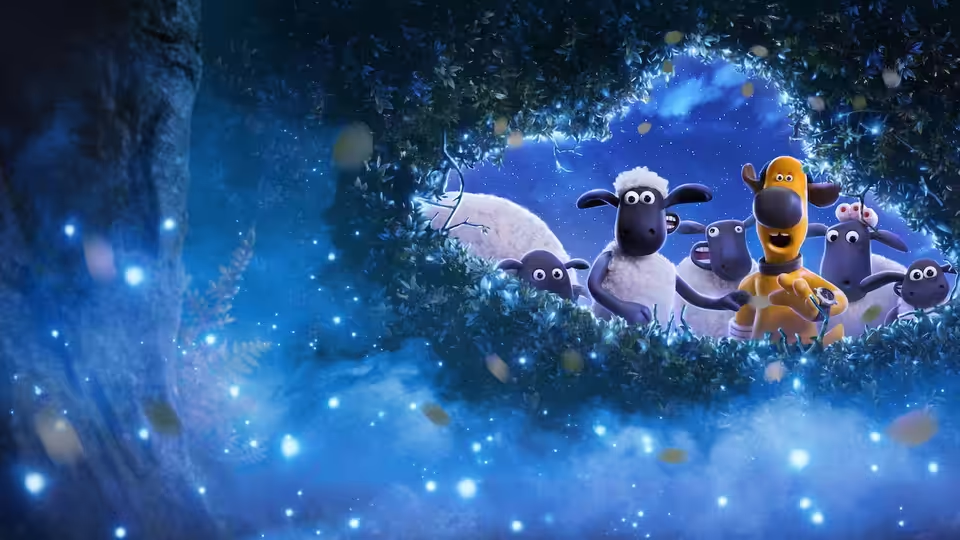
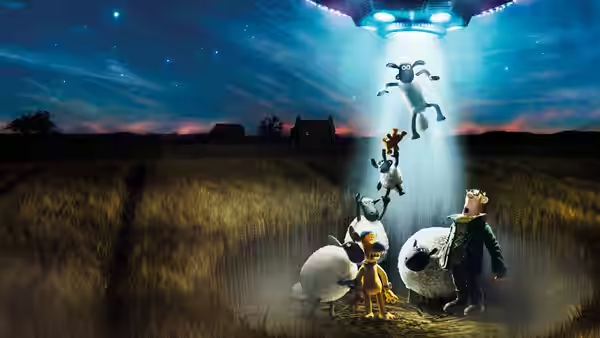
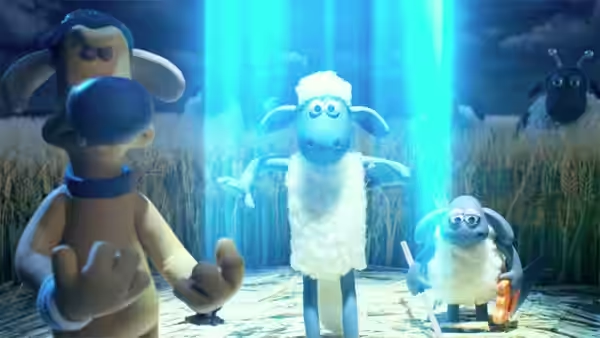
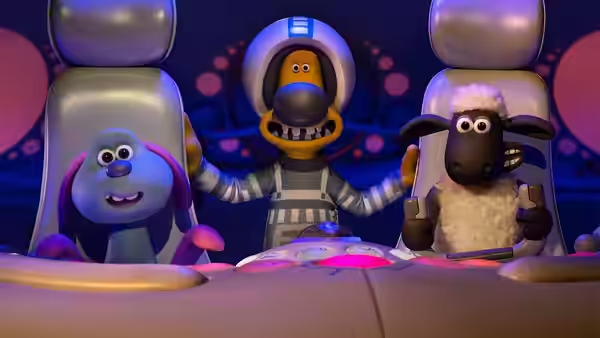
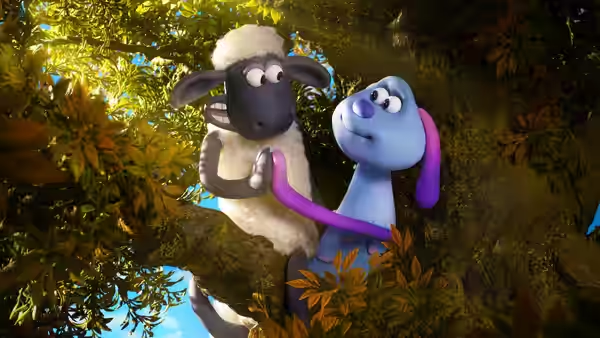
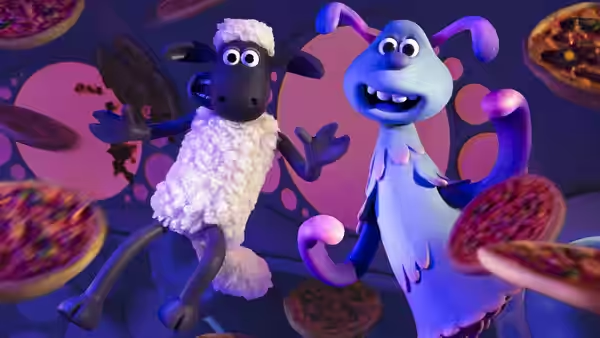
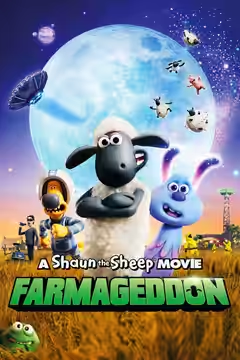
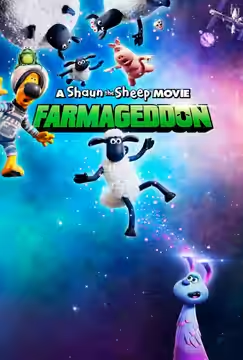
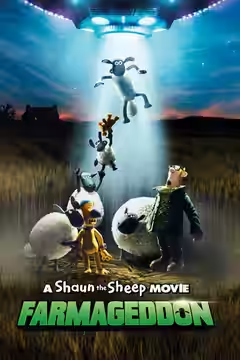
Will Becher and Richard Phelan’s sheep-and-alien adventure is funny, gentle and carefully made. The science-fiction story is familiar and the songs sometimes intrude, but the incidental jokes make this an easy family recommendation.
Will Becher and Richard Phelan make A Shaun the Sheep Movie: Farmageddon a funny, kindly family adventure, with enough care in the small jokes to justify the familiar science-fiction story. We recommend it, provided a fresh plot is not the evening’s main requirement. The pleasure is in watching stop-motion characters get a laugh without stopping to explain themselves. The farmyard business remains the strongest material, even when the film offers a larger adventure. At 87 minutes, it has the good sense not to make too much of the occasion.
The wordless storytelling gives the performers an unusual job. Justin Fletcher’s Shaun and Amalia Vitale’s Lu-La have to be understood through sounds and movement, with John Sparkes voicing both the Farmer and Bitzer. The vocal performances leave room for the animation, rather than trying to do all the work themselves. We laughed most at the small background gags, because the film lets us notice them without pausing the main action to demand applause. That restraint makes it worth looking around the frame instead of simply waiting for the next large mishap.
Charles Copping’s cinematography makes the stop-motion figures feel solid and keeps their movements easy to read. Matt Perry’s production design rewards attention to the surroundings, where incidental jokes can compete with the main business. The handmade detail matters because it makes this unlikely company feel settled in a shared place. There is enough to look at without the frame becoming exhausting, and enough space for a small movement to register. The science-fiction material receives the same care, though the farm has more personality.
Sim Evan-Jones’s editing gives the slapstick time to register before moving on, and the jokes benefit from that patience. Physical comedy needs us to understand what is happening, then gives us a moment to anticipate the trouble. Here, the cutting generally respects both steps, which helps keep the action accessible without making it sluggish. Tom Howe supplies the score, but the pop-song passages are less welcome: the montages briefly replace comic development with a ready-made burst of cheer. The film is cheerful enough without being prompted by a song.
Mark Burton and Jon Brown’s screenplay is less persuasive when it leans on familiar science-fiction references. Recognising a borrowed idea provides a small pleasure, but it does not necessarily produce a joke, and some of these nods feel easier than the farmyard comedy. Lu-La is appealing company without becoming a particularly substantial character. That limits how much feeling the adventure can gather around her, even when the animation is working hard. The story stays pleasant and predictable, with the finer invention happening in the incidental business.
Against the usual demands of a family comedy, the film gets the important things right: clear action, distinct personalities and enough visual humour to work across ages. It is particularly good at allowing adults and children to enjoy the same joke, rather than alternating between audiences. The gentle tone leaves plenty of room for silliness. We would choose it for a shared evening when nobody wants a film that talks at them. Keep an eye on the background.