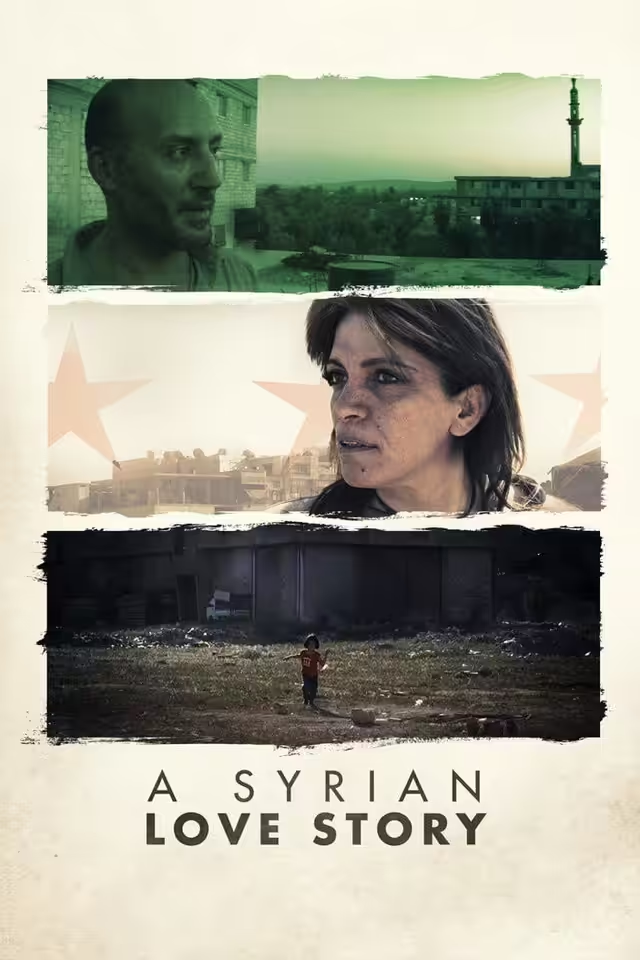
Sean McAllister’s intimate documentary makes the strain on a marriage painfully clear amid Syria’s political upheaval. Its technical roughness can frustrate, but the family matters far beyond its usefulness in explaining the news.
Sean McAllister’s A Syrian Love Story is a moving documentary with a rough finish, and we recommend it with that reservation. It follows a family whose marriage is strained by Syria’s political upheaval. The director gives private unhappiness enough attention to make it matter in its own right, even when events outside the family might seem to dwarf it. That closeness is the film’s principal strength.
Calling this a love story is useful. It asks us to approach a politically charged subject through a relationship, with all the awkward expectations that the word love carries. We look for tenderness, mutual understanding and some evidence that two people can protect each other. A marriage under political pressure complicates those hopes, and the title gives that difficulty an immediate human meaning without requiring any knowledge of the country’s history.
We found the strain on the marriage upsetting. It is the proximity to private unhappiness that does it: the political struggle keeps its scale, but we are asked to care about damage within one relationship as well. The film allows both to matter. Its emotional candour gives the personal story weight, and makes the effects of political upheaval harder to consider at a comfortable distance.
The technical roughness is harder to defend. A documentary can earn considerable patience through the value of what it records, but weaknesses in its execution still affect how readily we can settle into it. The finish asks for allowances that the family story should not have to earn. We can accept those shortcomings without pretending they are a virtue, or that a more polished film would necessarily have been less truthful.
The closeness also raises a question about our place as spectators. Intimate family documentaries invite us into troubles we would usually have the decency to leave alone, and political importance does not automatically make that invitation comfortable. Here, the value lies in allowing the marriage its own seriousness, rather than treating it as a useful human detail in a larger account of Syria. That is a persuasive reason to keep watching, though the discomfort remains.
Terence Dunn provides the music, and Elhum Shakerifar is the producer. The decisive contribution is the director’s access to the family and his willingness to let their relationship carry so much of the film. At 76 minutes, it has limited room for a comprehensive explanation of a country’s politics. Approached as a family documentary, it gives the personal consequences of those politics the attention they deserve.
Choose it for an evening when there is time to give the family proper attention. It is a poor candidate for distracted viewing, or for a discussion conducted entirely in the language of political positions. Leave time afterwards to talk; agreeing about the politics may be the easier part.