Terry Jones’s science-fiction comedy gives Simon Pegg plenty of work and too little worth doing. A willing cast cannot rescue the laboured jokes, though Robin Williams lends Dennis the Dog some welcome warmth.
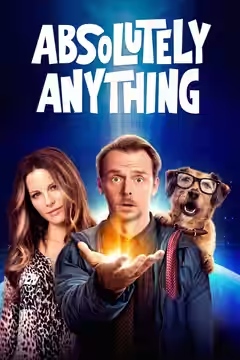
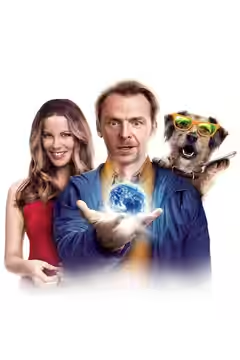
Absolutely Anything is a poor comedy with enough talent involved to make its failure particularly dispiriting. Terry Jones directs and shares the screenplay credit with Gavin Scott, but the jokes have the unfinished feel of suggestions waiting for somebody to improve them. We were bored, and then sorry for Simon Pegg, because his comic effort so often goes towards making weak material merely playable. A science-fiction comedy ought to give its performers more opportunities to surprise us.
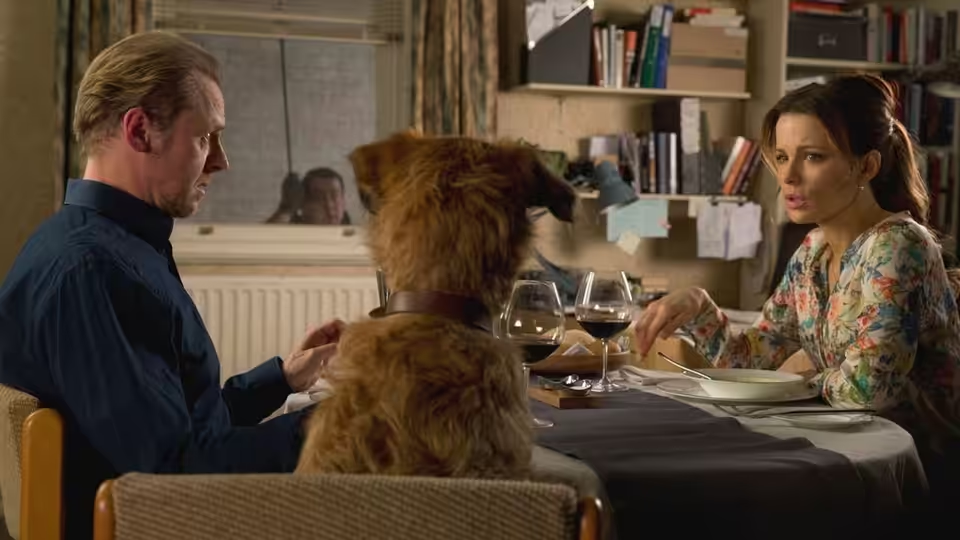
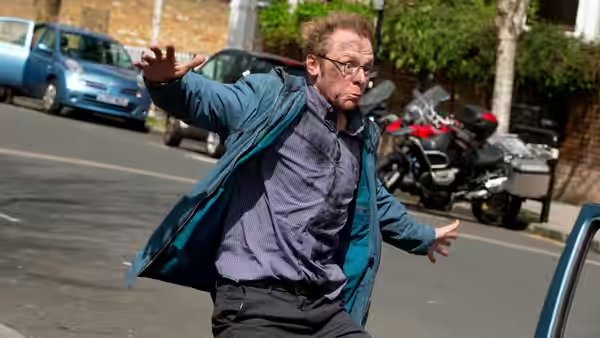
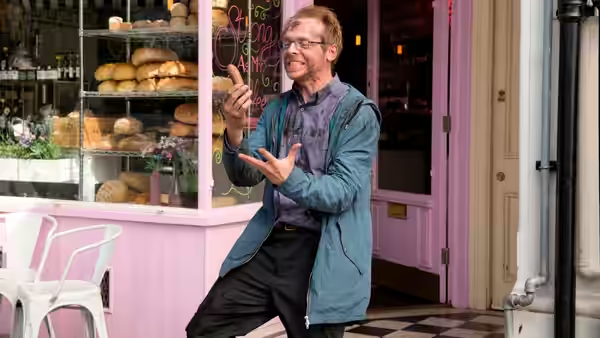
Pegg plays Neil with a willingness that keeps the film from becoming wholly disagreeable. He can make foolishness appealing, and he gives us somebody to follow even when there is little reason to care where the writing takes him. Yet the performance keeps drawing attention to how much work a capable comic actor can do without actually being given a good joke. Too often, we found ourselves noticing his effort while waiting for something to laugh at.
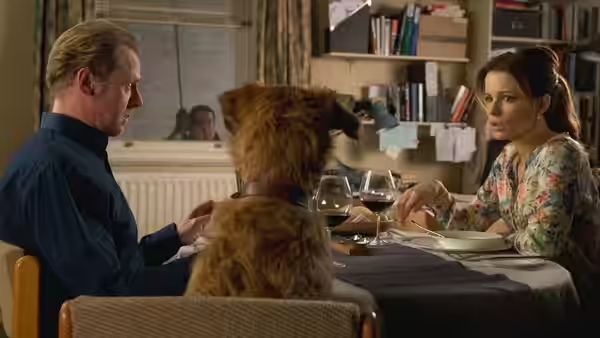
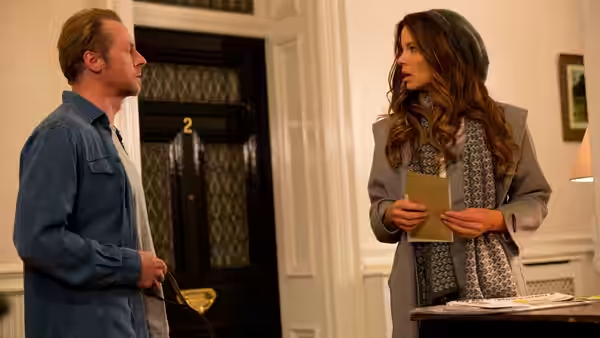
The supporting cast makes that shortage harder to excuse. Kate Beckinsale as Catherine, Sanjeev Bhaskar as Ray and Rob Riggle as Grant offer ample opportunity for different comic temperaments, yet the writing does too little with them. Suzy Eddie Izzard’s Headmaster and Joanna Lumley’s Fenella add to the impression of capable people being invited in without enough thought about what they might contribute. Jones and Scott seem to count on our pleasure at recognising the performers, which does not last long enough.
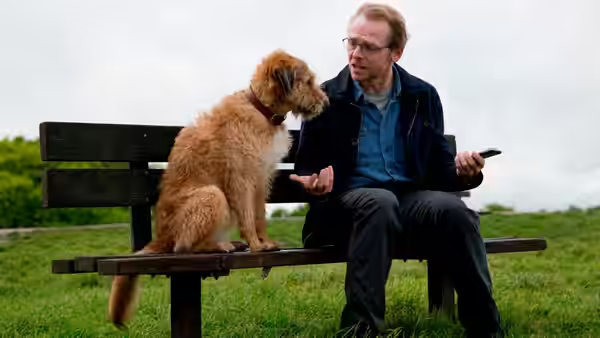
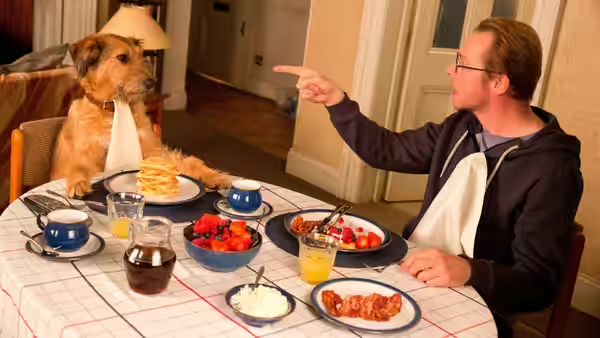
Dennis the Dog fares better, with Mojo on screen and Robin Williams supplying the voice. There is warmth in Williams’s contribution, and his vocal performance sounds less strained than much of the comedy around it. We were grateful for that ease, although gratitude is a modest response to somebody employed to make us laugh. Dennis provides some relief without being funny enough to justify the rest of the film.
Peter Hannan’s cinematography and James Acheson’s production design give the performers little visual assistance. The images are seldom funny in themselves, leaving the dialogue and performances to do almost everything. Julian Rodd’s editing cannot give the jokes the snap that Jones and Scott’s screenplay lacks, and the stretches between laughs become wearing. George Fenton’s music does not make the comedy feel much lighter, either; the film needs better reasons for its cheerfulness.
The running time is at least a kindness: this lasts 85 minutes. But brevity does not excuse jokes that arrive already worn out, and the film never seems demanding enough of its own comic ideas. Fantasy comedy can be untidy, foolish and unashamedly childish, provided the foolishness produces a laugh. Here there is too much waiting for the next one, with too little invention to make the waiting interesting.
Most critics have been unpersuaded, and we share that judgement. Pegg’s performance makes a degree of forgiveness understandable, but the script keeps asking for more of it. Admirers of the cast may find enough pleasure in their company to tolerate the material. Anyone simply looking for a funny film should choose another comedy.