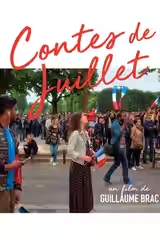
Guillaume Brac’s summer road comedy is funny, kind and easy to like, with three young leads who never play to the camera. It is also slight, and in its last half hour it drifts where it should be heading somewhere.
Guillaume Brac’s film, which he wrote with Catherine Paillé, is a summer holiday comedy that spends most of its time in a car and a tent. Félix (Éric Nantchouang) has met a girl called Alma (Asma Messaoudene) at a dance by the Seine, spent one night with her, and decided, when she leaves for a family holiday in the south, that he should follow. His friend Chérif (Salif Cissé) comes along because Félix asks him to. It is a small film, funny and kind, and we recommend it. It is also slight, and it knows it, and in the last half hour it stops chasing anything at all.
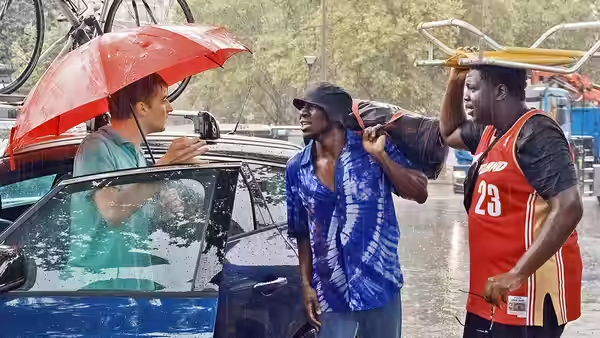
The ride they book is with Édouard (Édouard Sulpice), a nervous young man driving his mother’s car, who has not been told the whole plan and whose mother (Marie Anne Guerin, a voice on the phone) keeps ringing to ask about the bodywork. Sulpice is the reason the film is a comedy rather than a mood. He plays Édouard as somebody who has done everything right and cannot understand why it has landed him at a campsite with two strangers who find him ridiculous. We laughed out loud, more than once, and most of it was at his face when the engine makes a noise it should not.
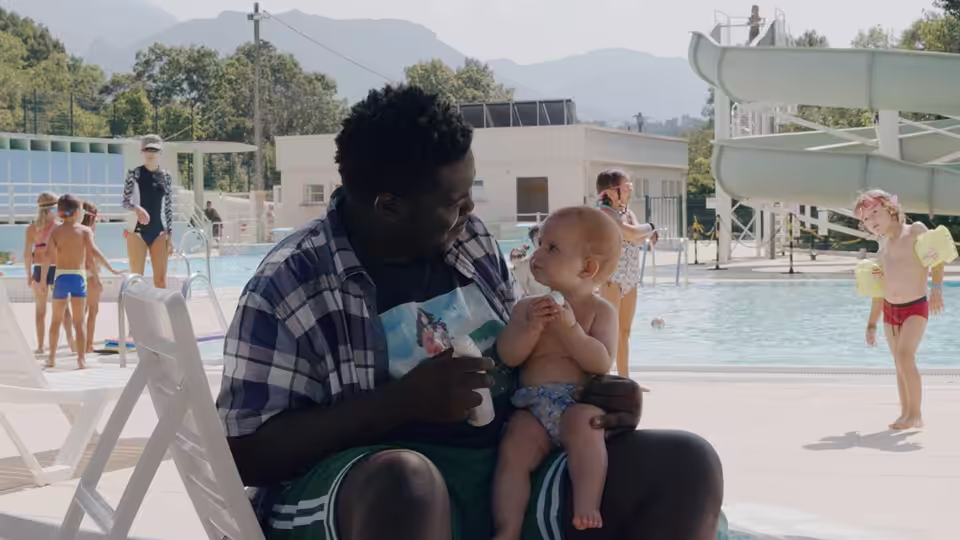
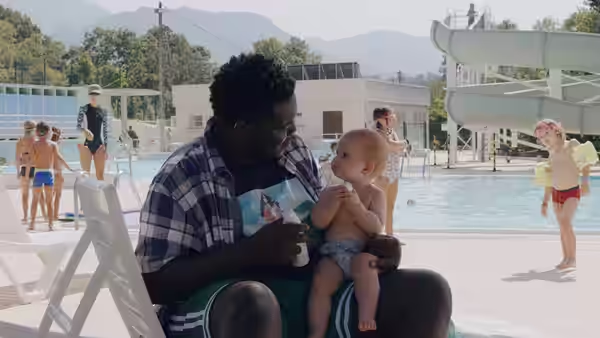
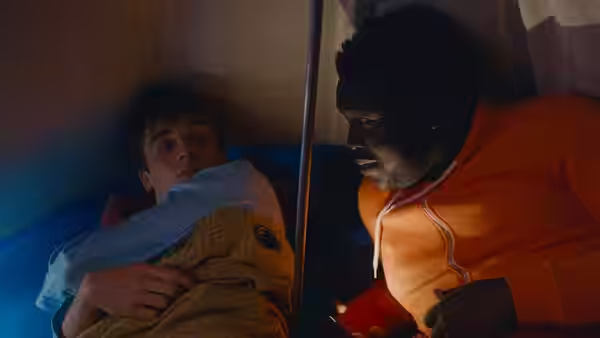
Nantchouang and Cissé are less showy and just as good. Félix is all forward motion, charming, sure that a girl who liked him for a night will like him for a fortnight, and Nantchouang lets you see the moment he starts to doubt it and keeps talking anyway. Chérif is the one who notices other people. Cissé gives him a slow, watchful ease, and his scenes with Héléna (Ana Blagojević), a mother with a small child at the campsite, are the gentlest in the film. Nobody in it is acting for the camera, and most of the faces were new to us.
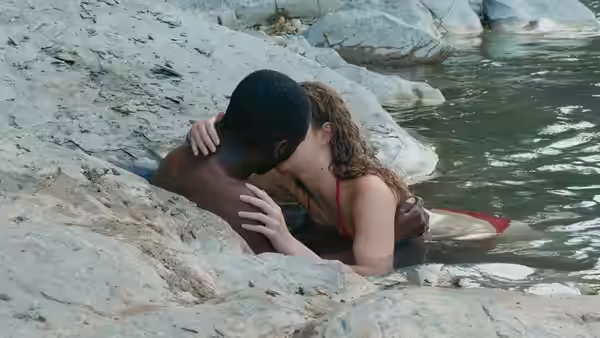
Alan Guichaoua shoots it in daylight, handheld, and lets the sun be too bright. Skin shines, the river is green, the campsite is dust and canvas and plastic chairs. Marine Galliano’s production design is mostly a matter of knowing which tent, which cooler and which awning a family like Alma’s would own, and getting them right. Héloïse Pelloquet cuts scenes before they finish, so a conversation ends on someone looking away rather than on the line that would explain it. At 95 minutes the film is the right length for what it has, which is not always true of films this relaxed.
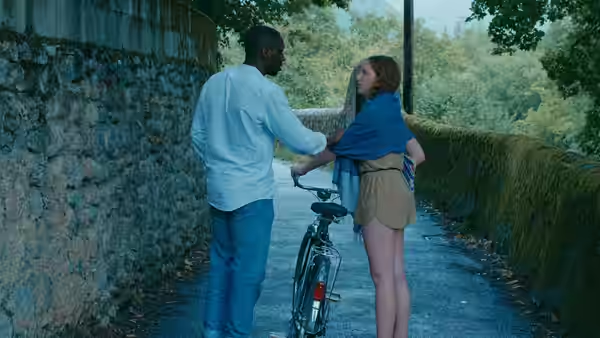
The scene that got at us comes early, and it is not a joke. Félix finds Alma, and her face when she sees him tells him what he has done. Brac does not punish him for it and does not let him off either. Messaoudene plays the moment without a raised voice, and Nantchouang takes it standing up. We felt for him more than we thought the film had earned, and then realised it had been earning it since the dance.
The trouble is that once that is settled the film has nowhere in particular to go, and it goes there slowly. The middle stretch is a series of afternoons, each pleasant, none necessary. The adults at the campsite are sketches, and a thread involving Héléna’s life outside the holiday is set up with some care and then put down. The last movement reaches for a feeling about summer ending that it has not quite built, and Pelloquet’s cutting, so brisk earlier, lets scenes sit and look wistful.
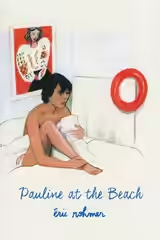
Everyone who has written about the film has mentioned Éric Rohmer, and they are right to, up to a point: the talk, the water, the young people deciding what they are owed. Rohmer’s people were cruel to each other in complete sentences. Brac’s are kind and a little vague, and the film is warmer and thinner for it. Most critics have placed it a few points above us; the middle third is where the difference lies.
Watch it on a warm night with the windows open. Do not wait for it to build to anything; it will not, and the afternoons are the point.