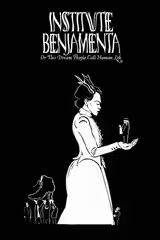
Guy Maddin’s second film is a fake antique: a war melodrama shot as if in 1928 and dubbed as if nobody had ever recorded a voice before. The joke is precise and often funny. It does not quite have 82 minutes in it.
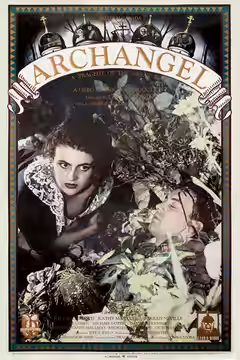
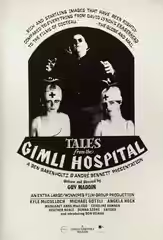
Guy Maddin’s second feature, after Tales from the Gimli Hospital (1988), is a war film made to look as if it had been found in a cellar. It is set in Archangel in 1919, where Allied troops are still fighting the Bolsheviks months after the Armistice, and it is shot, cut and dubbed in imitation of a picture from the last years of silence, when studios were adding sound to films that had not been built for it. The imitation is precise and often funny. The film underneath it is thin, and 82 minutes is long enough for us to notice. It is worth an evening for anyone curious about how Maddin began; we would not press it on anyone else.
Lt. John Boles (Kyle McCulloch) arrives in the city with one leg and a grief he cannot put down. He is billeted with Danchuk (Sarah Neville), her husband Jannings (Michael Gottli), who hides from every fight, and their son Geza (David Falkenburg). At the hospital he meets Veronkha (Kathy Marykuca), a nurse with the face of the woman he lost, and her husband Philbin (Ari Cohen), a Belgian aviator who forgets he is married before the wedding night is over. Boles forgets things too. So does everyone. The script, by Maddin and George Toles from a story by John B. Harvie, treats forgetting as the local weather.
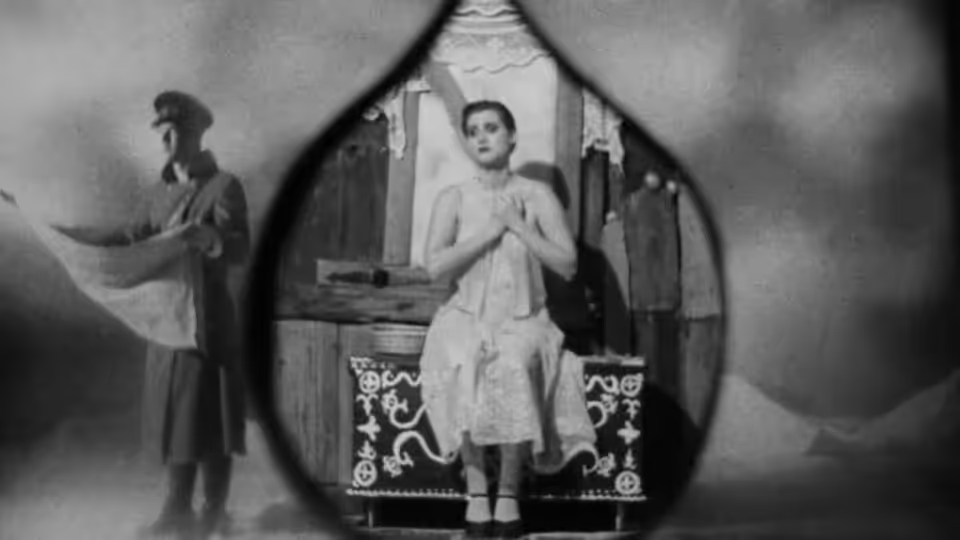
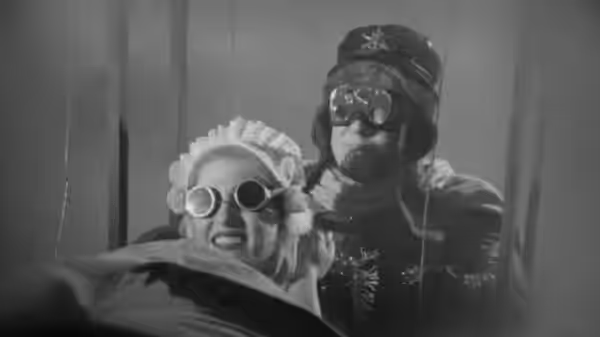
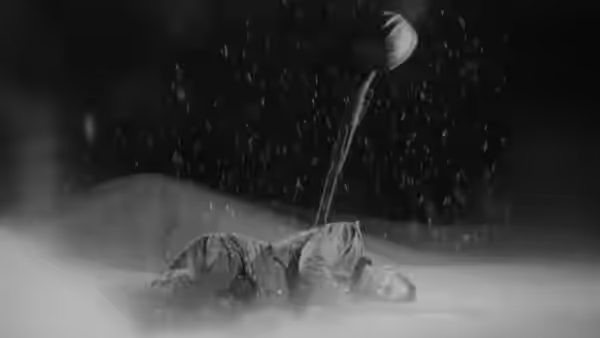
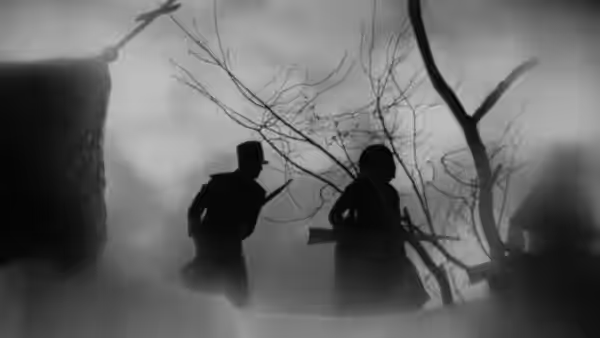
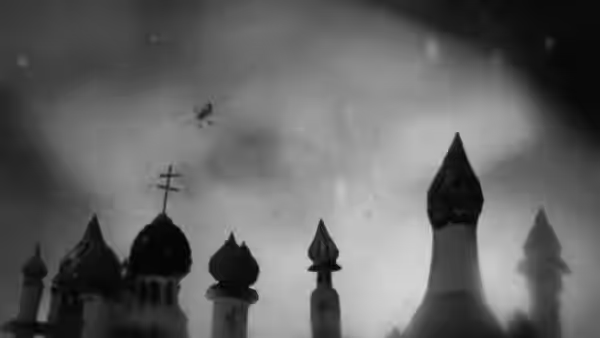
Dennis W. Smith builds the city out of painted sky, plaster and cardboard. The cannon look like stage cannon, the trenches look dug in a warehouse, and snow falls indoors as readily as out. Donna Szöke puts the men in greatcoats two sizes too large and the women in white so bright it burns on the film. Maddin, cutting his own footage, uses irises and fades and the occasional lurch that suggests a missing reel. The lens is smeared so faces glow and edges dissolve. It looks, at a glance, sixty years older than it is.
The sound is the best joke. Dialogue has been recorded flat and dropped in a beat late, so mouths finish before words do, and every line arrives with the hiss of a room nobody bothered to quiet. Actors speak the way people did when the microphone was new, slowly and towards it. McCulloch plays Boles with a stunned, upright blankness that is exactly right for the style and leaves us nothing to hold onto once the style has been established. Neville does better; her Danchuk wants the lieutenant and knows she is not allowed to, and she lets it show in small movements the soft focus nearly erases.
We laughed, properly, when Philbin was told for the second time that the woman in front of him was his wife. Not long after, the film cuts to a trench and shows us something done with a man’s insides that we will not describe, and the laugh stopped in our throat. For a minute Archangel is horrible and absurd at once, which is where Maddin wanted it all along. It does not stay there. The battles repeat, the amnesia repeats, and by the hour mark we were bored, and slightly cross about being bored by something so peculiar.
The trouble is that a melodrama needs someone to care about, and Maddin has emptied everyone out on purpose. Boles loves a dead woman, Veronkha loves nobody she can remember, Philbin cannot remember anyone. Geza is the only person on screen who wants something plainly, and Falkenburg plays him with a fierce little frown that is the film’s one warm spot. Michael O’Sullivan’s Doctor and Margaret Anne MacLeod’s Baba drift through with their own private confusions. Gottli’s Jannings, the coward, gets the sharpest scenes and the fewest of them.
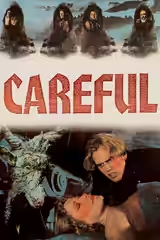
Against Maddin’s later work this is a sketch for a manner he would finish elsewhere; Careful (1992) uses the same fake-antique tools and remembers to build a story with them. Watch this one at home, late, with someone patient. It runs 82 minutes, which is the right length for the joke and still a little long for the film.