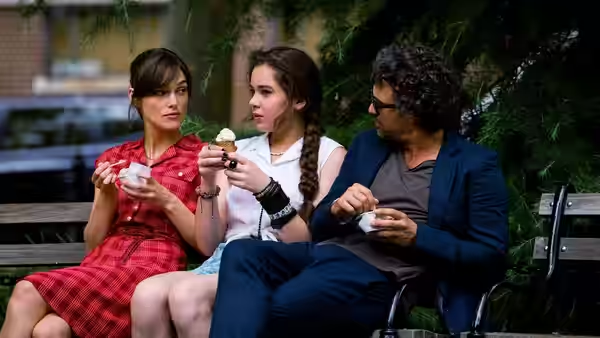
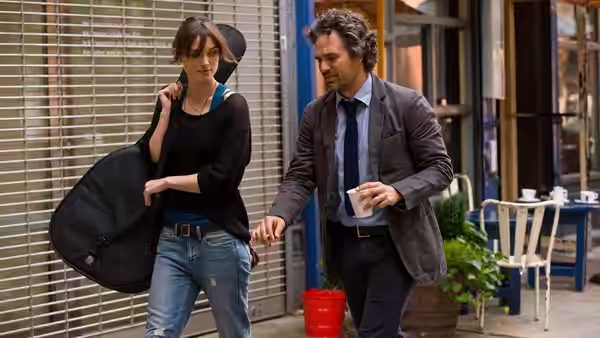
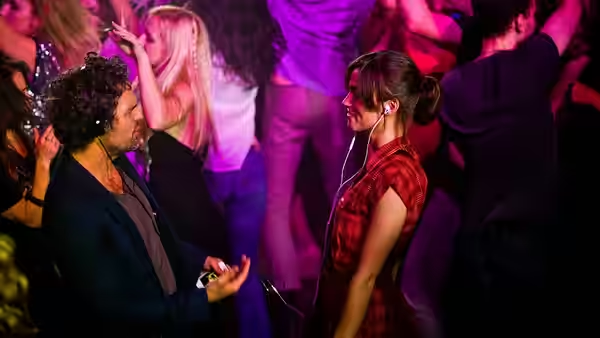
John Carney’s musical romance is worth an evening for Keira Knightley, Mark Ruffalo and the pleasure of hearing a song take shape. The music-business story is conveniently arranged, and the supposedly spontaneous recordings are a little too clean.
John Carney’s Begin Again is a pleasing musical romance, provided we do not ask too much of its account of the music business. It wants us to believe that making a record with other people can help put a life back in order. That is a modest hope, and the film gives it some substance whenever somebody starts playing. The conversations about careers and personal troubles are less persuasive.
Mark Ruffalo gives Dan Mulligan enough humour to make his sudden enthusiasm for a song convincing. In the tavern, he hears Gretta James’s song and imagines what a band could do with it; John Carney lets us hear that arrangement taking shape. We were moved by the simple fact that somebody was listening so closely. Andrew Marcus’s editing makes the imagined accompaniment easy to follow, keeping our attention on the singer as the sound grows around her.
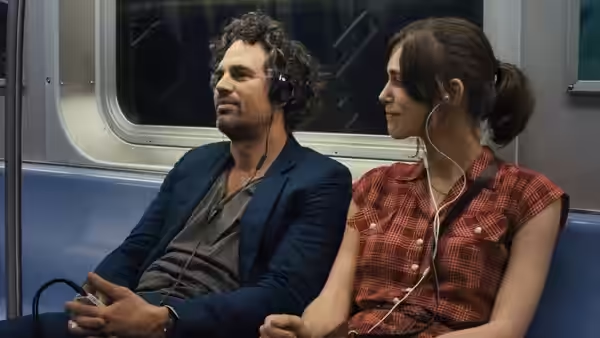
Keira Knightley’s light singing voice is well suited to performances that depend on somebody paying close attention. We like its lack of insistence: she lets a melody do its work without treating each phrase as an audition. The chemistry between Keira Knightley and Mark Ruffalo remains persuasive when the script arranges things too helpfully around them. They make the pleasure of finding somebody to work with seem sufficient reason to spend time together.
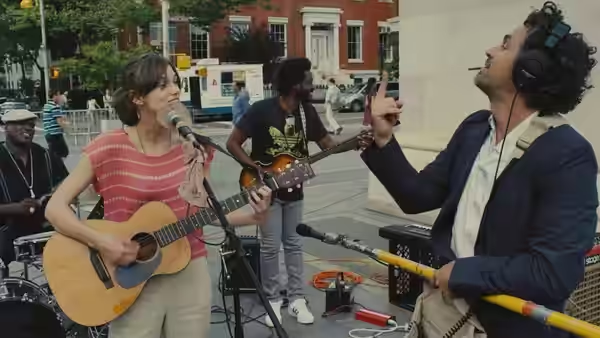
Yaron Orbach’s cinematography is at its most effective when it leaves room for the performers and the city around them. Chad Keith’s production design supports the informality: the tavern and the street settings give these songs somewhere ordinary to happen. There is a welcome lack of ceremony about people assembling to play. Yet the recordings sound so clean that the outdoor setting becomes hard to credit; we seldom hear much that could disrupt a recording.
Gregg Alexander’s music supplies catchy melodies, and there is pleasure in hearing the musicians find their way through them. The polish helps the film move easily, but it also limits how much these songs tell us about the people singing them. A story this interested in individual expression could have allowed a few awkward notes to survive. The smooth arrangements leave too little of the uncertainty that makes the tavern performance affecting.
John Carney’s script is less patient with the lives surrounding the central partnership. Personal difficulties are raised and tidied away too readily, and the supporting relationships can feel hurried. This is where the familiar second-chance story becomes too convenient. Still, the actors prevent most of the sweetness from becoming tiresome. We believe these people enjoy making music together, even when we doubt how neatly the rest of their lives can be made to fit.
A musical romance needs us to care about the people before it asks us to care about their songs. Begin Again gets that much right, and its central partnership remains enjoyable through the more routine stretches. Its good nature survives some convenient writing and an excess of polish. Choose it for an evening when some good company and a few songs will do.