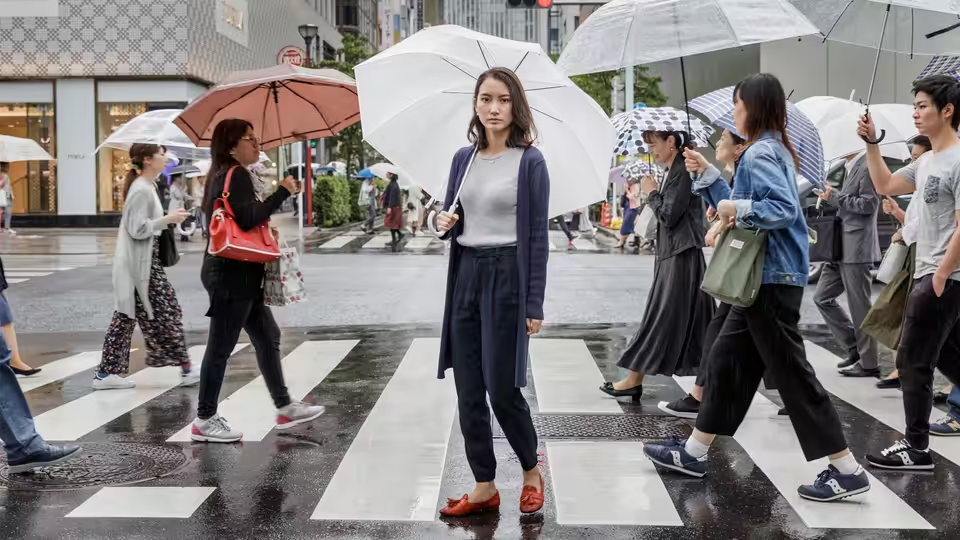
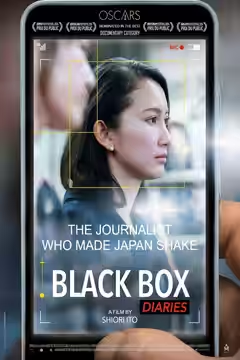
Black Box Diaries is a forceful, often upsetting documentary whose private recordings carry more weight than its investigative passages. Shiori Itō makes the personal cost of seeking justice painfully clear, even when the evidence needs fuller explanation.
Shiori Itō directs Black Box Diaries as she pursues legal recourse after being sexually assaulted. It is a forceful, distressing documentary, strongest when her private recordings show the strain of carrying on with that work. The investigation gives it a direction, but there is no suggestion that having something to do makes the days easy to bear. Being able to describe what happened and being able to live with it are different demands, and the film makes time for both.
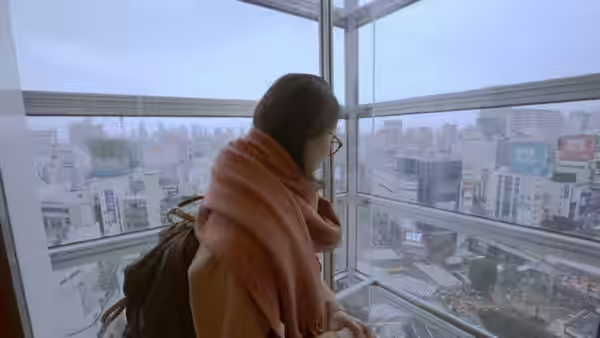
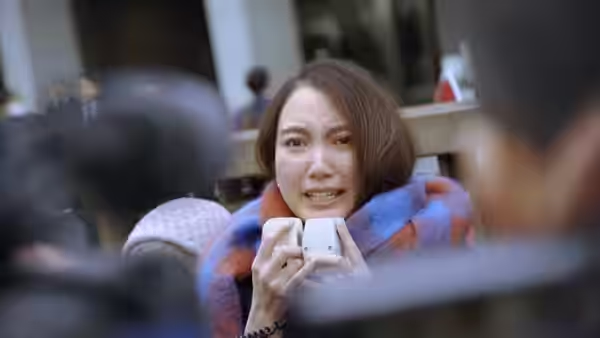
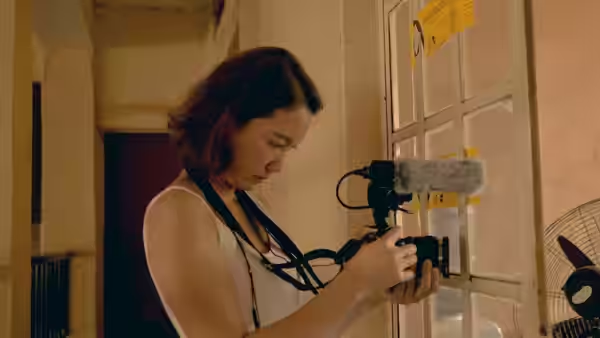
Shiori Itō, Yuta Okamura, Hanna Aqvilin and Yuichiro Otsuka share the cinematography credit, and the phone diaries provide the film’s most affecting images. Their directness matters: someone turns on a camera and tries to put her distress into words. We found these passages deeply upsetting, because the journalist gathering the evidence is also the person struggling with what it concerns. Speaking clearly does not make her seem any less hurt. Handwritten entries give that private record another form.
Ema Ryan Yamazaki edits the diaries together with the investigative material, allowing each to change how we understand the other. A development in the reporting has more weight when the film has also shown the effort of continuing to report. The moments with friends are welcome for a simpler reason: they allow Shiori Itō to have company without always having to explain herself. Those scenes give the film some warmth and a necessary change of pace.
The investigative passages are less assured, and occasionally their awkwardness gets in the way of their information. In particular, the hotel CCTV material needs a clearer account of how it was obtained. Asking for that explanation does not diminish the seriousness of the testimony; it is part of taking the reporting seriously. The film has earned enough attention by this point to stop and explain, even if that briefly interrupts its forward movement.
Mark De Gli Antoni supplies the music, though the voices in the diaries are what stay with us. We would judge a documentary like this partly by how much room it leaves for its subject to be tired, uncertain or simply among friends. On that measure, it succeeds. Shiori Itō is allowed to occupy the screen without every private moment having to prove her determination.
There is a difficulty in watching this kind of first-person film that should not be tidied away. Someone seeking to have her account heard has also made her pain available for scrutiny, and our attention can start to feel like another demand upon her. Black Box Diaries largely avoids treating the diary footage as proof of admirable endurance. The time spent on distress matters in itself, without requiring us to applaud the ability to carry on. The private recordings allow those feelings to remain difficult and unresolved within the individual scenes.
At 103 minutes, this is demanding viewing without being an endurance exercise. The gaps in the explanation of the evidence are a real limitation, but they do not undo the care taken with the person supplying it. See it for the diary footage, and leave time afterwards before putting something else on.