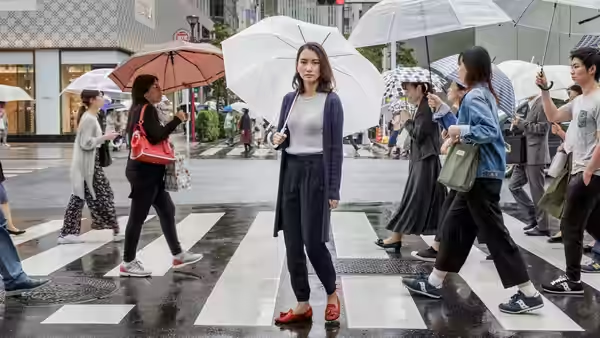
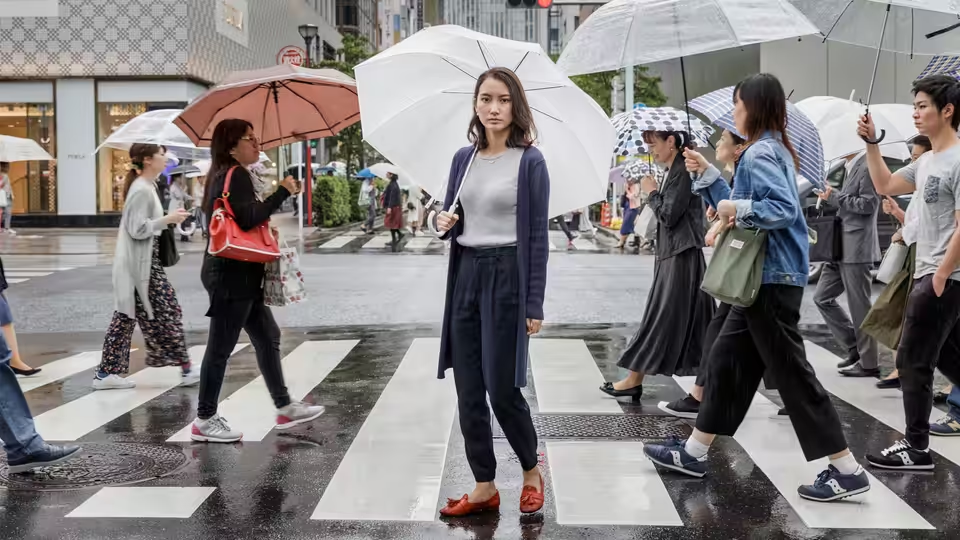
Shiori Itō stands beneath a white umbrella on a busy city crosswalk
Film review

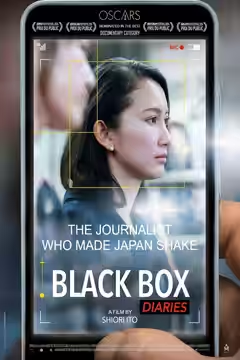
Black Box Diaries

2024 · Directed by Shiori Itō · 1h 43m

In a sentenceA journalist investigates her own assault, and the phone diaries are the part we cannot shake

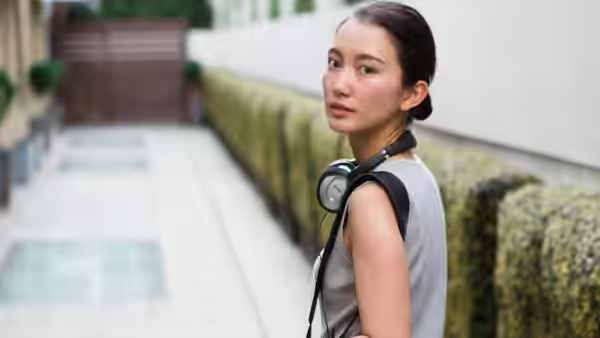
In Japan, journalist Shiori Itō turns the camera on her own attempt to seek justice after sexual assault. She records diary videos on her phone and pursues an investigation in which she is also the person whose account is being tested. Ema Ryan Yamazaki edits the diary footage and handwritten entries alongside investigative material, while Shinzo Abe appears in archive footage. Away from that work, moments with friends show the life continuing around it. She tries to make her account heard by institutions that have failed to protect her, while her private recordings show how she is coping.

Plays from YouTube when you press play; nothing loads from them until then.

Fi1m review

Black Box Diaries is a forceful, often upsetting documentary whose private recordings carry more weight than its investigative passages. Shiori Itō makes the personal cost of seeking justice painfully clear, even when the evidence needs fuller explanation.

Shiori Itō directs Black Box Diaries as she pursues legal recourse after being sexually assaulted. It is a forceful, distressing documentary, strongest when her private recordings show the strain of carrying on with that work. The investigation gives it a direction, but there is no suggestion that having something to do makes the days easy to bear. Being able to describe what happened and being able to live with it are different demands, and the film makes time for both.

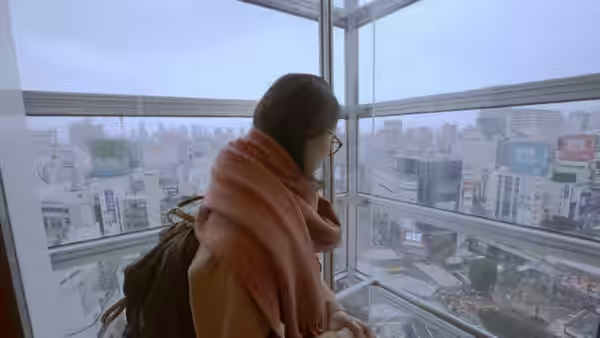
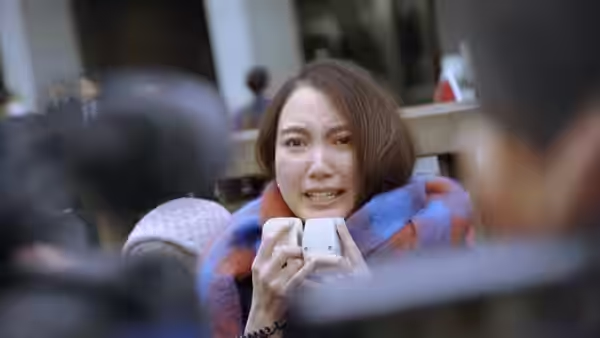
Shiori Itō, Yuta Okamura, Hanna Aqvilin and Yuichiro Otsuka share the cinematography credit, and the phone diaries provide the film’s most affecting images. Their directness matters: someone turns on a camera and tries to put her distress into words. We found these passages deeply upsetting, because the journalist gathering the evidence is also the person struggling with what it concerns. Speaking clearly does not make her seem any less hurt. Handwritten entries give that private record another form.

Ema Ryan Yamazaki edits the diaries together with the investigative material, allowing each to change how we understand the other. A development in the reporting has more weight when the film has also shown the effort of continuing to report. The moments with friends are welcome for a simpler reason: they allow Shiori Itō to have company without always having to explain herself. Those scenes give the film some warmth and a necessary change of pace.

The investigative passages are less assured, and occasionally their awkwardness gets in the way of their information. In particular, the hotel CCTV material needs a clearer account of how it was obtained. Asking for that explanation does not diminish the seriousness of the testimony; it is part of taking the reporting seriously. The film has earned enough attention by this point to stop and explain, even if that briefly interrupts its forward movement.

Mark De Gli Antoni supplies the music, though the voices in the diaries are what stay with us. We would judge a documentary like this partly by how much room it leaves for its subject to be tired, uncertain or simply among friends. On that measure, it succeeds. Shiori Itō is allowed to occupy the screen without every private moment having to prove her determination.

There is a difficulty in watching this kind of first-person film that should not be tidied away. Someone seeking to have her account heard has also made her pain available for scrutiny, and our attention can start to feel like another demand upon her. Black Box Diaries largely avoids treating the diary footage as proof of admirable endurance. The time spent on distress matters in itself, without requiring us to applaud the ability to carry on. The private recordings allow those feelings to remain difficult and unresolved within the individual scenes.

At 103 minutes, this is demanding viewing without being an endurance exercise. The gaps in the explanation of the evidence are a real limitation, but they do not undo the care taken with the person supplying it. See it for the diary footage, and leave time afterwards before putting something else on.

Critical consensus AI synthesised

78
Positive
13
Mixed
3
Negative
0

Most critics find Black Box Diaries absorbing and emotionally forceful, with praise centred on Itō’s first-person footage and her persistence in seeking justice. The diary recordings give the investigation a private, human dimension, showing the psychological cost of her public struggle. The reviews also value the film’s account of institutions failing survivors, while several praise the editing for shaping investigative material and intimate moments into a clear, compelling narrative.

The available verdicts range from enthusiastic endorsement to more qualified approval, with reservations focused on investigative technique rather than the value of Itō’s testimony. IndieWire finds some investigative sequences awkward and amateurish, despite the strength of the personal footage. The Guardian wants a more precise explanation of how pivotal hotel CCTV footage is obtained. These are limited objections within a broadly favourable consensus; the inaccessible reviews do not provide enough evidence to identify a substantive dissenting position.

Variety
26 January 2024 · festival review · Guy Lodge
90*

Lodge finds the documentary remarkable, riveting, and an unusually powerful account of systemic injustice through one survivor’s experience. He especially praises how Ito’s candid diary footage and investigative material are woven into a compelling, emotionally precise narrative.

Read the full review →
IndieWire
24 October 2024 · B+ · Natalia Winkelman
83

The review finds the documentary emotionally compelling, though some investigative sequences feel awkward and amateurish. It praises the intimate first-person footage and the film’s portrayal of Ito’s increasingly visible trauma.

Read the full review →
The Guardian
22 October 2024 · Peter Bradshaw
80*

Bradshaw finds the documentary remarkable and regards Itō as a courageous journalist whose actions may have changed Japanese history. He praises her intelligence and courage, while mildly wishing the film explained more precisely how it obtained the pivotal hotel CCTV footage.

Read the full review →
Time Out
23 October 2024 · ★★★★ · Phil de Semlyen
80

The review finds the documentary troubling but deeply absorbing. It praises the film’s defiant, outraged account of Japan’s #MeToo moment.

Read the full review →
Slant Magazine
1 February 2024 · ★★★/4 · Ross McIndoe
75

The review finds the film a courageous, intimate account of an arduous fight for justice, while underscoring the system’s failure to protect survivors. It praises Itō’s calm, luminous screen presence, especially in her private moments with friends.

Read the full review →
The Hollywood Reporter
26 October 2024 · Lovia Gyarkye
75*

The critic calls the documentary sobering and compelling, praising how it makes Ito’s pursuit of legal recourse clear and propulsive. The diaristic iPhone videos stand out for revealing her private pain and reclaiming testimony as a healing act.

Read the full review →

Straight answers AI written, from our review

Is Black Box Diaries worth watching?
Black Box Diaries is worth watching for its deeply affecting account of a journalist seeking justice after sexual assault, and we score it 82. We find Shiori Itō’s private phone diaries more powerful than the investigative passages, which sometimes need clearer explanations of the evidence; expect demanding, often upsetting viewing.
How long is Black Box Diaries, and what is it rated?
Black Box Diaries runs 1h 43m. It is a documentary film.
Where can I watch Black Box Diaries in Greece?
Black Box Diaries is not on any streaming or rental service in Greece at the moment. It is available in 20 other countries; change your country at the top of the page to see where. Availability is checked daily.
How violent or frightening is Black Box Diaries, and is it suitable for children?
Black Box Diaries has a UK 15 certificate and is not suitable for children, with distressing testimony about sexual assault and its personal consequences. We find the phone diaries deeply upsetting because they show Itō struggling with the experience she is investigating; the subject matter warrants particular care for teenagers and anyone sensitive to accounts of sexual assault.
How does Black Box Diaries compare to Stories We Tell?
Black Box Diaries is more distressing than Stories We Tell, and we favour it for the direct emotional force of its private recordings. Both filmmakers examine personal history and how testimony becomes a film, but Sarah Polley’s family inquiry offers more warmth and sly humour. It is the better choice for a less distressing evening, though it overexplains its own cleverness.
What should I watch after Black Box Diaries?
After Black Box Diaries, try Stories We Tell (2012, Fi1m 77): Another filmmaker examines private history while questioning how testimony becomes a film. Then Collective (2019, Fi1m 88): Dogged reporting follows evidence through institutions practised at protecting their own.

Cast

If you liked this, try…

  1. Stories We Tell (2012, Fi1m 77)Another filmmaker examines private history while questioning how testimony becomes a film.

  2. Collective (2019, Fi1m 88)Dogged reporting follows evidence through institutions practised at protecting their own.

  3. The Silence of Others (2018) · not reviewed yetSurvivors pursue legal recognition while public institutions would prefer them to stop.

  4. Writing with Fire (2021) · not reviewed yetWomen journalists keep reporting in circumstances that make persistence a daily risk.

  5. The Tale (2018) · not reviewed yetA dramatised account of revisiting sexual abuse, attentive to memory and self-protection.