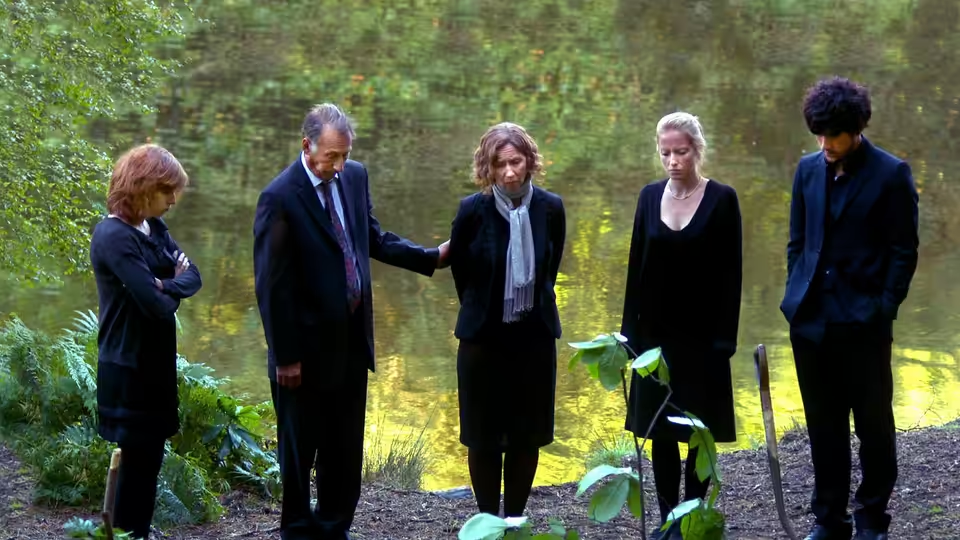
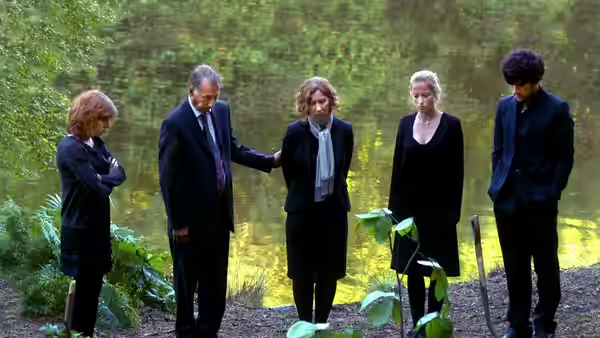
Tom Kingsley and Will Sharpe make an affecting, uneven black comedy, held together by Chris Langham’s subdued performance. Some of the eccentricity feels forced, but the sadness beneath the jokes gives us reason to stay.
Black Pond is a good, uneven black comedy whose peculiarities occasionally get in the way of its people. Writers and directors Tom Kingsley and Will Sharpe attempt a difficult mixture: suburban absurdity, dread and sadness, all kept close enough for a laugh to become uncomfortable. They manage it often enough to make the awkward stretches worth accepting. We recommend it to anyone who likes their comedy subdued and slightly troubling, with a warning that some of the oddness feels forced.
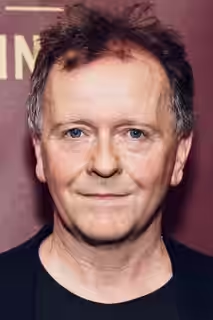
Chris Langham gives the film its strongest reason to keep watching. As Tom Thompson, he is subdued without becoming blank, and his vulnerability makes the comedy feel capable of hurting someone. We were moved by how little he presses for sympathy: the tenderness in his performance remains visible even when the film around him is busy being peculiar. There is no need for the writing to announce that sadness matters here, because the performance has made it matter already.
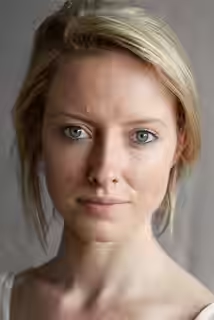
Amanda Hadingue, as Sophie Thompson, and Colin Hurley, as Blake, help to keep that care for the characters intact. We believe in them, and would happily have spent more of the running time in their company. Their performances also make the weaker characterisation elsewhere more noticeable, because they demonstrate how much interest there can be in these people. The directors get good work from their cast when they give them enough room to make an impression.
The animation and dream sequences are a less dependable part of the film. They have imagination, and help the suburban satire become more unsettling, but some feel like additions the comedy could have managed without. The directors do not always distinguish between an image that deepens the unease and one that simply advertises their willingness to try something unusual. When those passages fail, the humour becomes harder to enjoy because we start noticing the effort required to sustain it.
The weaker characterisation is harder to forgive, because the film has already shown how much a careful performance can achieve. Some of the writing seems content to mark someone as peculiar and move on, leaving the actors to supply the interest. We care about certain people while others seem to exist chiefly to keep the comedy going, and that uneven attention limits how much the darker material can trouble us. At 83 minutes, the film could still have exchanged some of its flourishes for a little more time with its characters.
Against the demands of black comedy, though, its willingness to take sadness seriously counts for a good deal. The recognisable hurt in the performances stops the humour becoming a succession of clever ways to be unpleasant. There is enough warmth here to survive the occasional self-consciousness, and enough discomfort to prevent that warmth becoming an easy reassurance. Give it an evening for Chris Langham, provided a few conspicuous misfires will not spoil the pleasure.