Film review

Blackfish

2013 · Directed by Gabriela Cowperthwaite · 1h 23m · MPA PG-13

In a sentenceThe most frightening thing here is not the whale but the park’s own promotional footage

Documentary

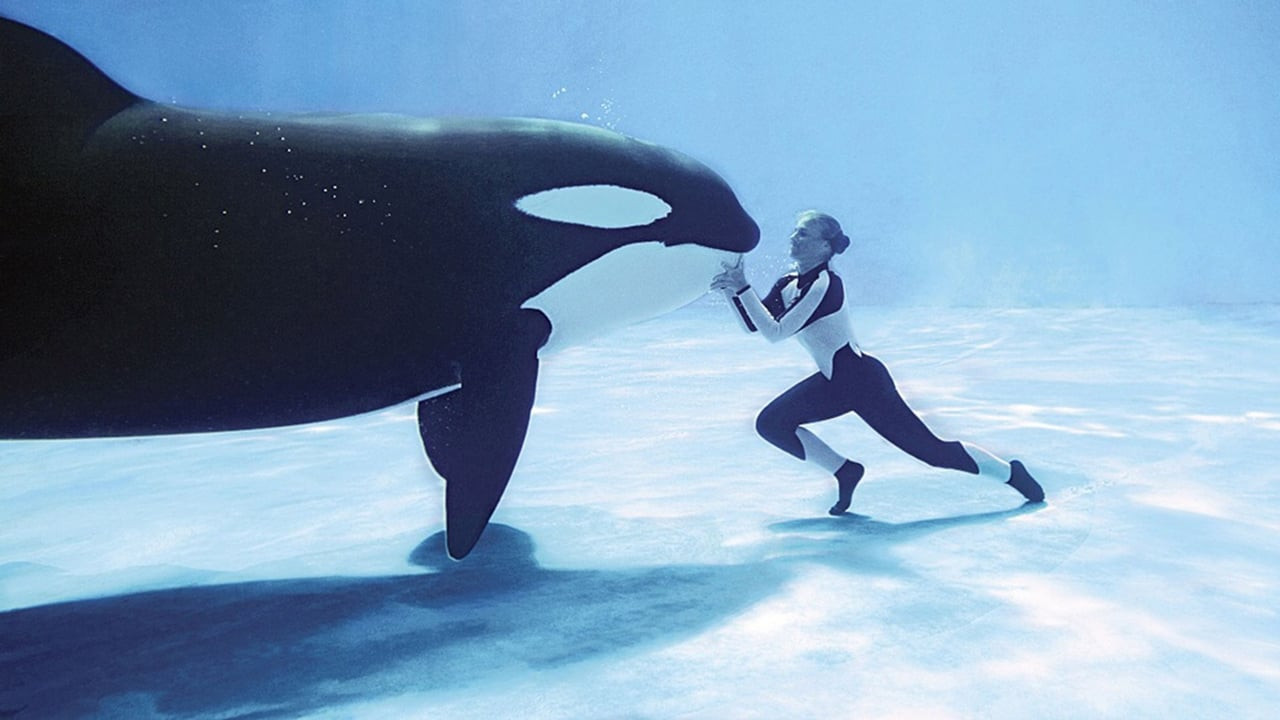
A 911 call over a black screen: a trainer is in the water with a whale. It is February 2010, at SeaWorld Orlando; the trainer is Dawn Brancheau and the whale is Tilikum, an orca taken as a calf from the sea off Iceland in 1983. Former SeaWorld trainers Samantha Berg, John Hargrove and Jeffrey Ventre describe being hired for their swimming and their smiles and taught almost nothing about the animals. Researcher Ken Balcomb explains how orcas live in the wild. Gabriela Cowperthwaite’s archive footage shows Tilikum’s first home, a small pool at Sealand of the Pacific in British Columbia, where he is shut each night into a dark steel module with two older females who bully him.

Plays from YouTube when you press play; nothing loads from them until then.

Fi1m review

Gabriela Cowperthwaite’s documentary about a killer whale and the park that kept him is as tense as any thriller and makes its case almost too well. It is one-sided, partly by necessity, and Jeff Beal’s score keeps telling us what the footage has already shown.

Gabriela Cowperthwaite’s Blackfish has one argument and makes it in 83 minutes: killer whales should not be kept in tanks, and the company that keeps them knew what it was risking and told its customers otherwise. It uses the story of one whale, Tilikum, and the people who spent their working lives a few feet from him. It is effective. It is also a film that has decided what you will think before you sit down, and it does not trouble to hide that. We believe it is right, which is not quite the same as believing it is fair.

Most of what you see was not shot for this film. Christopher Towey and Jonathan Ingalls film the interviews plainly, former trainers at kitchen tables and against grey walls, a researcher on a dock, and their work is the least of it. The film is made from other people’s tape: home video shot from the stands, the park’s own promotional reels, local news, court depositions, and a few pieces of security footage that nobody expected the public to see. Eli Despres and Cowperthwaite cut this material like a thriller. Each incident is built slowly, in pieces, with the outcome held back to the last possible moment. It works, and by the third time it works we had started to notice the method.

The trainers carry the case. Samantha Berg, John Hargrove, Jeffrey Ventre, Carol Ray, John Jett and Dean Gomersall all worked at the park, and they describe being hired for their swimming and their personalities and taught almost nothing about the animals in front of them. They are not bitter, or not mainly. They loved the whales and say so, and the shame in the room is that they kept performing after what they knew. Ken Balcomb, who has watched wild orcas for decades, provides the comparison: families that stay together for life, in open water, with dialects of their own. Dave Duffus, the researcher who gave evidence for the American safety regulator after the 2010 death, is the calmest person in the film and the most damaging to the park, because all he does is describe procedures.

There is one sequence we have not been able to shake. A trainer in a wetsuit is taken by the foot to the bottom of a pool, held there, brought up, and taken down again, for minutes, while his colleagues stand at the edge doing what they can, which is nothing. What frightened us was not the whale but the man’s face each time he surfaced: composed, breathing, waiting for the next one. We watched it with a hand over our mouth. Later, a former trainer describes the day a calf was moved to another park and her mother stayed in a corner of the pool making a sound nobody there had heard before. It is a plain account of something that cannot be shown, and it did more to us than any of the footage.

The film’s weaknesses are all of the same kind. Jeff Beal’s score is low strings and a hum, and it sits under nearly everything, insisting that what we are watching is terrible when the pictures have already made that clear. A silence would have done more. When an interviewee’s voice catches, the camera stays, and the cut waits for the tear. A scientist puts up a scan of an orca brain and points to a region; the film moves on before we are told what the evidence is. The park declined to take part, as an end card says, and Mark Simmons, the one former trainer who leans towards defending it, is on screen for a minute or two. The argument would have survived hearing the other side at greater length. It might have been stronger for it.

Set against other single-issue documentaries, this is a sharper piece of work than most, and the reason is the archive. The park filmed itself constantly, and the film’s best moments are its own reels: a smiling employee assures a family that a collapsed dorsal fin is common in the wild, and that whales live longer in the park than in the ocean, and then Balcomb says otherwise. We found ourselves laughing at the first claim and angry by the second.

Certificate 15, and the certificate is earned by what happens to people rather than to animals. Watch it with the sound a little lower than usual; the pictures are enough.
Critical consensus AI synthesised

77
Positive
16
Mixed
1
Negative
1

The reviews lean strongly positive, and they agree on what the film is for: a case against keeping orcas in captivity, built on the story of Tilikum and the accounts of former SeaWorld trainers. Most critics find that case convincing, and several say it plays like a thriller, with the archive footage of attacks singled out as the most gripping material. The whales’ intelligence and suffering come through clearly, and the trainers’ testimony carries most of the emotional weight.

The reservations are about method rather than conclusion. Time Out finds Cowperthwaite didactic, leaning too hard on doomy music and shock revelations, and Little White Lies thinks the conspiracy-thriller framing is the weakest part of an otherwise important film. Others note the argument is one-sided, though one adds that SeaWorld’s refusal to take part left the director little choice. The spread is narrow; almost nobody disputes the film’s point, only how loudly it is made.

IndieWire
16 July 2013 · Kimber Myers
90*

The film is a heartbreaking and effectively damning indictment of SeaWorld's practices with killer whales. It effectively exposes the consequences of captivity through personal stories and evidence of harm to both animals and trainers.

Read the full review →
RogerEbert.com
20 July 2013 · Matt Zoller Seitz
90*

The film powerfully documents abuse in orca captivity and corporate practices at SeaWorld, using the story of Tilikum to argue for reform and highlight the creatures' intelligence and suffering. It blends thriller elements with testimony and footage to make an urgent case against treating sentient beings as entertainment.

Read the full review →
Slant Magazine
13 July 2013 · Bill Weber
90*

The documentary turns the orcas' rebellion against corporate captors into a showbiz horror film, gutting SeaWorld's image with non-exploitative incredulity at its avarice. It effectively mixes interviews, animation, and archival footage to reveal suppressed employee casualties and the whales' trauma.

Read the full review →
The Guardian
25 July 2013 · Peter Bradshaw, Henry Barnes and Xan Brooks
90*

This documentary about fatal attacks by performing killer whales is as gripping as a serial-killer thriller. The real villain is not the whale but its human captors who have driven the orcas mad through captivity and performance demands.

Read the full review →
The Hollywood Reporter
21 January 2013 · festival review · David Rooney
90*

The documentary is emotionally powerful and a damning indictment of SeaWorld, exposing the trauma of orca captivity and corporate cover-ups of attacks. It highlights the intelligence and suffering of the whales through former trainers' accounts and scientific context.

Read the full review →
Vulture
19 July 2013 · David Edelstein
90*

The nonfiction film is brutal, haunting, and necessary, revealing the monstrous realities of orcas in captivity through gripping trainer testimonies and evidence of their intelligence and emotional lives. It builds like a thriller while underscoring the animals' suffering and the industry's deceptions.

Read the full review →

Cast

If you liked this, try…

The Cove poster

The Cove

2009 · Dolphins, a Japanese fishing town and a film crew who behave like burglars

Grizzly Man poster85

Grizzly Man

2005 · Herzog on a man who loved bears and would not accept what bears are

Project Nim poster

Project Nim

2011 · A chimpanzee raised as a child, then passed along; the humans come off worse

Gunda poster

Gunda

2020 · A pig, her piglets and no narration; the quietest argument for animals we know

Cow poster

Cow

2021 · Andrea Arnold follows one dairy cow for years and never once looks away