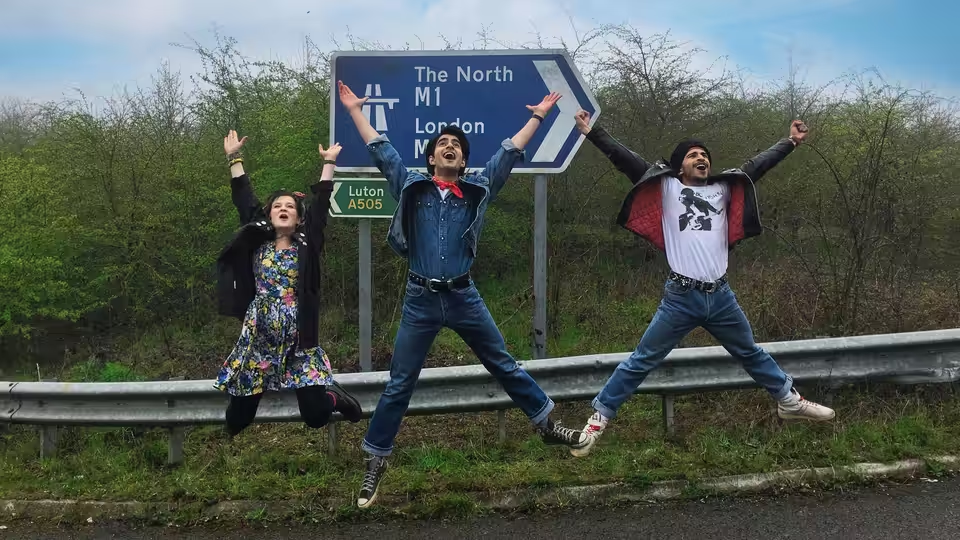
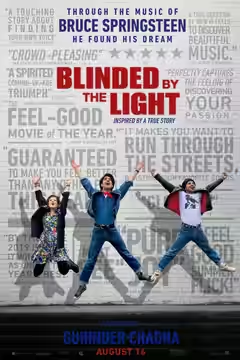
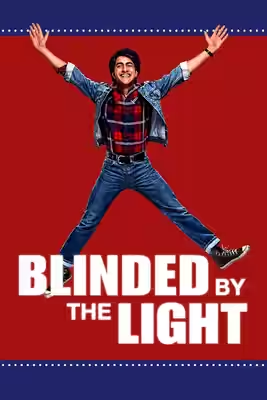
Gurinder Chadha’s coming-of-age film is warm, funny and carried by Viveik Kalra’s unguarded enthusiasm. The Bruce Springsteen devotion gets repetitive, but the family scenes give us good reason to stay with this overexcited teenager.
Gurinder Chadha’s Blinded by the Light understands how foolish a favourite singer can make a person look, and mostly has the good sense to be kind about it. We recommend it for Viveik Kalra’s open-hearted performance and for its account of finding words for feelings that seemed yours alone. The coming-of-age story is familiar, and the musical enthusiasm occasionally becomes exhausting. But the director makes Javed’s attachment to Bruce Springsteen credible before asking us to share it.
The setting matters: this is British Pakistani adolescence in 1980s Luton, with racism to contend with as well as a difficult relationship with a father. The early scenes give that hostility enough weight for the arrival of the music to feel like a plausible source of relief. We were moved by Javed’s first discovery of the songs. Viveik Kalra makes the excitement so unguarded that we understand why the lyrics suddenly seem to explain his life, even when we do not share his devotion.
The lead performance also catches the less appealing side of that discovery: Javed’s enthusiasm can become so consuming that there is little space left for anyone else’s interests. That is recognisable teenage behaviour, although the film is sometimes too indulgent of it. Kulvinder Ghir helps keep the family scenes from becoming a succession of unreasonable objections to the young man’s wishes. The father-son relationship has warmth and strain, and the father’s humanity survives a screenplay that does not always resist the obvious route.
Nick Ellis’s production design and Annie Hardinge’s costumes establish the period through Walkmans and double denim, details appropriate to a story about what teenagers use and wear. Ben Smithard’s images carry the move from everyday Luton into the musical passages with more assurance than some of the staging. The songs can make the place feel larger and more inviting without requiring us to forget the early hostility. At times, though, the performers seem to be working harder at conveying delight than the scene warrants.
The writing by Sarfraz Manzoor, Gurinder Chadha and Paul Mayeda Berges is less reliable when it lets the lyrics do the explaining. They are useful when Javed cannot express himself, but their repeated use leaves too little for the dialogue to do. Justin Krish’s editing gives individual musical passages momentum, though the story between them sometimes drags. There is enough charm to carry us through, but less insistence would have left more space for Javed to surprise us.
A. R. Rahman’s music is less conspicuous beside the featured songs, and that restraint is welcome. The film already works hard to make us feel things, without needing every musical cue to press the point. As a coming-of-age film, it is conventional enough that its appeal depends heavily on the people doing the growing up. The performances supply the awkwardness and eagerness that make those conventions tolerable, and the family retains some dignity even when the writing simplifies its disagreements.
At 117 minutes, it is longer than this straightforward story needs to be. Some musical repetition could go without losing the pleasure of watching Javed find something he wants to defend. Still, the affection for him is persuasive enough to overcome the more determined attempts to cheer us up. Try it for a warm evening, provided nobody on the sofa has already had enough of Bruce Springsteen.