Edward Hall’s remake takes Noël Coward’s dry 1941 comedy of a novelist haunted by his first wife and swaps the talk for pratfalls and shrieking. The house is lovely, the cast is willing and almost nothing is funny. Dench deserved a better séance.
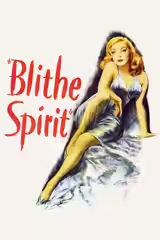
Noël Coward wrote Blithe Spirit in 1941 as a drawing-room comedy: a novelist, two wives, one of them dead, and a great deal of talking. David Lean filmed it in 1945 and mostly left the talking alone. Edward Hall’s version, written by Piers Ashworth, Nick Moorcroft and Meg Leonard, has decided the talking was the problem. It turns every exchange into an event: a fall, a flung vase, a scream. The idea is that a modern audience wants a farce rather than a comedy of manners. It is not funny as either.
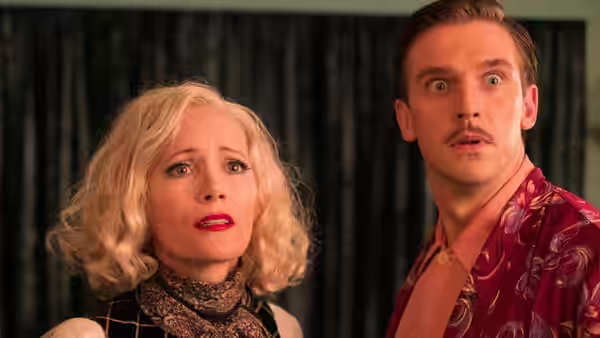
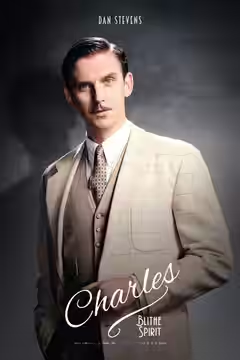
Dan Stevens plays Charles at full stretch, eyes wide, voice up in his nose, flinching at the furniture. It is committed and in another film it might be good. The trouble is that the script never lets him be clever, and Charles Condomine is a man whose entire appeal is that he is cleverer than his situation. Here he is simply its victim. We watched him fall over for the fourth time and realised we had stopped waiting for a line.
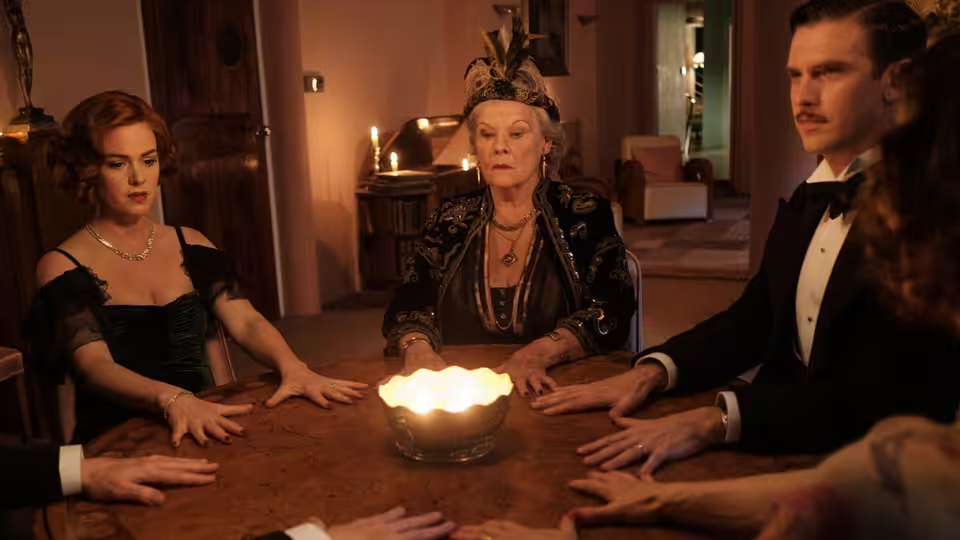
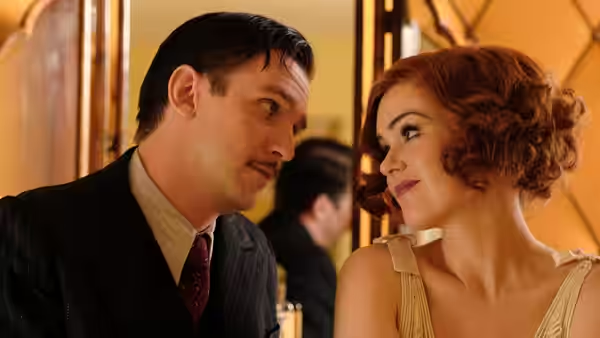
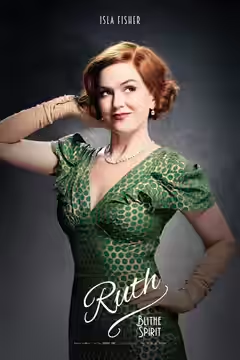
Leslie Mann’s Elvira is the best thing in it. She plays the ghost as a woman who has come back mainly to be irritating, draping herself over the piano, leaning into Charles’s ear while Ruth is talking. Isla Fisher’s Ruth has the harder and duller job of being the wife who cannot see what is going on, and she does it with more patience than the writing earns. The scenes with the three of them in one room, the only ones Coward would recognise, have a pulse. Then someone falls down the stairs and it goes.
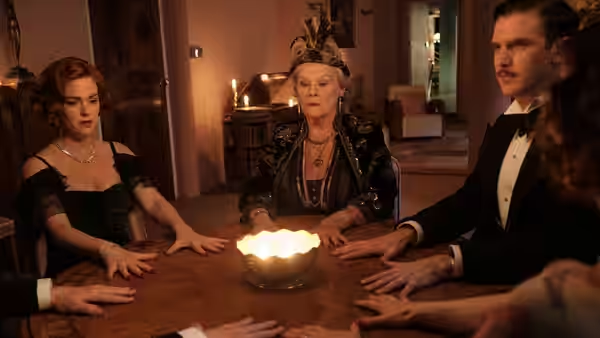
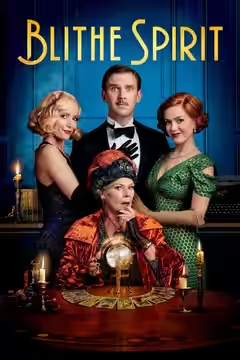
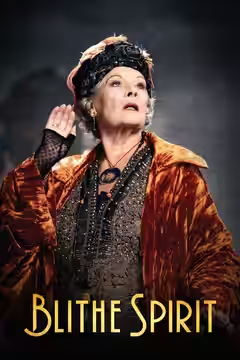
Judi Dench’s Madame Arcati has been rewritten from a brisk eccentric who happens to be good at her job into a grieving widow who is not. It gives the character a wound and the film a heart, and it takes away the joke, which was that the one competent person in the house was the one everybody laughed at. Dench does what she can, and there is a scene in a cave on the shore, candles and chanting against the noise of the sea, that is strange enough to hold the attention. It was the only time we felt the film might be about to surprise us, and it did not.
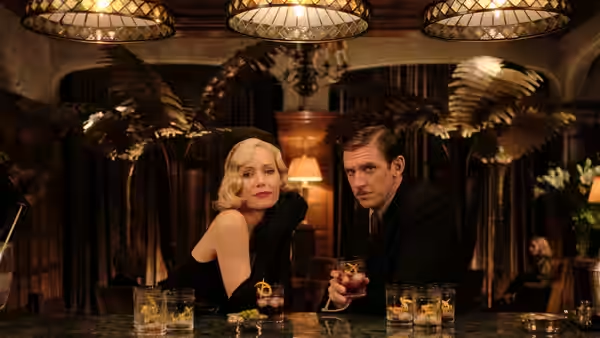
The money is on the screen and it is the house. John Paul Kelly has given the Condomines a long white Modernist home, pale wood and chrome and windows down to the floor, and Ed Wild lights it as if the sun never goes in, so the ghost moves through rooms with no shadows to hide in. Charlotte Walter dresses Mann in silks that match the walls, a good quiet joke. Simon Boswell’s score is brass and strings in a hurry, pushing each scene towards a punchline that does not arrive. Paul Tothill cuts fast, and the speed is the film’s one consistent mistake: Coward’s comedy lives in the pause before the reply, and there are no pauses here.
We laughed once, properly, and it was at Mann saying nothing, a look across the breakfast table while Ruth explains to Charles that he is unwell. The rest of the time we sat in a polite stillness, the kind you adopt at a dinner party where the host is working too hard, and around the hour mark the stillness turned into irritation, because the people on screen are plainly capable of the thing the film keeps stopping them from doing.
Hall comes from the theatre and it shows in the wrong way. He has staged the play as if afraid the camera would find it small, and so has made it loud instead. Lean’s 1945 film is stiff in places and cool where it might be warm, but it trusts the lines. Most critics have landed near where we have, and the kinder ones have been kind mostly to the cast and the furniture.
At 99 minutes it does not outstay a Sunday afternoon, and the 12 certificate will trouble nobody. If you want Coward, read him, or seek out Lean. If you want Dench in a shawl in a cave, there is that, and it lasts about four minutes.