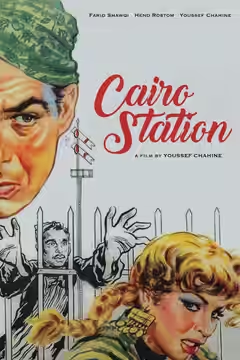
Youssef Chahine makes a railway station an unsettling place to spend 77 minutes. We recommend this humane crime drama for its performances and shadowed images, with a caveat about its occasionally heavy-handed sadness.
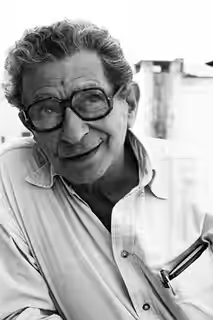
Cairo Station is a good, disquieting crime drama whose interest in people extends beyond what they contribute to the plot. Youssef Chahine directs and plays Qinawi, placing himself within a railway-station community marked by emotional deprivation and exploitation. We recommend it, with a reservation about how heavily it sometimes presses its sadness. Its strongest quality is the attention it pays to people who could easily have been treated as background.
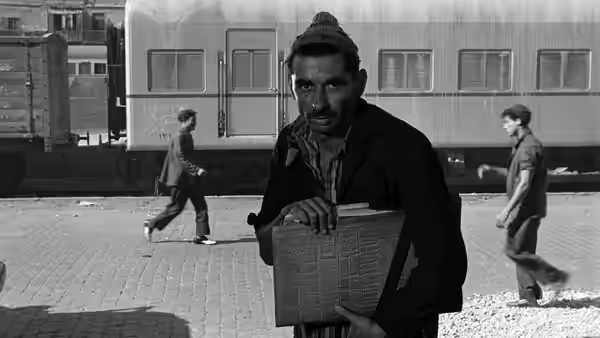
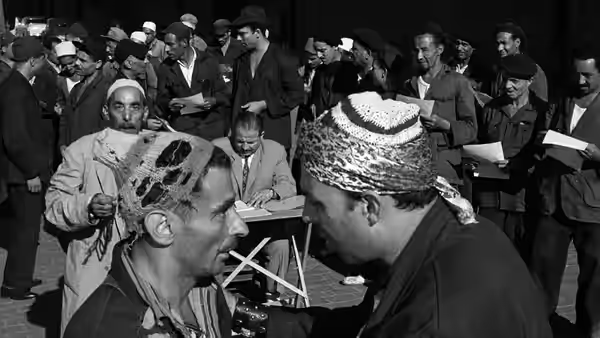
A railway station gives a film something useful before anyone speaks: people must share a place without sharing much else. Here, that proximity exposes social and cultural divisions without suggesting that simply meeting one another will resolve them. There is humour here, too, and it keeps the people from becoming a procession of grievances. The film allows human absurdity into a setting where there is plenty to be unhappy about.
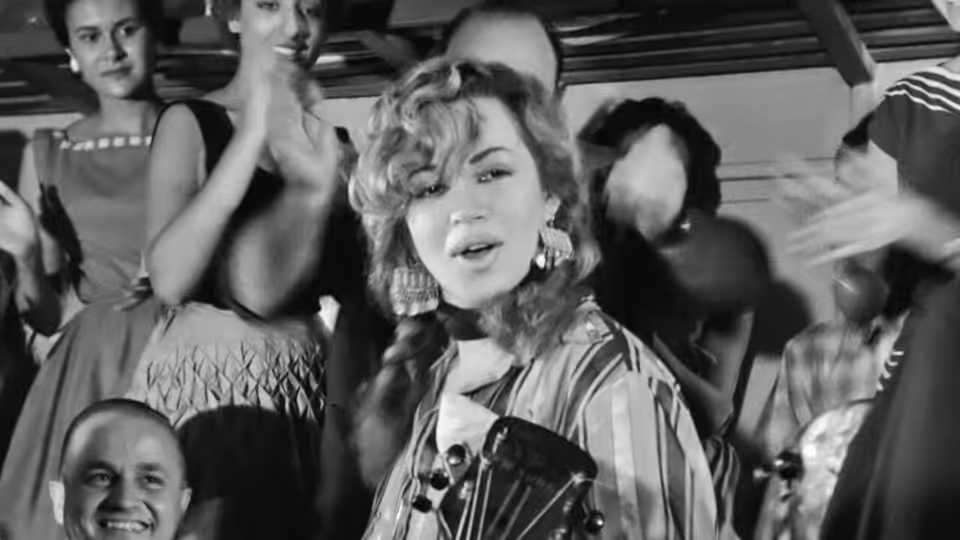
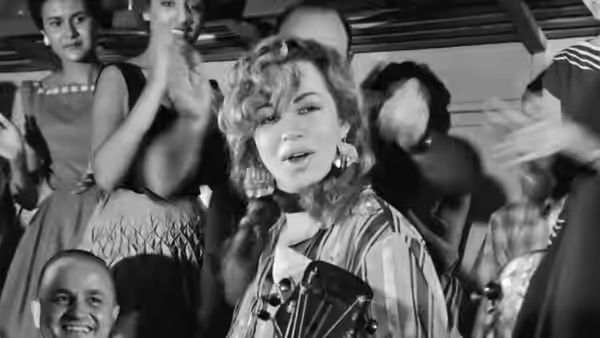
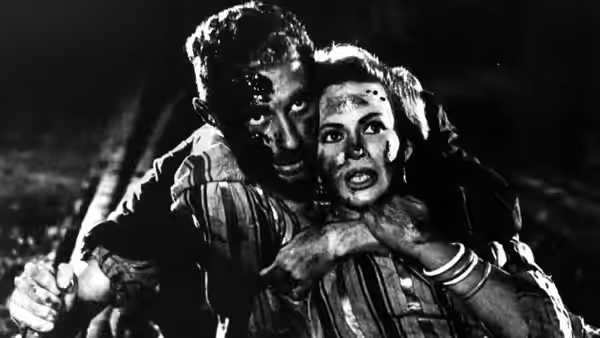
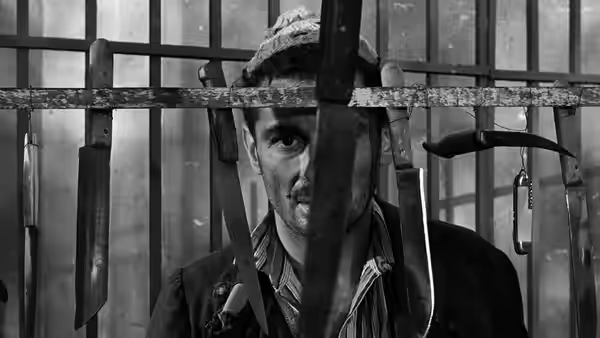
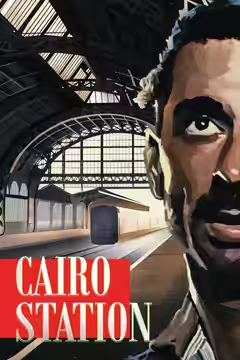
Alevise Orfanelli’s cinematography provides the clearest reason to seek it out. The noir-like shadows and sharp divisions between light and darkness make the station feel less open than a public building ought to feel. We were unsettled by those shadows: people occupy a shared space, yet the lighting makes their isolation palpable. The photography gives emotional deprivation a visible shape without requiring another explanation of what is wrong with these lives.
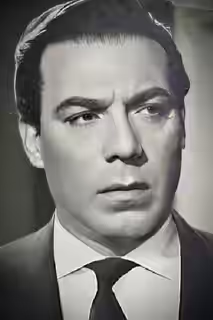
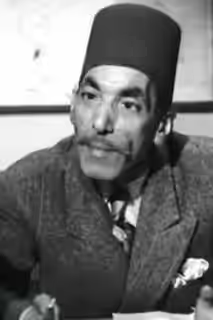
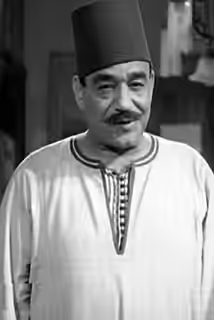
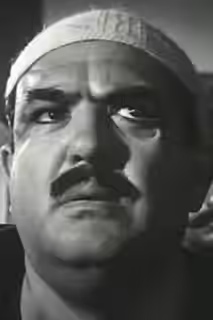
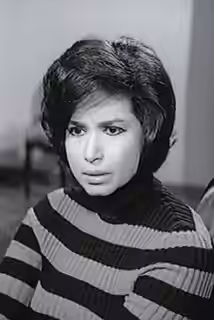
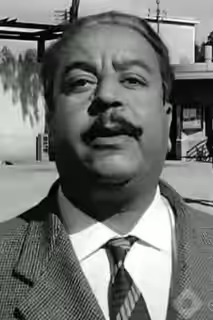
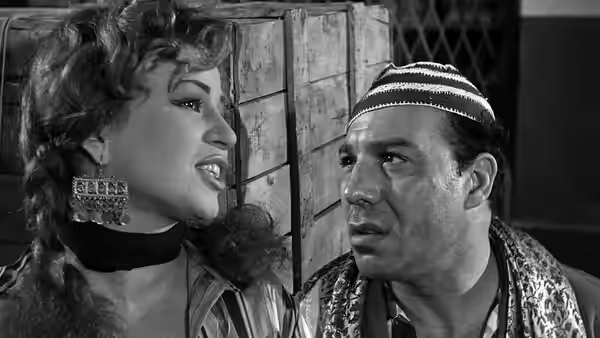
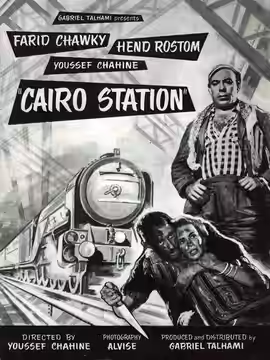
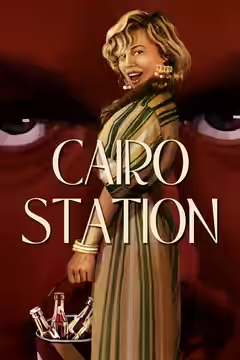
Alongside the director are Hend Rostom as Hanuma, Farid Shawqy as Abu Siri and Hassan El Baroudy as Madbouli. The naturalistic performances make the emotional need credible before the film asks us to judge it. We believe in the people sufficiently to resist having them reduced to examples of a social problem. That matters to the crime story, because our interest in what might happen depends on taking those involved seriously.
The tragic emphasis sometimes presses too hard in Abdel Hai Adib’s screenplay. We are already aware that these people live with deprivation; the film can seem reluctant to let us reach our own response to it. The danger is that a person becomes a case to be pitied, and we occasionally feel the writing pushing in that direction. The comedy helps because it gives the characters something to do besides suffer, and we would have welcomed more of that freedom.
Kamal Abul Ela’s editing keeps the material concentrated within 77 minutes. That compactness suits a setting where several lives compete for attention, though it also gives the sadness little room to ease. Fouad El-Zahry’s music registers less strongly with us than the photography, which carries much of the unease. The short running time is welcome for material this insistent, and there is little opportunity to grow comfortable with what we are seeing.
As a thriller, the film benefits from its attention to ordinary life: the social divisions make the unease recognisable. The station remains interesting as a place people inhabit, even when we are conscious of the pressure the story puts on them. We would recommend it to those who usually avoid thrillers, provided they can tolerate a little insistence about where their sympathies should lie. Save it for an evening when sympathetic company need not mean a cheerful film.