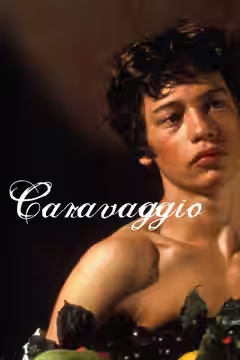
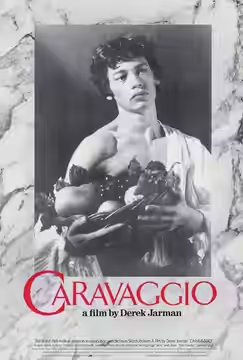
Derek Jarman’s film about the painter is lit the way the painter lit, and for long stretches that is enough. The story jumps, the jokes with anachronism outstay their welcome, and Nigel Terry and Sean Bean hold it together regardless.
Derek Jarman’s Caravaggio opens with the painter dying in a bare room, his mute servant Jerusaleme (Spencer Leigh) at his side, and spends its 93 minutes remembering. Nobody explains the Counter-Reformation, nobody dates anything, and a typewriter turns up on a desk in what is meant to be Rome around 1600. What Jarman has made is a film about how a man looks at bodies and turns them into pictures. It is good and it is uneven, and the good is of a kind you will not get anywhere else.
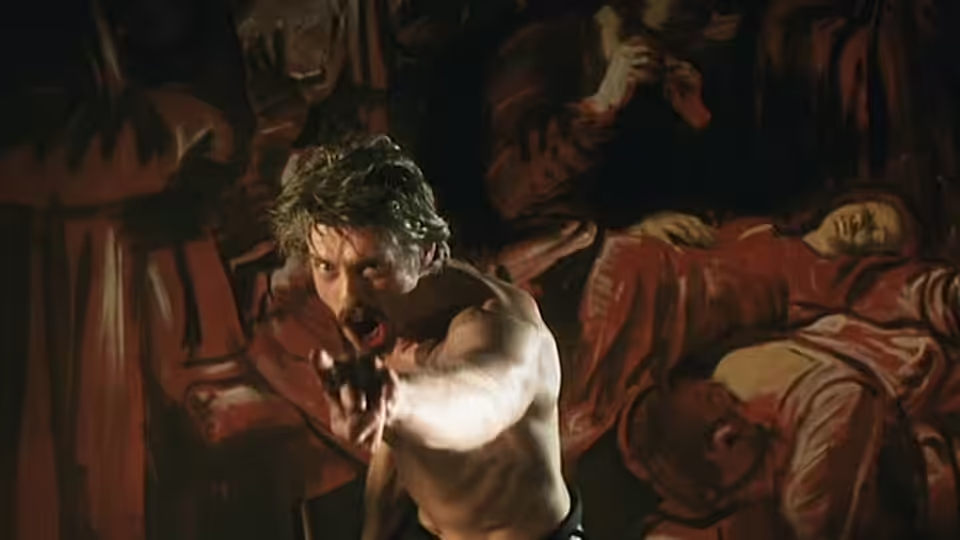
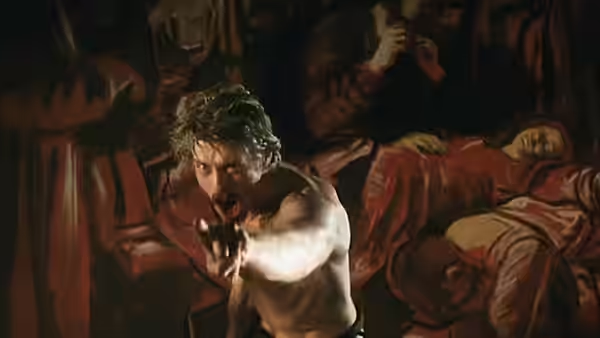
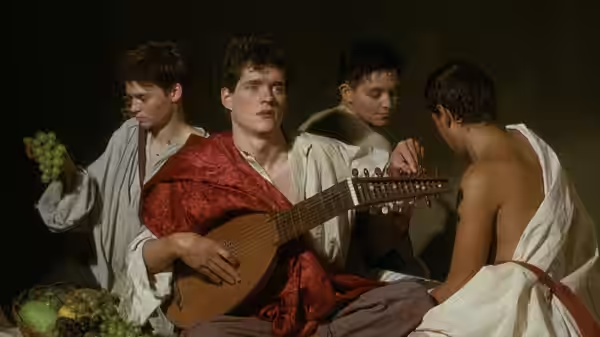
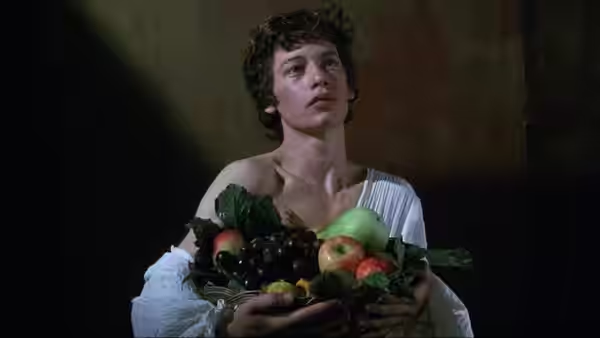
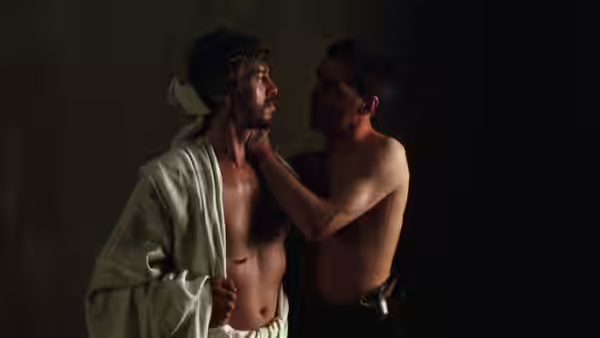
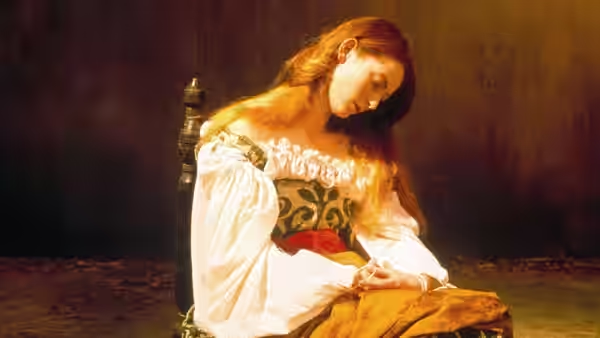
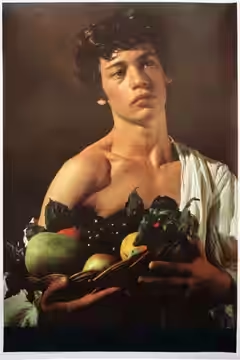
Gabriel Beristain lights it as the painter lit his canvases: one hard source from the side, and the rest black. Christopher Hobbs builds Rome out of almost nothing, sacking, a table, a few chairs, a plastered wall, and it is enough. Several times Jarman stops the story and has his cast hold still in the arrangement of a real Caravaggio. The first time it is odd. After that it is thrilling, because you watch the picture assemble in front of you before there is any paint on it.
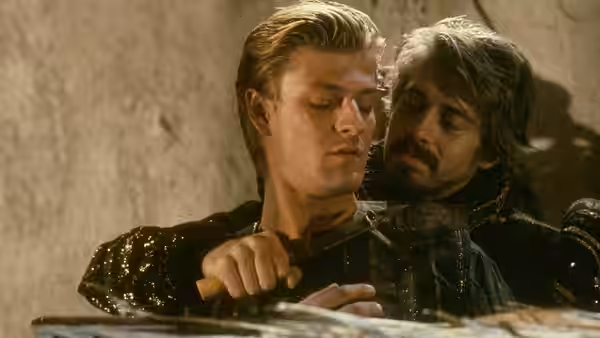
Nigel Terry plays the painter as a man who is either working or waiting to work. He is sullen, heavy in the shoulders, quick to a knife. Jarman gives him a voiceover from the deathbed that is more poem than diary, and Terry reads it flat, which is the right choice. Sean Bean’s Ranuccio is first seen fighting for money and then paid to stand still, and the film gets its charge from his not being sure which he prefers. Tilda Swinton’s Lena, the woman Ranuccio lives with, watches both men with a stillness the camera keeps going back to. The triangle is the plot, such as the plot is.
Around the edges the cast is enjoying itself. Michael Gough’s Cardinal Del Monte takes the boy in and looks at him the way a collector looks at a purchase. Robbie Coltrane’s Scipione Borghese is large, damp and pleased with himself. Dexter Fletcher plays the young Caravaggio as a street boy with a knife in one hand and a brush in the other. Sandy Powell dresses them in period cloth and then lets the present in at the edges, so that you are never allowed to settle into costume drama.
We were moved more than we expected to be, and it was the deathbed that did it. Terry on the pallet, Leigh mopping him and saying nothing because he cannot, one window of grey light, and Simon Fisher-Turner’s score dropping almost to silence. That score is made mostly of small sounds, water, bells, breath, a line of something like plainsong, and it sits under the images rather than on top of them. The film is simply watching a man leave, and it is patient about it.
Elsewhere it is less sure of itself. George Akers cuts the film as a run of tableaux, and between them the story jumps: people arrive without introduction and quarrels start without cause. The anachronisms, the typewriter, a motorbike, cigarettes, a pocket calculator, are funny once, and Jarman keeps making the joke. The voiceover sometimes slides into the kind of poetry that gets written late at night in art school. And the film has almost no interest in why these pictures mattered to anyone but the man who painted them; the arguments with the Church about what a saint may look like are dispatched in a line or two.
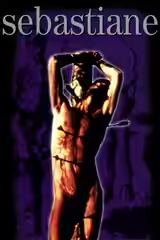
After the Latin of Sebastiane (1976) and the punk London of Jubilee (1978), this is Jarman’s most conventional film, which is to say it has a plot, and it is also his best looking. The reviews so far have been cooler than we are. We think the light and the deathbed outweigh them.
See it for Beristain’s dark, for Terry and Bean, and for the way a painting comes together in a bare room. It runs 93 minutes, which is about right for a film that stops every quarter of an hour to make a picture. Watch it at home with the lamps off; the black is half of it.