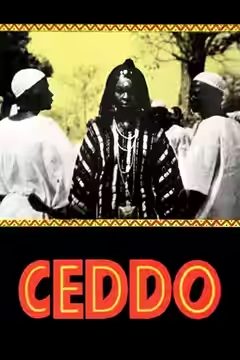
Ousmane Sembène stages a kingdom’s conversion as an argument held standing up in the open air. It is formal, slow and quietly furious; the stiffness of the playing costs it something, and the anger pays most of that back.
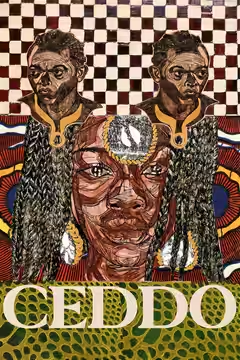
Ousmane Sembène sets Ceddo in a Wolof kingdom in the centuries when Islam, the Catholic church and the Atlantic slave trade arrived at once, and he will not say which century, because the argument is the same in any of them. A ceddo, a commoner who has refused to convert, kidnaps Princess Dior Yacine and holds her in the bush until the king listens. The king convenes his court in a clearing, and the kingdom talks. That is the film: 117 minutes of people standing in the sun, taking turns, deciding who they are going to be. It is slow, formal, often stiff, and one of the angriest films we know.
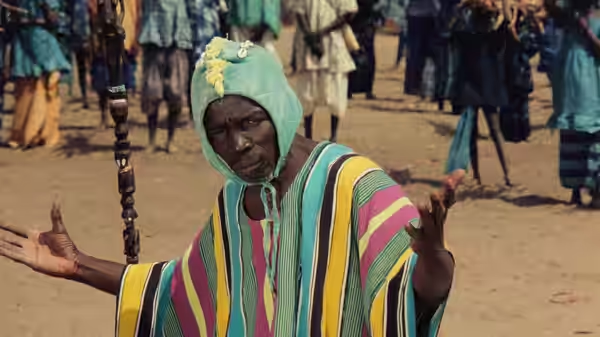
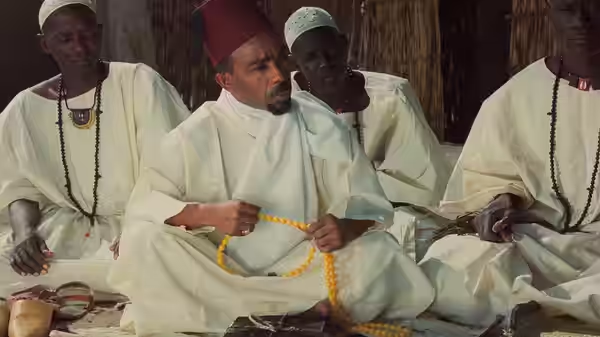
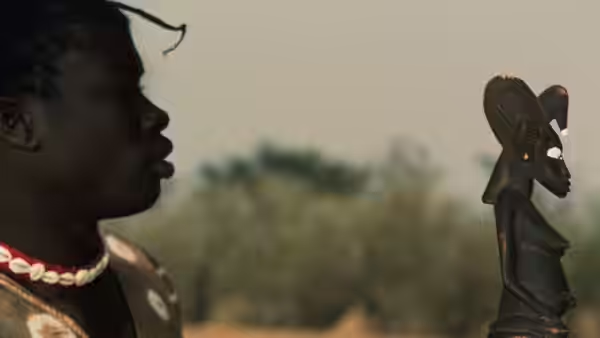
The staging is the argument. The four credited cinematographers, Georges Carestan, Orlando Lopez, Bara Diokhane and Seydina D. Saye, shoot the court wide and head-on, so that every speaker has a fixed place: the king on his stool, the imam at his right hand, the ceddo elders off to one side with their spears planted, the trader with his barrels and ledger. You can read the balance of power from where people stand before anyone opens his mouth. Nobody addresses the king directly. Speeches go through the Jaraaf (Omar Gueye), who repeats them, softens them and sometimes loses his nerve.
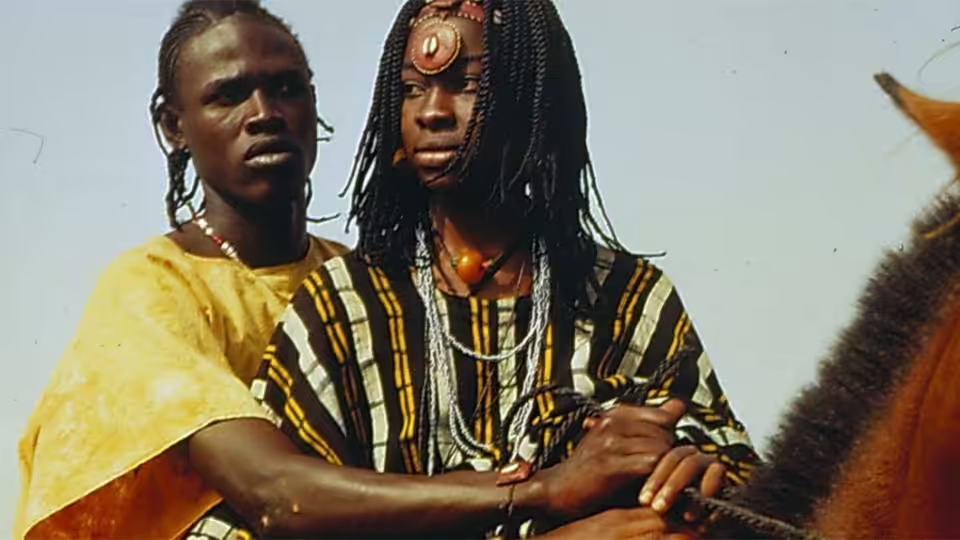
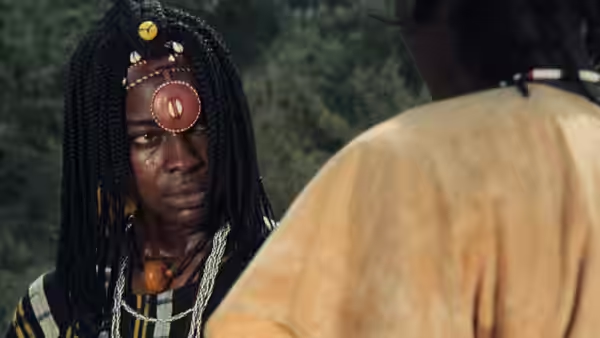
Makhouredia Gueye plays King Demba War as a man who has already chosen and wants only to be spared the sight of what it costs. Ousmane Camara’s Fara Diogomay speaks for the ceddo with a tired precision, as if he has made the speech before and expects to again. Tabata Ndiaye, as the princess, spends the first half sitting under a tree beside her captor (Ismaila Diagne), saying almost nothing, and she was the person we kept watching; she listens to him the way the court will not. The men who ride out to fetch her, Prince Biram (Mamadou Dioumé) and Saxewar (Nar Modou), go one at a time with the confidence of men who have never been told no.
Here is what got to us. Throughout, a white trader sits at the edge of the clearing with his guns, cloth and brandy, and he is paid in people. Ceddo bring him captives like sacks to market, and he weighs them against muskets. We were angry, plainly angry, at how ordinary Sembène makes it look, and angrier when we understood that the ordinariness is the charge he is bringing. The trade is not the villain of the film. It is the weather.
Manu Dibango’s score is the boldest thing in it and the thing we argued about afterwards. Under a missionary’s vision of the future, a congregation in white, a hearse, a modern road, Dibango lays a gospel spiritual sung in English: the descendants of the traded singing back across the water over the moment of the trade. The anachronism is deliberate and it landed hard. The jazz under the court scenes works less well; it pulls us out of the clearing and reminds us there is a recording studio somewhere.
The flaws are real. Florence Eymon and Dominique Blain hold shots to their full length and cut between clearing and bush with a regularity that becomes a tread, and around the hour mark we felt every minute. Much of the cast are not professional actors and some recite rather than speak, so an exchange that should sting arrives like a lesson read out. The second half takes a turn we will not describe; we will say that the film’s patience is a setup, and that it pays.
Against Sembène’s own work this is the severe one. Xala (1975) was a comedy about a cursed businessman and let you laugh at the people it was accusing. Ceddo does not let you laugh at anyone. It carries a 15 and did not reach British cinemas until 17 July 1981.
See it in a cinema if one is showing it, and at home only in a quiet room with nothing else on. It does not survive being half-watched, and it will not raise its voice to win you back. It expects you to stand in the sun with everyone else.