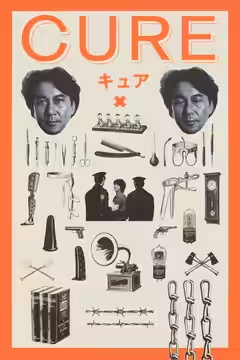
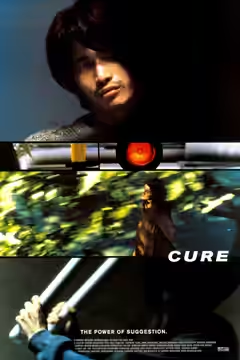
Kiyoshi Kurosawa makes police interviews frightening, with Koji Yakusho holding steady as the questions stop helping. We recommend this patient, disturbing thriller, though its repeated evasions will test anyone who wants an investigation to produce clear answers.
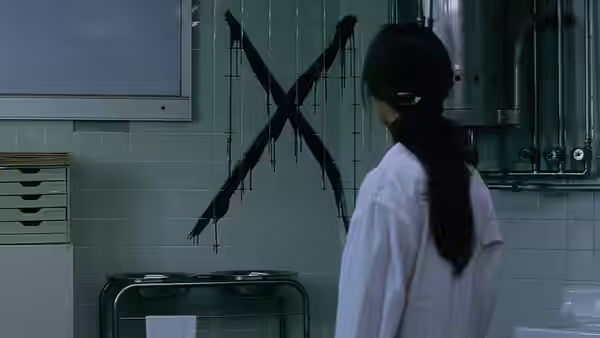
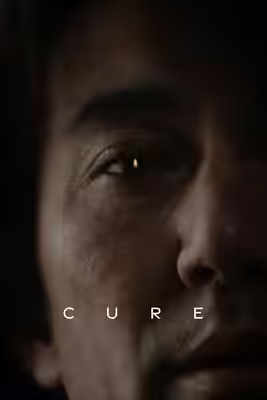
Kiyoshi Kurosawa’s Cure is a frightening crime thriller, worth the evening if you can accept how little it explains. Different people commit murders marked by the same X-shaped wound, then seem unable to explain why. Kenichi Takabe (Koji Yakusho) has confessions, suspects and bodies, yet none of them brings him much closer to understanding what has happened. Kiyoshi Kurosawa’s screenplay keeps the investigation moving while making each ordinary police question sound a little less useful.
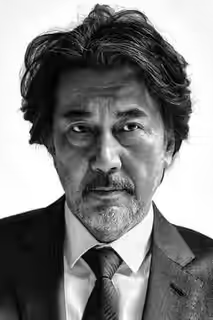
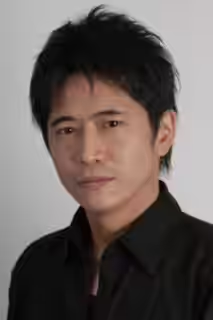
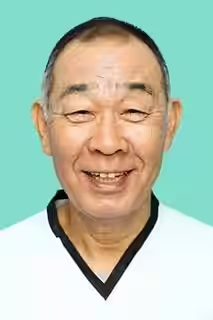
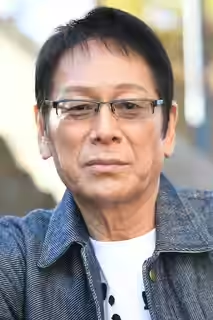
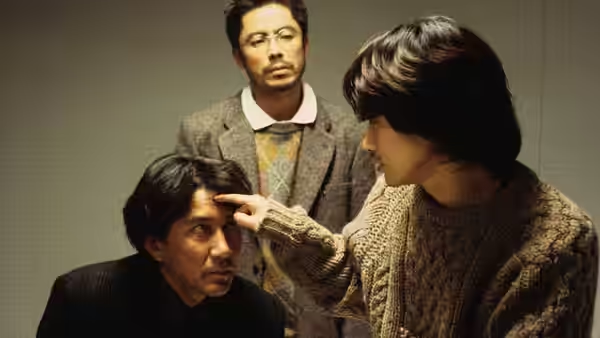
Koji Yakusho gives the detective a weariness that makes the familiar business of interviewing suspects worth watching. His patience looks like something maintained through effort, and irritation keeps showing through. Masato Hagiwara plays Kunio Mamiya with a vagueness that makes it difficult to decide how much he understands or why he needs the same information again. We felt anxious during their exchanges because the repeated questions about identity gradually prevent the detective from doing the questioning.
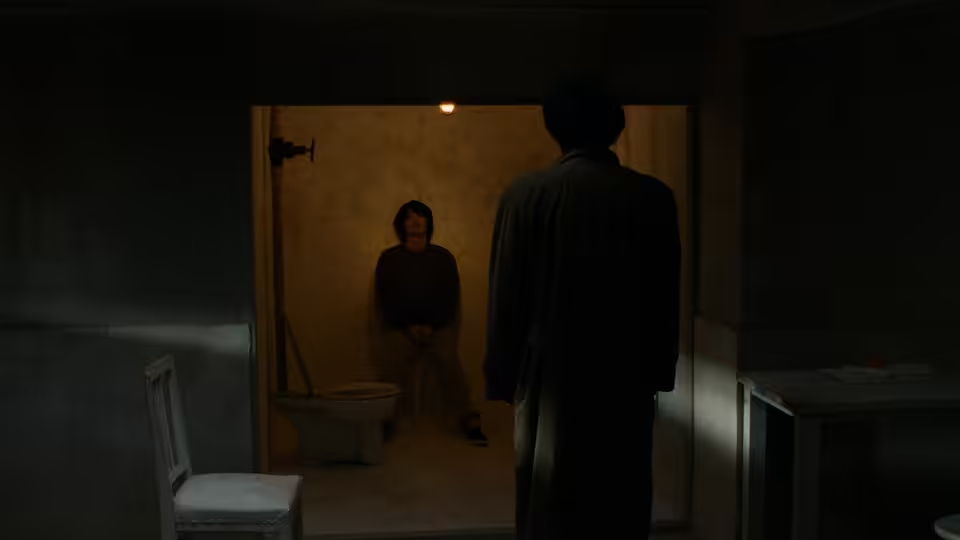
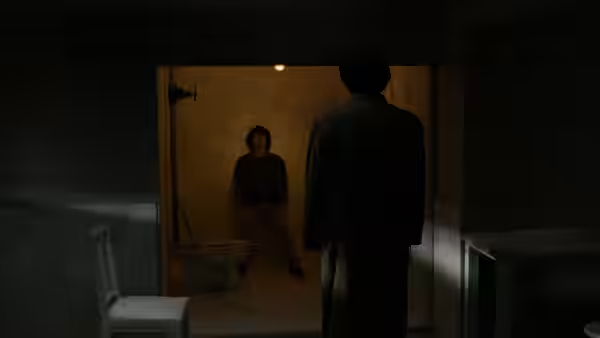
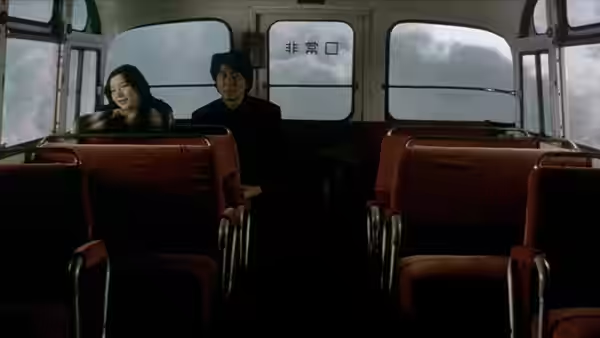
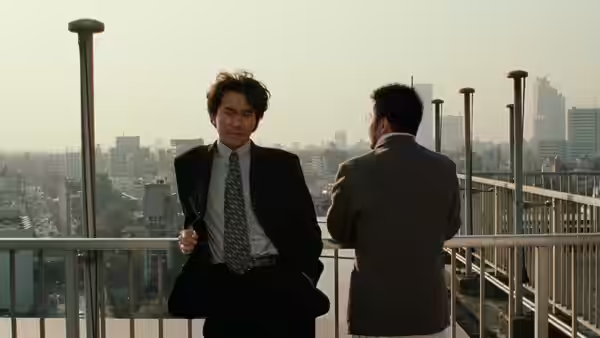
Tokushō Kikumura often keeps the camera back, holding people and the empty space around them in view. The plain framing gives us time to inspect a room without help from a close-up telling us where the threat lies. Tomoyuki Maruo’s drab institutional interiors make that scrutiny unrewarding in a useful way: there is little here that looks specially built for a horror film. That makes it harder to dismiss the conversations as things that could only happen in a horror film.
Kan Suzuki’s editing allows a conversation to continue beyond the point where it seems likely to produce anything useful. The delays make Masato Hagiwara’s evasions irritating as well as troubling, which matters when we are watching a detective trying to remain professional. Gary Ashiya’s sparse score leaves room for ambient sound to become oppressive; the mechanical noise can hold our attention as firmly as a voice. The sound keeps us alert even when the camera appears to be doing little.
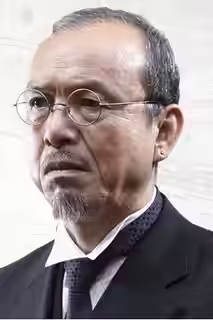
There are stretches where that patience wears thin. At 111 minutes, Cure sometimes repeats an exchange after we have understood how it will frustrate the person asking the questions. The evasiveness begins to feel rehearsed, and we wanted the investigation to move on. Tsuyoshi Ujiki, as Makoto Sakuma, brings welcome seriousness to the search for an explanation, but further discussion cannot always make a familiar question disturbing again.
As a serial-killer thriller, it offers little of the usual satisfaction of watching an expert take charge. Kiyoshi Kurosawa knows that a competent detective can be interesting without being reassuring, and Koji Yakusho makes competence look exhausting. The questions concern acts of violence, but the behaviour we watch is often unremarkable: impatience, uncertainty, a failure to listen. We recognise enough of it to stay involved when the investigation becomes harder to follow.
Give it an evening when the silences will not have to compete with conversation on the sofa. The slow exchanges need attention, and the film offers little relief from them. Leave something undemanding for afterwards.