Blake Edwards tries to keep the Pink Panther going without Peter Sellers by making the search for him the plot, and the search turns up a pleasant young man and a lot of empty rooms. Herbert Lom gets two laughs. Nobody else gets one.
Peter Sellers died in 1980 and Curse of the Pink Panther is Blake Edwards’s second go at carrying on without him. The first, Trail of the Pink Panther, stitched a film out of unused footage. This one is at least honest about the hole: Clouseau is missing, somebody wants him found, and the man sent to find him is a new character played by a new actor. Edwards and his son Geoffrey Edwards wrote it, Edwards produced and directed it, and it runs 109 minutes, which is about seventy minutes longer than its idea.
The idea is Sergeant Clifton Sleigh, and Ted Wass does what he is asked. He falls off a boat, he inflates a life-jacket inside a moving car, he gets a hand stuck in things, and he lands every one of these cleanly. The trouble is that Sleigh is a nice man. Clouseau was funny because he was vain; he destroyed a room and then straightened his tie and blamed the furniture. Sleigh breaks the same furniture and apologises. The falls are the same and the character underneath them is not there, so we watched a competent stuntman have a bad week and waited for the joke to turn into something, and it never did.
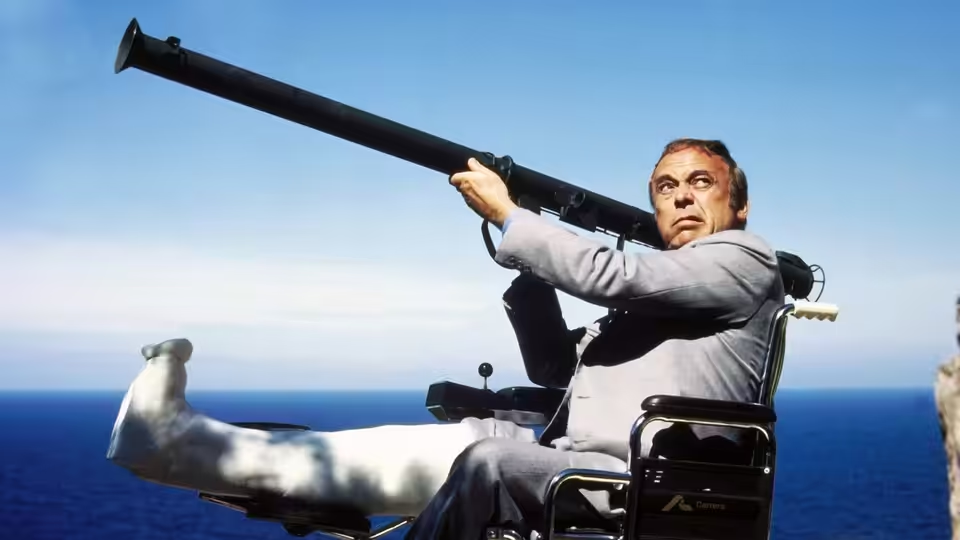
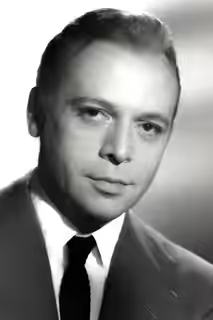
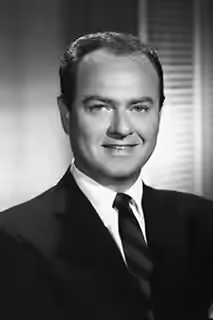
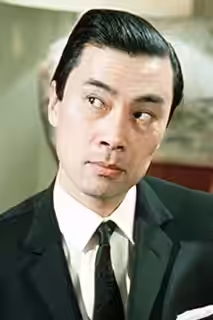
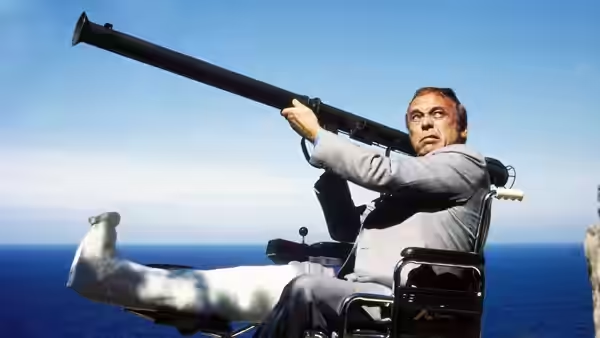
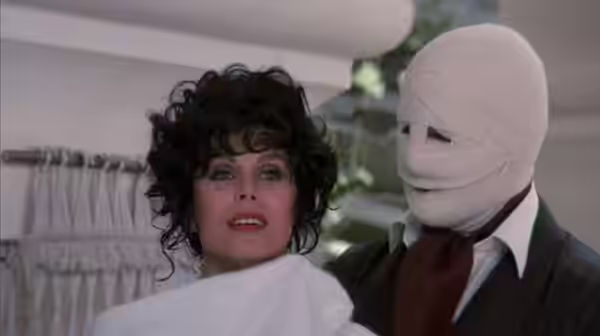
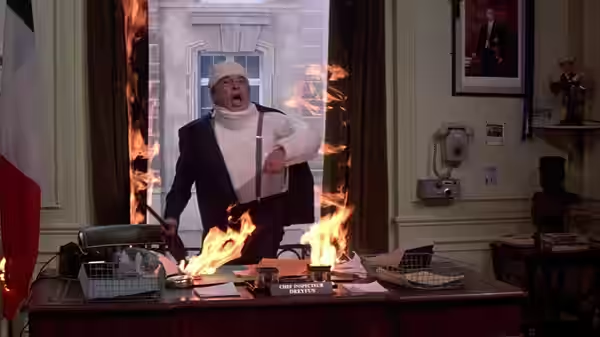
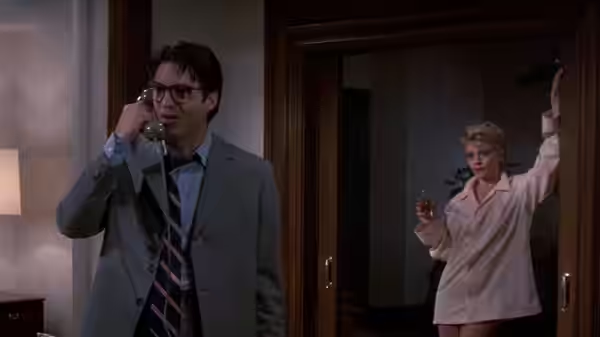
We laughed twice, and both times it was Herbert Lom. Dreyfus spends most of the film in hospital, each visit from Sleigh costing him another limb, and Lom plays the dread of the next visit with a twitch in one eye that starts before Wass has reached the door. That twitch is the only piece of acting in the film that knows exactly how long to hold. Harvey Korman, as the disguise maker Prof. Auguste Balls, gets one scene of mounting hysteria in a shop full of false noses and is then put away. Burt Kwouk’s Cato Fong has been given something new to do with Clouseau’s flat and does it gamely, with no material.
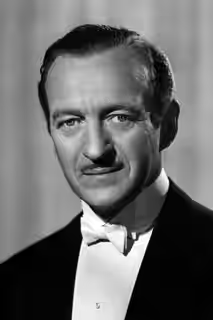
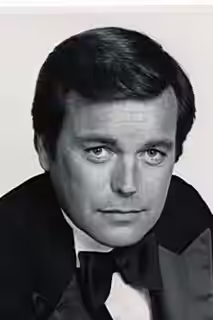
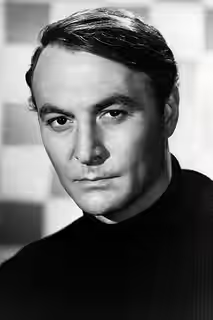
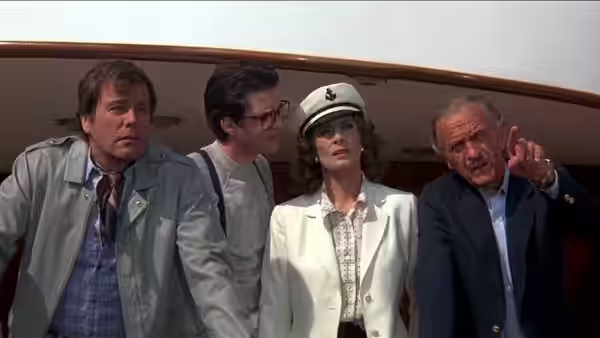
The old guard are in a villa and the film does not know why it has brought them. David Niven’s Sir Charles Litton sits on a terrace and is asked questions; Capucine’s Lady Simone Litton sits beside him. Niven seems a long way off, handed lines a butler could have delivered. Robert Wagner, as George Lytton, is around. Joanna Lumley, as the Countess Chandra, is dressed by Patricia Edwards in a run of silk gowns that are the best-looking thing on screen and is then stood in doorways to wear them. These are not performances so much as attendance.
Dick Bush shoots the exteriors in bright, flat midday light, every white villa and blue harbour as clean as a brochure, and it suits the money being shown better than the comedy, which needs shadows to hide a punchline in. Peter Mullins’s production design gives Dreyfus a hospital ward and Balls a cluttered shop and the Littons a villa, all of them plausible and none of them a place a gag could live in. Henry Mancini’s theme is still Mancini’s theme, and every time it slinks in under a scene we were reminded of a better film and then returned to this one.
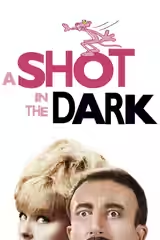
The standard here is Edwards’s own. A Shot in the Dark, from 1964, built a whole picture out of one man refusing to notice he was wrong, and the staging in it is as exact as anything in American comedy. Here the staging is loose, the cutting arrives late to its own gags, and Graham Stark’s bored waiter, a running bit in a café, is the only sequence with the old timing. Roger Moore is in the film; we will not say how or where. Most critics have landed low, between hostile and tired, and we are with them.
If you want the series, start anywhere earlier. If you have seen the earlier ones and are a completist, this is a watchable afternoon with Lom’s eye and Lumley’s wardrobe to look at. Everyone involved has made better films, and several of them had made better films with each other, which is the part that stings.