The slapstick earns a few laughs and Chow Yun-Fat gives the crowded mystery some authority. But predictable plotting and heavy-handed politics make 135 minutes feel longer than the jokes can justify.
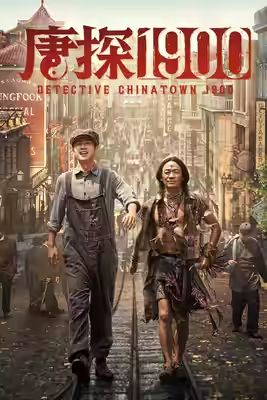
Detective Chinatown 1900 has enough comic energy to make its failings frustrating, but not enough mystery to sustain 135 minutes. Directors Chen Sicheng and Dai Mo want the slapstick, action and political material to belong in the same entertainment, and for short stretches they do. The jokes give us a reason to stay interested when the investigation does not. We would not recommend it as a whodunit, though there are pleasures here for anyone willing to let the case become a secondary concern.
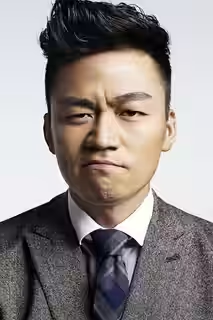
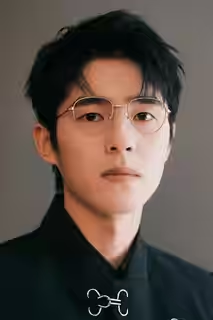
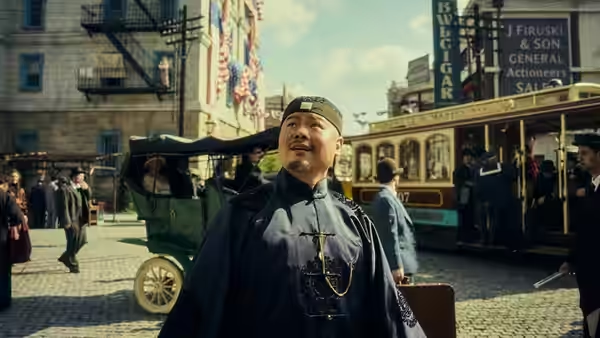
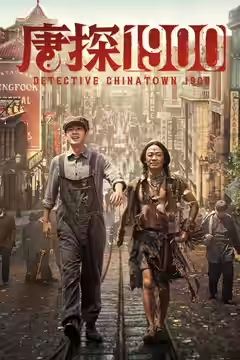
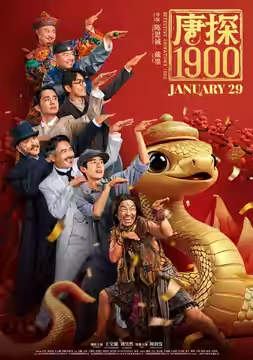
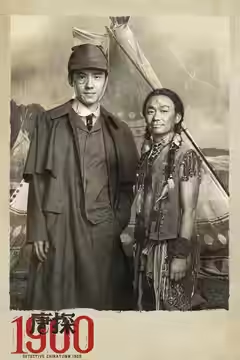
The cast is led by Wang Baoqiang as Ah Gui and Liu Haoran as Qin Fu, though the most reliable pleasure is the film’s willingness to make fun of itself. The slapstick allows some foolishness into a film that can otherwise become rather pleased with its own importance. That self-mockery is welcome, particularly when the plot threatens to become tiresome. It also makes the more solemn writing feel laboured: having shown that it can entertain without explaining itself, the film becomes much too eager to lecture.
Chen Sicheng’s screenplay is less successful at sustaining the investigation. A mystery can be elaborate without being difficult to guess, and this one keeps adding complications without making the answer feel more interesting. Tang Hongjia’s editing maintains a brisk pace within individual passages, but the larger shape remains overlong and muddled. We grew impatient with the predictable plotting because the extra complications gave us so little reason to reconsider what we thought was happening.
Du Jie’s cinematography contributes to the generous scale of the staging, and the film is hardly short of things to look at. Yet spectacle frequently distracts from the detective work, which needs us to attend to information rather than simply enjoy the bustle. Nathan Wang’s score does little to make the moves between broad comedy and political seriousness feel natural, although that problem begins in the writing. The accumulated activity becomes tiring when the case itself is offering so little surprise.
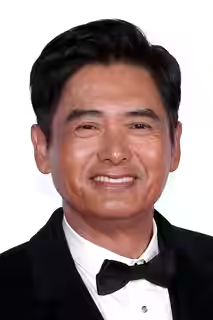
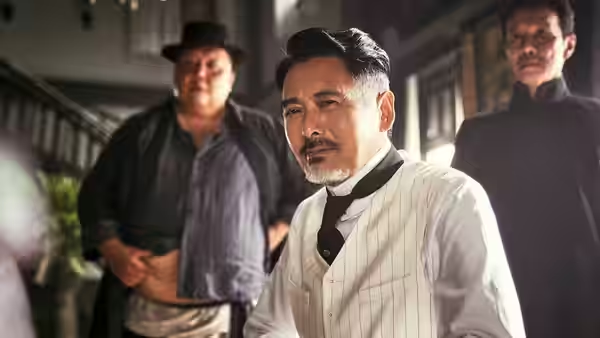
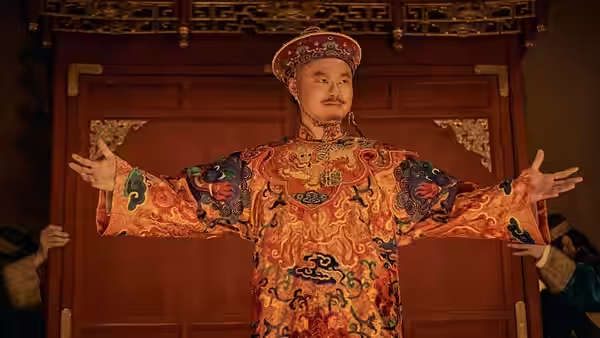
Chow Yun-Fat, as Bai Xuanling, is the strongest reason to persist. He is persuasive as the community’s voice, giving the political material a human presence that its more insistent passages lack. Chen Sicheng nevertheless presses points that the performance has already made, and the earnestness becomes wearing. The stereotyping of Native American characters also makes the broader political concerns feel carelessly handled. A film asking us to take its community seriously needs to extend that care to the other people it depicts.
Comic mysteries can survive a good deal of nonsense if following the clues remains enjoyable. Here the gags are more dependable than the clues, and the serious material increasingly requires patience the mystery has already used up. Viewers chiefly interested in broad comedy may be more forgiving, particularly with Chow Yun-Fat giving the film some weight. For an evening built around trying to solve a case, we would choose something tighter.