Kristoffer Borgli hands Nicolas Cage a receding hairline, a parka and the whole world’s dreams, and for an hour the result is a small, sharp, funny film about wanting to be noticed. Then it starts explaining itself, and gets smaller.
Paul Matthews is the kind of man people forget while he is still talking to them. He teaches biology at a small university, he has been meaning to write a book about ants for years, and he keeps a private tally of colleagues who have done better. Then he starts turning up in other people’s dreams, doing nothing at all, and Kristoffer Borgli’s comedy is about what a man like that does with the attention. For its first hour it is sharp, sad and properly funny. For its last half hour it is a lecture, and that is a smaller thing to be.
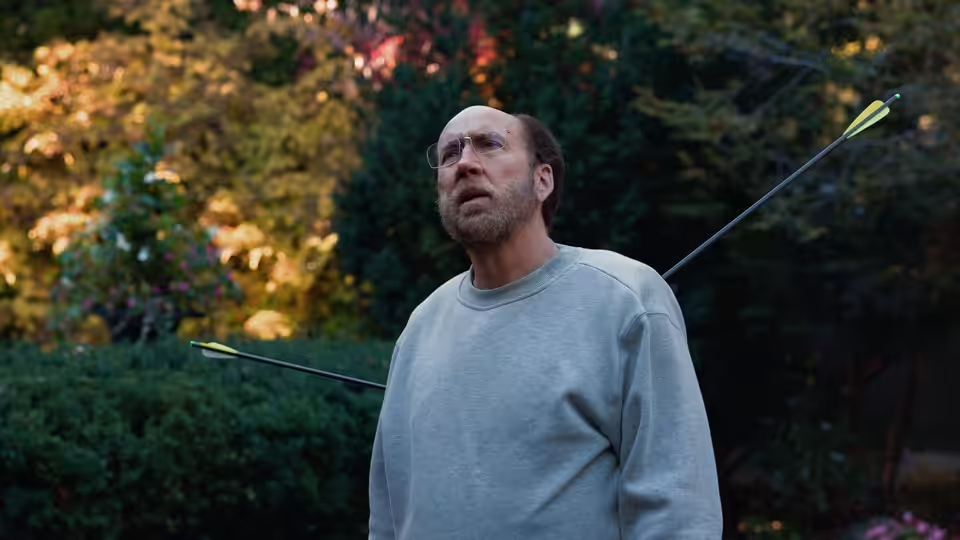
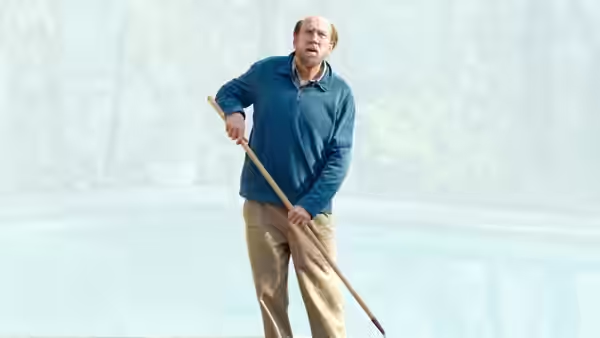
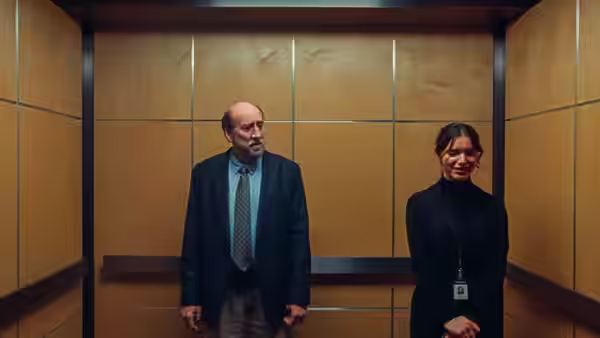
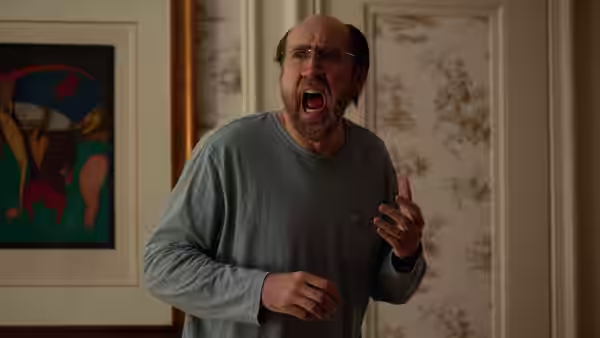
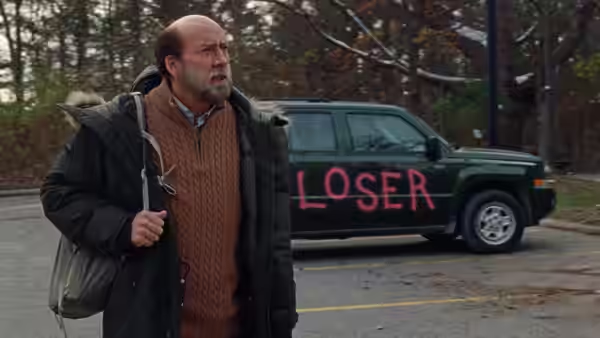
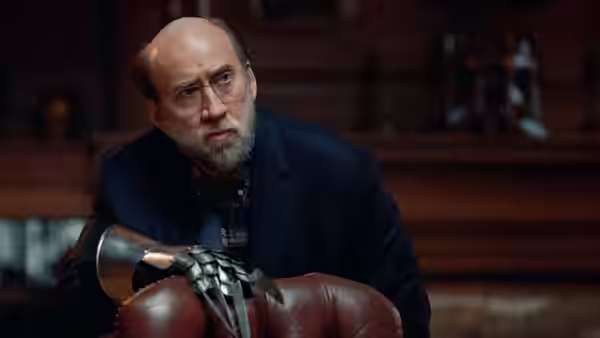
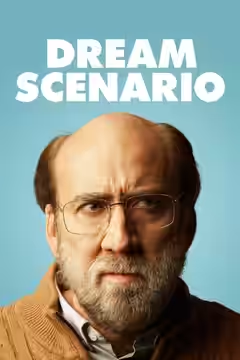
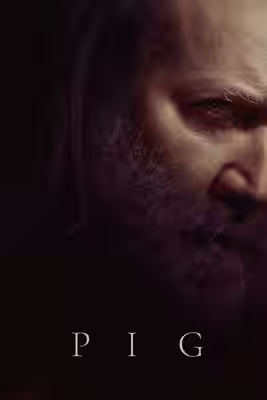
Nicolas Cage plays him with no vanity and almost no volume. The hairline has been pushed back, Kaysie Bergens puts him in a parka he never seems to take off and glasses he is forever adjusting, and the voice is a pinched, reasonable murmur that turns aggrieved the moment anyone disagrees with him. It is a performance built out of small things: a laugh a beat too late, a hand raised to make a point nobody is waiting for. Cage has spent thirty years being the loudest thing in the frame. Here the joke is that he is the dullest, and he plays it dead straight.
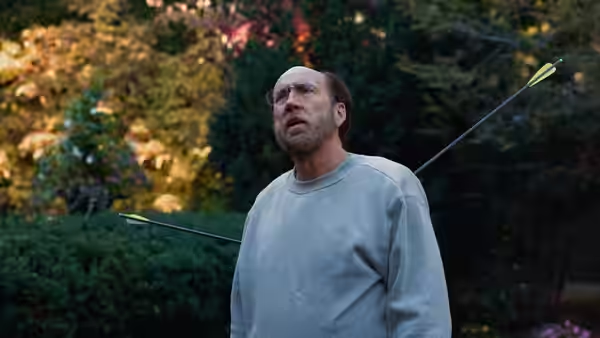
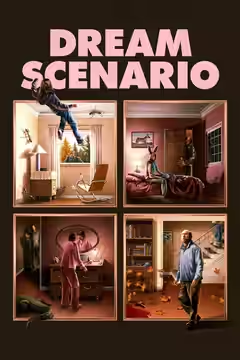
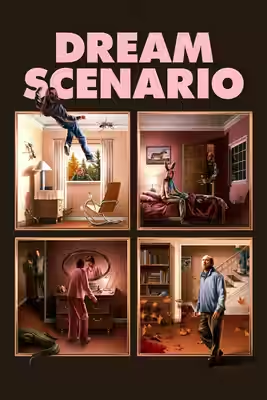
The dreams are the film’s best idea, and the way they are shot is the second best. Benjamin Loeb lights them exactly as he lights the waking scenes: flat, a little drab, the colours of a university corridor in February. Borgli, editing his own picture, cuts straight from a kitchen to a burning field without so much as a fade, so that for a second you are not sure which one you are in, which is how dreams actually work. In each of them Paul stands to one side, hands in his pockets, watching, and we laughed harder each time. A collapsing house, a man on fire, an alligator, and there is Paul, looking mildly interested. Owen Pallett’s score stays low and stringy under all of it, and Zosia Mackenzie’s sets are so ordinary that a lecture hall and a nightmare look like the same place.
Julianne Nicholson does more with less than anyone else in it. Janet is the one person who knew Paul before the world did, and Nicholson lets you watch her decide, scene by scene, how much of this she is prepared to put up with. Michael Cera and Kate Berlant run the agency that wants to sell Paul’s face, and their pitch meeting, in which Cera explains with complete seriousness what a soft drink could do inside a dream, is the best stretch of dialogue in the film. Tim Meadows, as Brett, has the tired face of a man who has sat through a great many complaints.
The trouble begins when the dreams stop being harmless. We will not say how, but the trailer has. For a few scenes Borgli lands the turn. Then the film starts arguing. Paul, who has been a small and rather unpleasant man for an hour, is asked to stand in for something much larger than himself. He is not big enough for the job, the script seems to know it, and it goes on anyway. We stopped laughing and started checking how much was left. A late detour into a piece of technology, with a Noah Centineo cameo attached, belongs to a different and broader satire.
Borgli’s previous film, Sick of Myself, was about a woman who made herself ill to be looked at, and it kept its nerve to the last frame. This one has the better premise and the bigger star, and it flinches. Critics have reached for Charlie Kaufman, and the comparison holds for the first hour; Cage’s own Adaptation is the obvious cousin. Kaufman would not have let the film explain what it thinks about the internet.
At 102 minutes it does not overstay, and the last scene, which we will not describe, is quieter and kinder than we expected. Watch it for Cage standing quite still while the world burns behind him. It is a joke that does not wear out, and the film knows it.