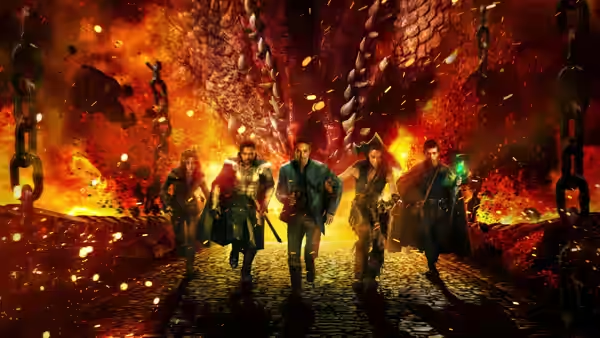
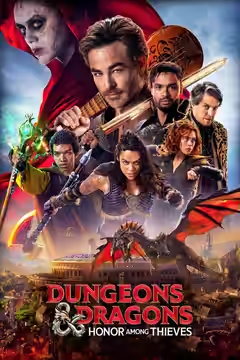
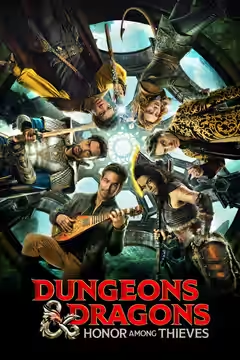
Daley and Goldstein have made a heist comedy in fantasy dress, and when it is small, five people bickering in a graveyard or a druid running through a castle, it is a pleasure. When it is big, it is loud, grey and long.
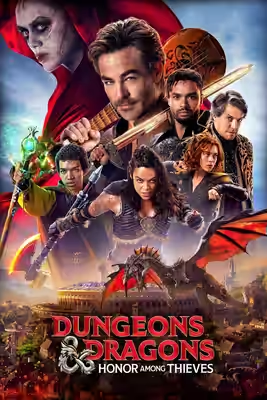
John Francis Daley and Jonathan Goldstein’s Dungeons & Dragons: Honour Among Thieves is a heist comedy that happens to have wizards in it, and it is fond of the game rather than solemn about it. For its first hour that is a pleasure. Then the fights get bigger and the pleasure thins.
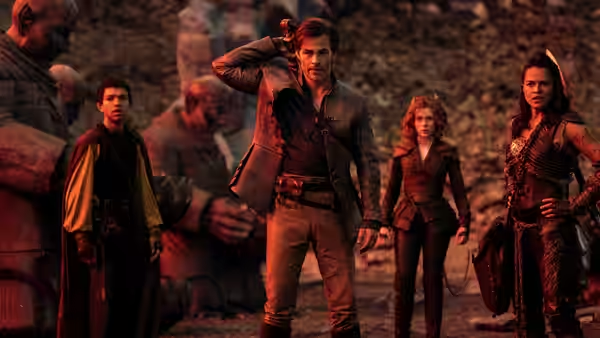
Edgin (Chris Pine) is a bard who gave up the lute for burglary, and Holga (Michelle Rodriguez) is the barbarian who hits things while he talks. We meet them in prison, where Edgin uses his parole hearing to tell the story of how they got there, and the film’s method is set in that scene: he talks, and the plan is usually worse than the talking. Back in Neverwinter, their old partner Forge (Hugh Grant) has become lord of the city and has kept Edgin’s daughter Kira (Chloe Coleman) as his own. Getting her back means a robbery, and a robbery means a crew.
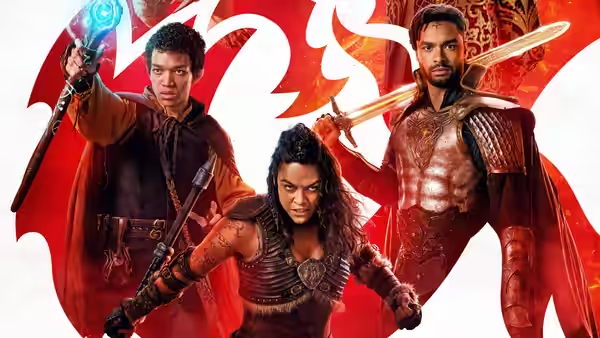
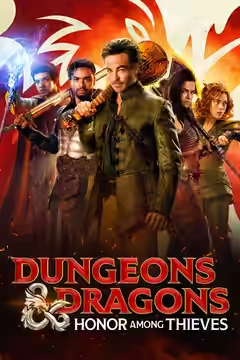
The crew is the film. Justice Smith’s Simon is a sorcerer who cannot make a spell work when anyone is watching, and Smith plays the nerves rather than the jokes, which is why the jokes land. Sophia Lillis’s Doric is a druid who would rather be an owlbear than a person. Pine and Rodriguez have an ease together that most screen pairs never manage, and the script, by Daley, Goldstein and Michael Gilio, never makes them a couple. Grant does the thing Grant does now, a smiling man who is lying and slightly delighted to be caught at it, and Amanda Monk dresses him in velvet and rings.
The two best sequences are the smallest. In a graveyard, Simon casts a spell that lets a corpse answer exactly five questions, and the crew waste them on pleasantries, dig up another, and do it again, and Dan Lebental cuts each repetition tighter than the last until the final corpse is a punchline before it has opened its mouth. We laughed out loud, twice, and were not expecting to. Later Doric flees a castle by changing shape mid-stride, fly to mouse to deer to owlbear, and Barry Peterson’s camera follows her through what has been stitched to look like one unbroken take, along corridors, over a wall and into a river. It is the one place the digital work does something a camera could not.
Jean Page arrives partway through as Xenk, a paladin so upright he cannot recognise a joke, and Page plays him without a flicker. Every line Pine throws at him bounces off. He is the reason a number of critics have been kinder to the middle act than we are.
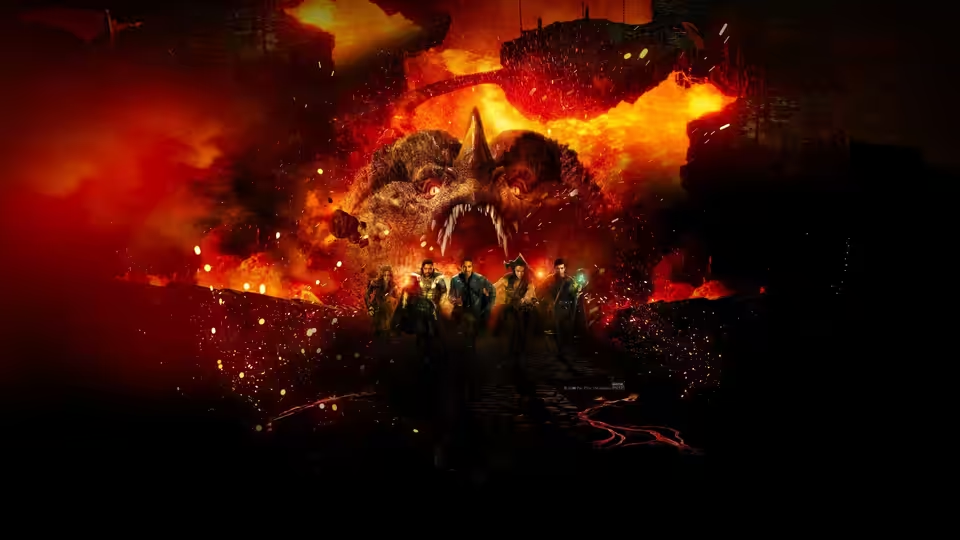
The trouble is scale. Every time the film stops talking and starts fighting, it looks like every other film of its size. Ray Chan has built a proper Neverwinter, timber and stone and a market you could walk through, but the arena where the last act happens is a grey bowl full of grey pixels. Daisy Head’s Sofina, the wizard behind Forge, is asked to scowl and hover and little else. Lorne Balfe’s score thunders through all of it at a single volume. By the last fight we had stopped following who was hitting whom and started checking the time. At 134 minutes the film is a good half hour longer than its best version.
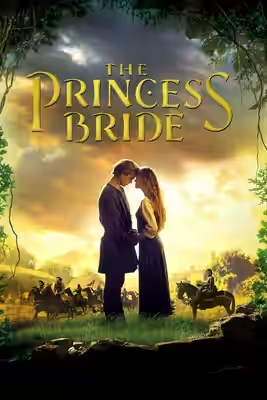
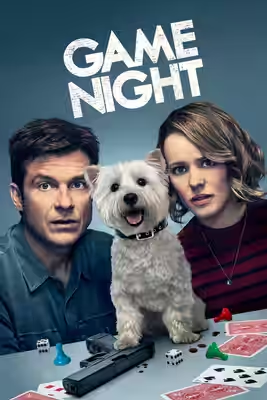
Daley and Goldstein made Game Night, a comedy about ordinary people caught in a plot too big for them, and they have brought its rhythms here. Fantasy has not had many of these since the eighties, when The Princess Bride and Willow were allowed to be silly and sincere in the same scene. What those two had that this one lacks is a danger we believed in between the jokes.
Take the children; the 12A is earned by nothing worse than a few skewered guards and a dragon that has let itself go. The people on the sofa who have never rolled a die will follow every word, which is what the tagline promises, and the ones who have will spot things the rest of you will not and be insufferable about it for a week.