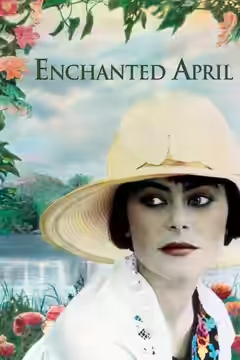
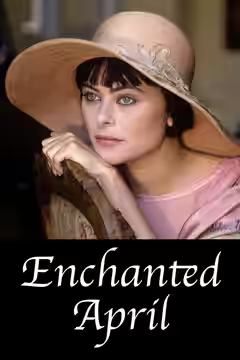
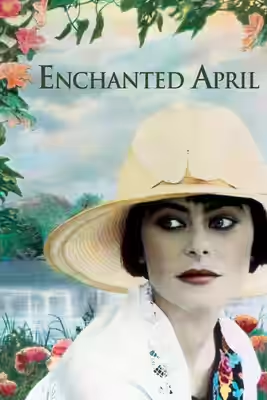
Mike Newell’s Enchanted April offers agreeable company and Joan Plowright’s sharply delivered wit. Its romantic optimism comes too easily, but the performances make this slight drama worth considering for a quiet evening.
Mike Newell’s Enchanted April is an agreeable romantic drama whose optimism comes too cheaply. April in Italy, with the possibility of love: the attraction needs little explaining. There is nothing embarrassing about wanting a film to offer that, and Mike Newell treats the wish with an affection that makes its gentleness welcome. We just wanted the writing to give its characters more convincing difficulties.
Peter Barnes adapts a novel by Elizabeth von Arnim, and the film works most comfortably as a comedy of manners. Its wit gives the characters something to do while the romance gathers what momentum it can. Too often, however, a difficulty feels like a temporary inconvenience, with insufficient attention paid to what makes people reluctant to change. We need not demand misery, but a little more stubbornness would make the good humour more persuasive.
Joan Plowright, as Mrs Fisher, supplies the sharpness that keeps the film from becoming merely pleasant. We laughed at the precision of her delivery, which gives the witty lines a welcome bite. There is authority in the performance, and she can command our attention without making the comedy seem laboured. Her contribution matters because the film needs someone capable of making a familiar observation entertaining through the way it is said.
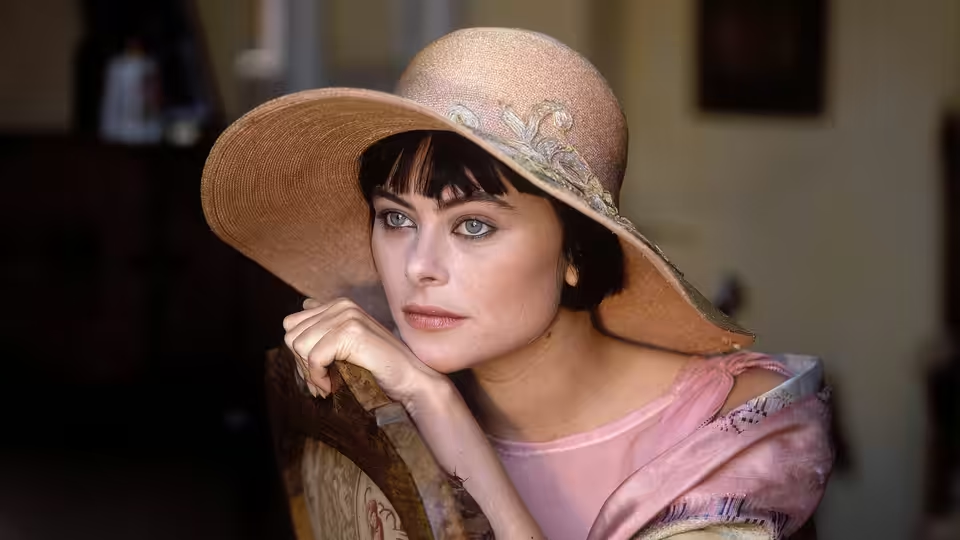
The ensemble gives us further reasons to stay, with Josie Lawrence as Lottie Wilkins and Miranda Richardson as Rose Arbuthnot. Alongside Polly Walker as Caroline Dester, they provide enough variety to keep the gentleness from becoming monotonous. The problem is how often the writing seems content to rely on the appeal of its performers. There is room here for more friction between people, and for a less accommodating account of how their difficulties might be overcome.
Rex Maidment’s cinematography makes the Italian setting inviting, which matters in a film offering romantic escape. Malcolm Thornton’s production design is pleasing too, although the comfort of the surroundings contributes to the feeling that too little is at stake. These are successful choices for the kind of film Mike Newell wants to make. They also make the thinness of Peter Barnes’s dramatic writing easier to overlook for a while.
Richard Rodney Bennett’s music helps sustain the agreeable mood, though it cannot make the romance more convincing by itself. Dick Allen’s editing keeps the film from feeling overlong, and the 95-minute running time is welcome. Yet there are stretches when the story needs development that pace alone cannot supply. A comedy of manners can remain gentle while asking more awkward questions about the people whose company it invites us to enjoy.
The right appetite matters here. We would choose it for an evening when mild wit and the prospect of an Italian April are enough, rather than when we want a romance to surprise us. Its easy answers are a real limitation, and gentleness does not automatically excuse them. Let Joan Plowright be the reason for the evening, and the expectations are about right.