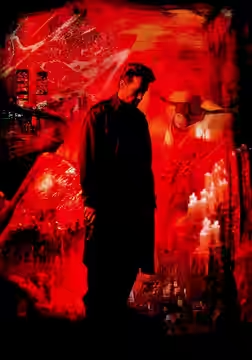
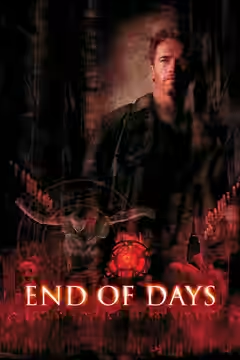
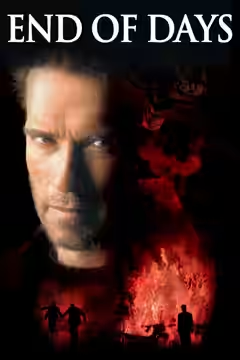
Gabriel Byrne gives End of Days some welcome malice, and Arnold Schwarzenegger takes his punishment gamely. But the religious plotting is muddled, the solemnity wearing, and the action cannot make the trouble worthwhile.
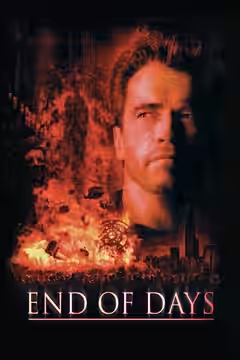
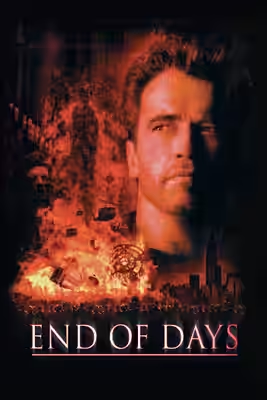
End of Days has an appealingly unreasonable proposition: put Arnold Schwarzenegger in a religious horror film and see how much of it can be settled by force. Peter Hyams gives that proposition some weight, but not enough wit or clarity to sustain 122 minutes. There are enjoyable stretches, chiefly when Gabriel Byrne takes charge, yet the film keeps interrupting itself to sound grave. The explanations soon become a drag.
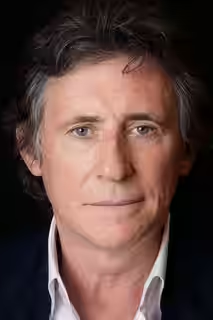
Gabriel Byrne, credited as The Man, is the strongest reason to persist. His Devil enjoys being wicked, with enough menace to prevent the performance from becoming merely comic. We were relieved whenever he took charge of a scene. His leering pleasure in the role gives us something recognisably human to recoil from, and he does not seem embarrassed by the material. A little more of that willingness to enjoy the absurdity would have helped everyone else.
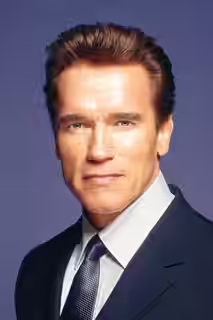
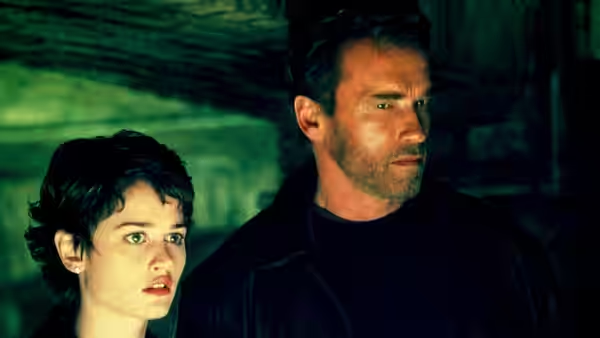
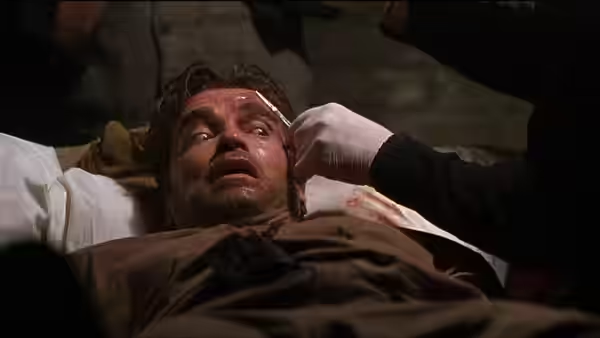
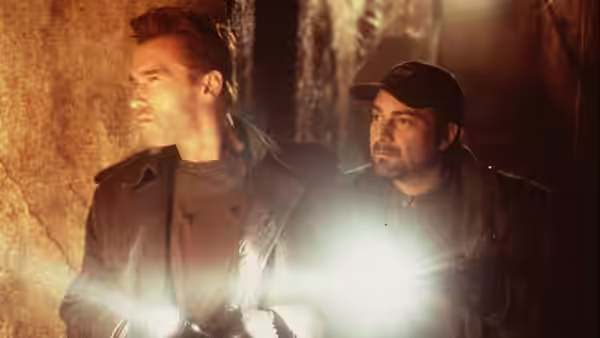
Arnold Schwarzenegger plays Jericho Cane with a vulnerability worth taking seriously, even when the performance itself is less convincing. He is game about looking battered, and the punishment gives the action something beyond the usual assurance that the leading man will manage. We do not, however, come to know him particularly well. His commitment earns some sympathy, but Andrew W. Marlowe’s writing asks the religious plot to supply an emotional weight it has not earned.
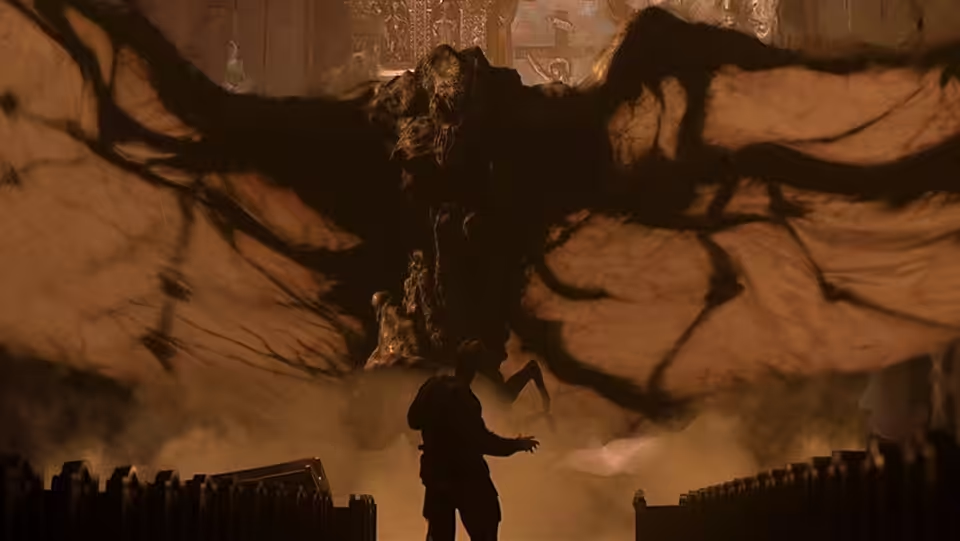
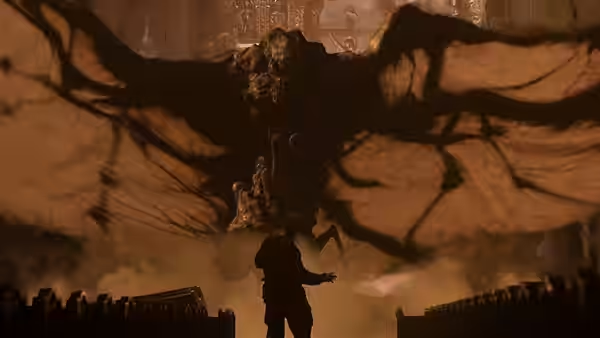
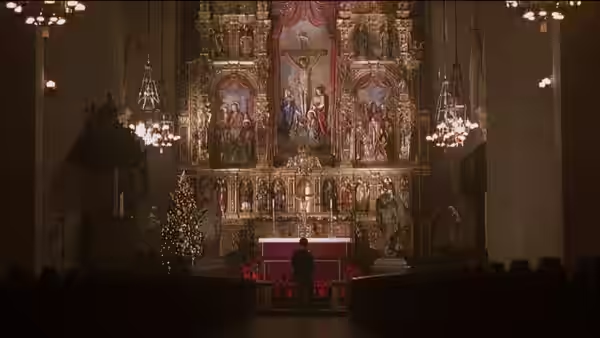
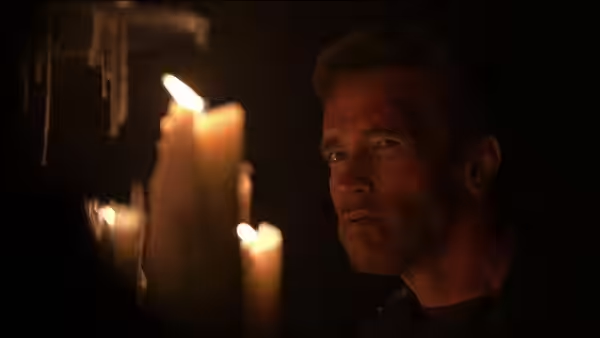
Peter Hyams also serves as cinematographer, and the action has more force than the horror has dread. The physical spectacle sometimes excites, then the religious business resumes its solemn trudge. Richard Holland’s production design contributes to the oppressive mood, but the surroundings rarely provide a reason to feel afraid. Too much effort goes into telling us how seriously to take the danger, leaving too little room for the anticipation that might make it frightening.
Editors Jeff Gullo and Steven Kemper cannot give the mixture a reliable rhythm. The bursts of action offer some relief, but the film feels laboured whenever it has to account for its supernatural business. John Debney’s music adds urgency without resolving that stop-start feeling. We need to understand what is at stake without spending so much time being instructed, and the editing cannot solve a problem that begins with the writing.
The action-horror combination ought to allow room for both fear and a certain disreputable pleasure. Here, the violence can be forceful, but solemn delivery is repeatedly asked to make the religious plot convincing. Andrew W. Marlowe’s script needs firmer rules and less fuss about them. The familiar ingredients would be easier to forgive if the film did not seem so determined to make us respect them.
There is enough in Gabriel Byrne’s performance to explain an affection for End of Days, and the action occasionally earns its keep. That is not enough to recommend the full 122 minutes. If he is the attraction, be prepared to sit through a good deal that does not involve him.