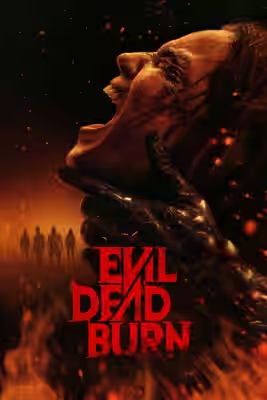
Sébastien Vaniček’s spin-off is the most brutal film to carry the name, and Souheila Yacoub holds it together. But it has traded the series’ mischief for a domestic-abuse allegory it states rather than dramatises, and by the hour mark the gore has stopped landing.
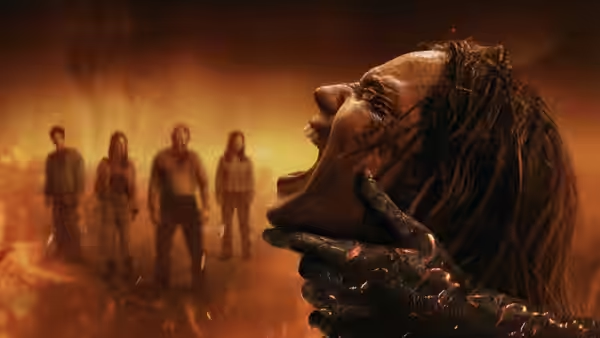
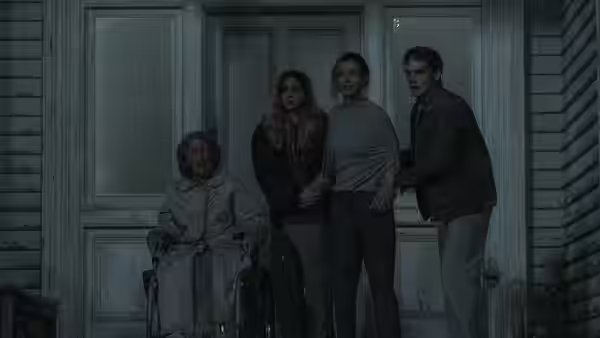
Sam Raimi and Robert Tapert, who produce, have handed their series to Sébastien Vaniček, the French director of Infested (2023), and he has written it with Florent Bernard. What they have made is the cruellest film to carry the Evil Dead name and, for long stretches, the least enjoyable. That is partly deliberate. The Deadites here are turned loose on a family that was already hurting each other before anything supernatural arrived, and every possession plays out as an argument that had been going on for years. The idea is a decent one. The film states it, then states it again, and by the halfway point it has stopped frightening us and started explaining.
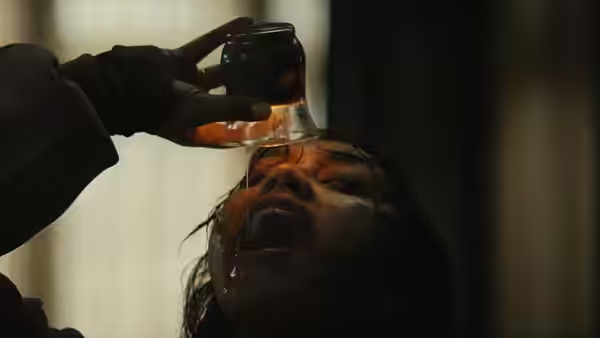
The craft is real, and it is where the film is easiest to like. Philip Lozano’s camera hardly ever sits level. It tilts, drifts through doorways and follows bodies across rooms in long takes where most horror films would cut, so that when a thing happens to a person we see all of it. Nick Connor’s house is cluttered and ordinary, every drawer and sideboard stocked with something that will later be picked up in anger, and the film’s best jokes, such as they are, come from watching a household implement do a job it was not sold for. The trouble is the colour. Lozano and Connor have settled on greys and browns, and blood on a grey wall in grey light reads as damp rather than red.
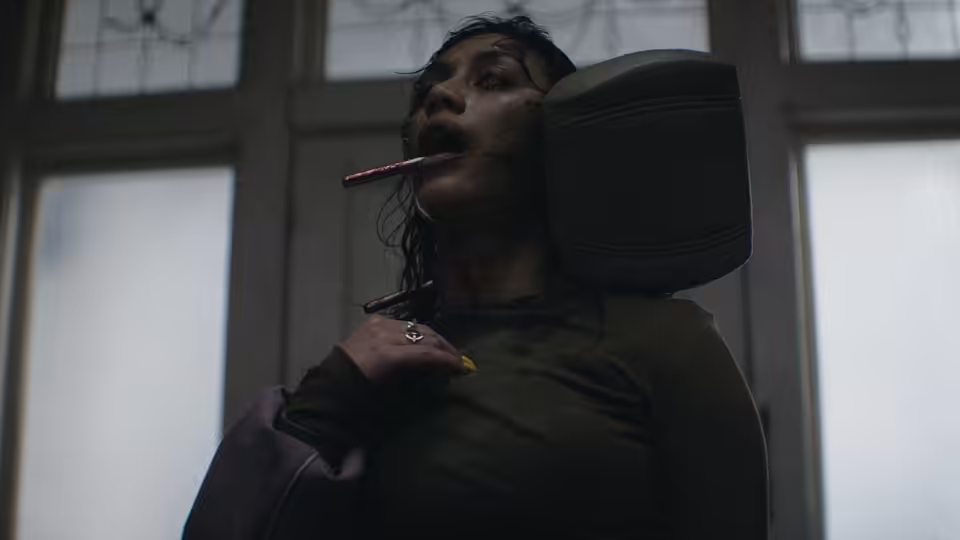
Souheila Yacoub carries it. She plays Alice with a set jaw and a total absence of self-pity, and she can make running down a corridor look like a decision rather than a reflex. Tandi Wright’s Susan is the film’s other real presence, a woman whose every kindness has a bill attached. Hunter Doohan, Luciane Buchanan and Erroll Shand are given one trait each and play it competently. There is a sequence involving an older member of the household, which we will not spoil, that is the film’s best few minutes, the one place where the appalling and the ridiculous sit in the same shot as they used to for Raimi.
Here is what we felt. Early on there is a set piece involving an ear, and we were horrified, properly, and looked away, and were glad of the 18 certificate. There is also a sequence in a car that is staged with real ingenuity and had us braced in our seats. That was the first hour. By the second we noticed we were watching a body come apart the way one watches rain, and then we were annoyed at ourselves for being numb, and then at the film for having spent our capacity to be shocked so early and so freely.
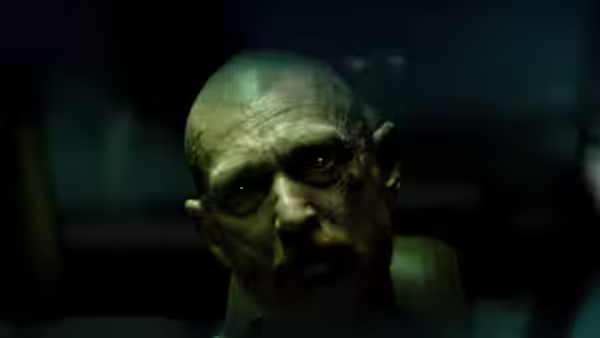
The allegory does not help. Vaniček and Bernard want the demons to say what the family has always thought, and so the demons say it, in full sentences, at length. There is no need to work anything out; the film has done the working out and hands it over. Raimi’s originals had Bruce Campbell falling over furniture and a camera that ran at people like a dog. This has neither, and its refusal of comedy is not a mistake so much as a choice we cannot share. Maxime Caro leaves shots long, which serves the set pieces and starves the scenes between them, so that the family drama the film cares about most is the part that drags. Xavier Caux and Douglas Cavanna’s score drones low under everything and shrieks on cue, and we could not hum a note of it.
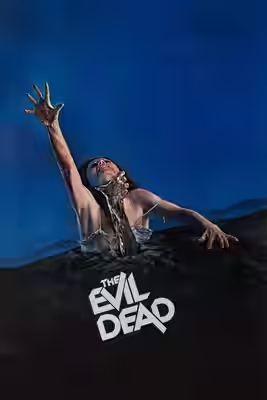
Against the series’ own standards it sits oddly. The Evil Dead (1981) and Evil Dead II (1987) were cheap, quick and delighted with themselves. Lee Cronin’s Evil Dead Rise (2023) was grim too, but it kept a ration of glee. Burn is better made than any of them, shot for shot, and it is the one we would least want to see again. Most critics are split down the middle on it, and for once we think the middle is the right place to stand.
See it if you have followed the series this far and want to know how much further it can go. Go with someone who does not flinch, and do not eat first. It is 110 minutes long, which is about twenty more than the material can carry, and the last of them are the loudest.