Aki Kaurismäki has made this film before, and he has rarely made it better. A deadpan Helsinki romance about two people with bad jobs and worse luck, it is short, dry and, by the end, unexpectedly kind.
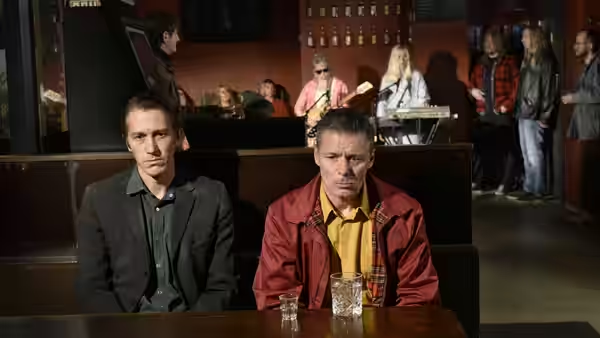
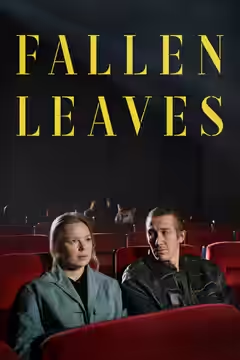
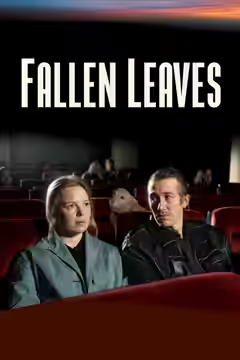
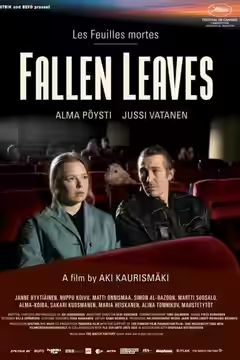
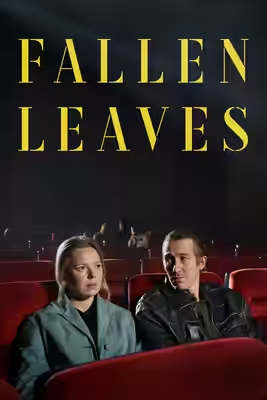
Ansa (Alma Pöysti) stacks shelves in a Helsinki supermarket until a security guard catches her taking home food the shop was going to throw away. Holappa (Jussi Vatanen) works on building sites and drinks, and keeps drinking. They meet in a karaoke bar where his friend Huotari (Janne Hyytiäinen) is singing, and over some weeks and a great many silences they come round to the view that they would rather be in the same room than not. Aki Kaurismäki writes, produces and directs, and he does it in 81 minutes. It is a small film and a good one, and we liked it more than anything of his in years.
Kaurismäki has been making this film, in one form or another, since the 1980s. Shadows in Paradise, Ariel and The Match Factory Girl put lonely Finns in bad jobs and watched them find each other, and several critics have called Fallen Leaves a fourth part, which seems fair to us. His people still talk in short flat sentences. They still smoke, drink coffee from small cups and listen to the radio. Nothing here will surprise anyone who has seen him before, and he does not appear to think it needs to.
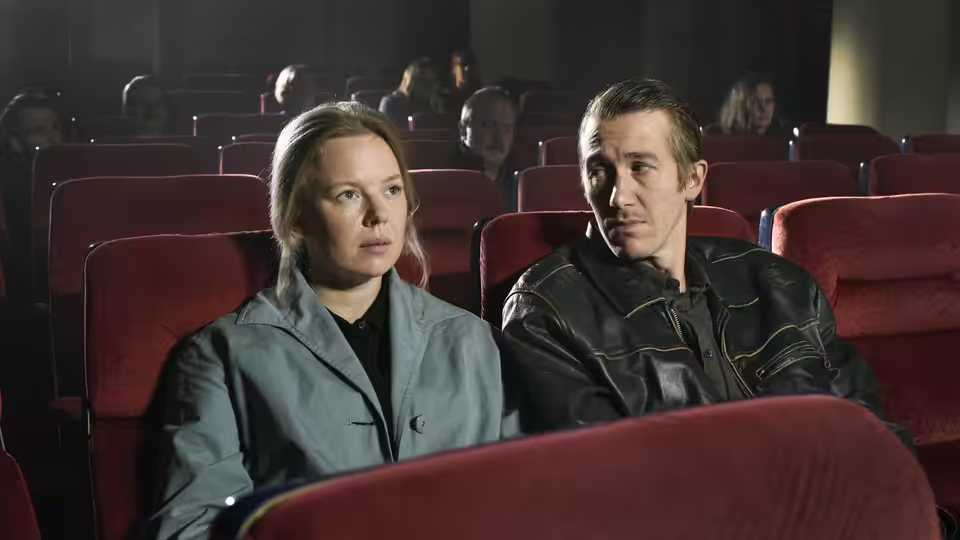
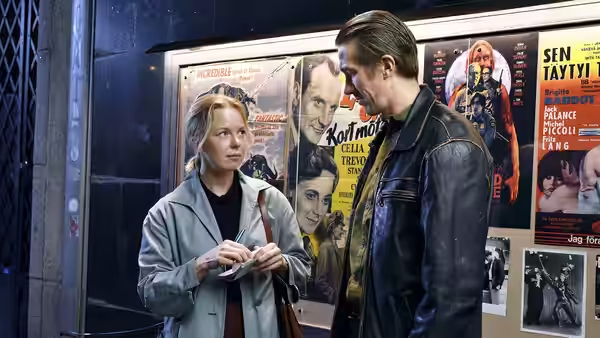
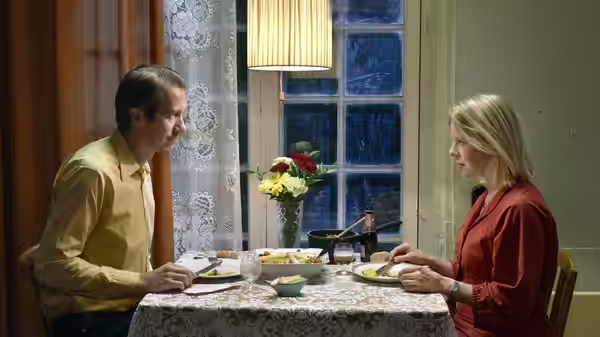
Timo Salminen lights it the way he lights all of Kaurismäki’s Helsinkis: each wall a single flat colour, each lamp placed as if for a still life, the reds and greens and blues as clean as paint samples. Ville Grönroos gives Ansa a kitchen with one chair at the table and a radio on the side, and gives the karaoke bar the brown walls and pooled light of a place where the same people have been sitting since the Seventies. Tiina Kaukanen dresses everyone in clothes from no decade you could name, plain coats and cardigans that could be new or forty years old. The result is a city that looks like 1985 until somebody turns the radio on and the news is from Ukraine.
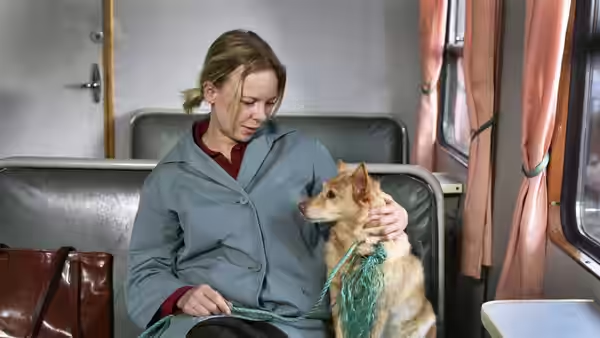
Pöysti plays Ansa with a face that hardly moves, and we could read every thought on it from the back row. She is not blank; she is guarding something, and when Holappa says something kind the guard slips for about half a second before she gets it back. Vatanen plays Holappa as a man who walks as if apologising for taking up pavement, and he has one line about why he drinks that is funnier and sadder than it has any right to be. Hyytiäinen’s Huotari sings at karaoke with the confidence of a man who has never once been asked to, and Nuppu Koivu, as Ansa’s friend Liisa, gets her laughs without appearing to try for them. Nobody in this film raises their voice. We are not sure anybody in it could.
The radio is what got at us. Ansa switches it on for company, alone in her kitchen, and gets casualty figures and shelled cities. She listens for a moment, then reaches over and switches it off, and goes back to her dinner. The camera stays where it is. This happens more than once, and the second time we found it hard to sit through, which we had not expected from a comedy about two shy people. Kaurismäki keeps letting the world in through a small speaker and then shutting it out again, because there is nothing else she can do about it, and the film knows that is not enough and does not pretend otherwise.
The one mixed notice among the reviews calls it minor, and we can see the case. It is 81 minutes and thin, and there is a stretch in the middle where the plot, such as it is, hangs on a mischance we will not describe and the film marks time until it arrives. The cinema jokes, the posters in the lobby and the film the two of them choose, are for people who know Kaurismäki’s friends and heroes, and if you are not one of them a couple of minutes will pass you by. Samu Heikkilä cuts most scenes a beat before you expect, which is the right call nine times in ten and once or twice leaves a joke standing in the doorway.
See it in a cinema if you can, because the silences need a room to sit in. On a sofa, with the lights on, you will be tempted to talk over them, and there is not a great deal of dialogue left to lose. The 12A is fair: there is drink, there is bad luck, and there is a dog, about which we will say nothing except that it earns its billing.