Sean S. Cunningham’s cheap camp slasher has a lake, a whispering score and one proper performance that arrives with twenty minutes to go. The killings are nasty and well made; everything in between is waiting. For the curious and the committed only.
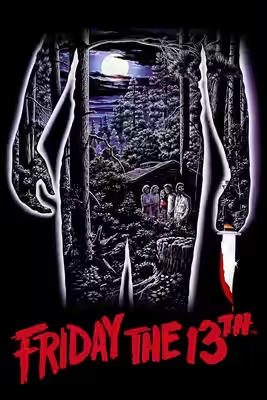
Sean S. Cunningham had produced The Last House on the Left (1972) for Wes Craven, and by 1980 he had seen what John Carpenter’s Halloween (1978) did on a small budget. Friday the 13th is his attempt at the same trick with a lake instead of a suburb. Steve Christy (Peter Brouwer) is reopening Camp Crystal Lake, which the town calls Camp Blood, and has hired six counsellors to paint the cabins before the children come. Someone in the trees does not want it reopened. That is the plot, and Victor Miller’s screenplay does not add much to it. It is a mixed film: a handful of frightening minutes, a long stretch of waiting, and a performance at the end that nearly justifies the rest.
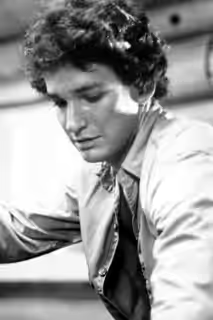
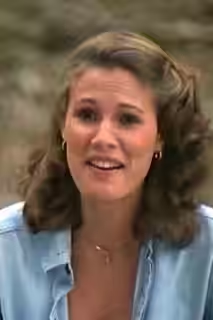
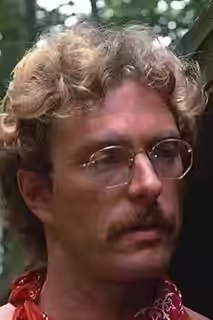
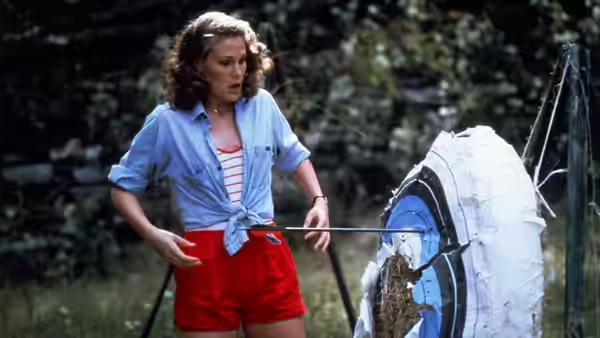
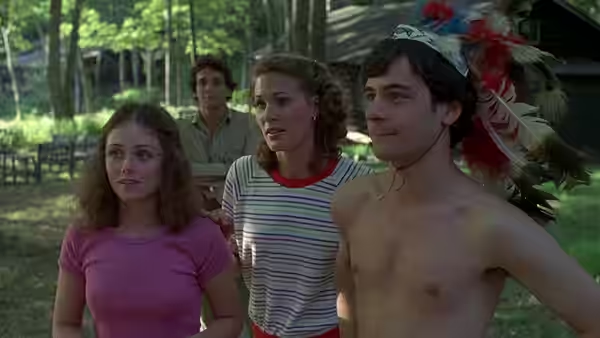
The waiting is the problem. Between killings the counsellors swim, shoot arrows, play strip Monopoly and listen to Ned (Mark Nelson) do voices, and none of it tells us anything about them we could not have guessed from the casting. Kevin Bacon, as Jack, is young and pleasant and given nothing to do. Harry Crosby’s Bill fixes a generator. Jeannine Taylor’s Marcie has a nightmare about rain that is the one line in the script with anything going on behind it. We were bored, honestly, from about the thirty-minute mark until the storm arrives, and Bill Freda’s editing, which is patient when the camera is stalking, is slack when it is watching people talk.
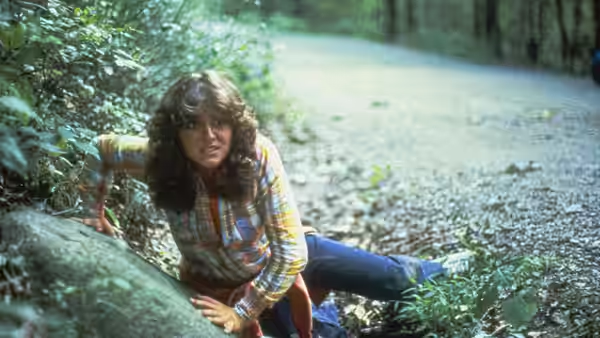
When the camera is stalking, the film works. Barry Abrams shoots much of it from the killer’s eyeline, handheld, moving through branches and past cabin windows, so the woods seem to be looking in. Annie (Robbi Morgan), the cook who never reaches camp, is chased through the trees in daylight, and the chase frightened us more than any of the night scenes, because it is shot plainly, at a run, with nobody in the frame but her. Harry Manfredini’s score does the rest: strings that stab on the cuts, and a chopped, whispered syllable on the soundtrack that tells us the killer is close before the picture does. It is the most useful thing in the film and the one thing from it that has lasted.
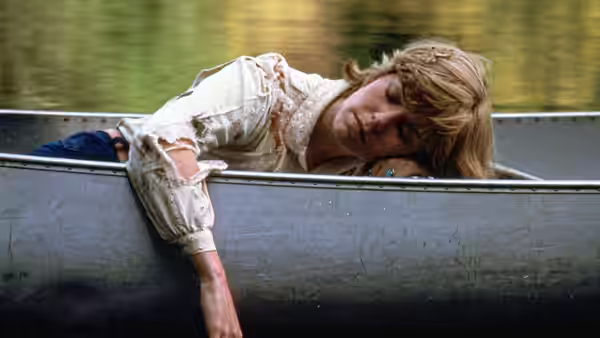
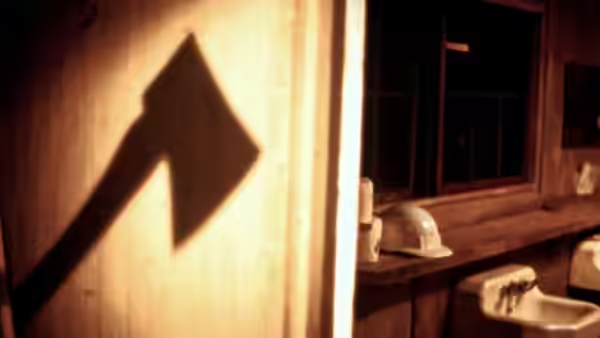
The killings themselves are nasty and carefully built, prosthetic throats and faces that look wet and wrong in the lamplight, and the film stops to show them. Cunningham telegraphs most of them, the camera settling behind a shoulder and holding there, and the critics who called this a failure of suspense are not wrong. It is a different kind of film from Carpenter’s. His killer has a plan; this one has a list.
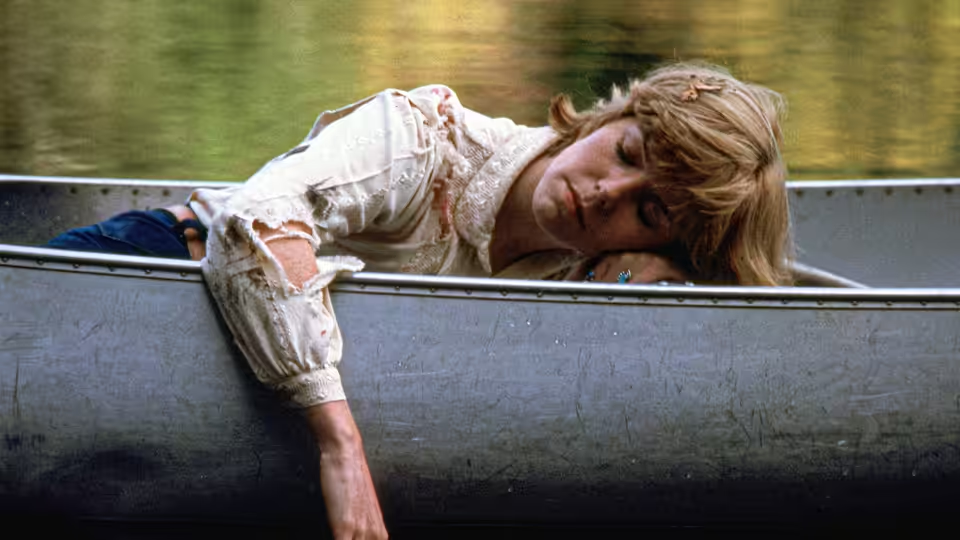
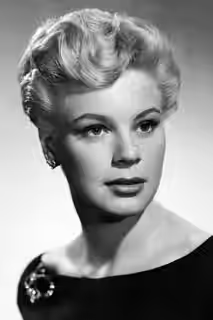
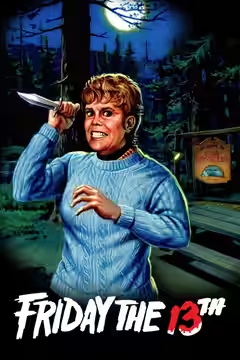
Then, with the night nearly over, Betsy Palmer arrives, and we will not say as whom or why. She gives the film its one performance, pitched somewhere between a bake-sale organiser and something much worse, talking to Adrienne King’s Alice in a sweet, reasonable voice while the music does the opposite. King, who has been plain and sympathetic for an hour without much to play, suddenly has an opponent, and the last twenty minutes are the picture the rest of it was waiting to be. There is one more trick after the climax, and it got us.
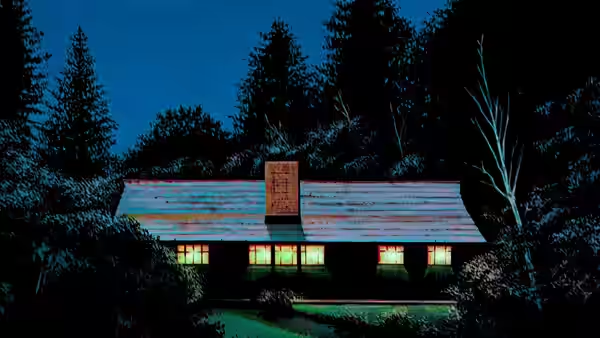
Virginia Field’s production design has the right cheapness: paint tins, bunk frames, a generator shed, a kitchen with the chairs still stacked. Caron Coplan’s costumes are shorts and work shirts and a bandanna, and they place the thing better than any title card. The town, with its diner and its prophet on a bicycle, is two streets, and Rex Everhart’s truck driver and Ronn Carroll’s Sergeant Tierney give it more character in a scene apiece than the counsellors manage in an hour.
The 18 certificate is for the killings and not much else. Most critics have been harder on this than we are, and we can see why; the film does little that Halloween had not done better two years earlier, and it does it with fewer ideas. But it does three or four things well, it runs 95 minutes, and the lake is nice. Anyone who wants to know where the next ten years of this came from can watch it for the Manfredini score and stay for Palmer. Everyone else can sleep through the middle, which is what the counsellors are doing.