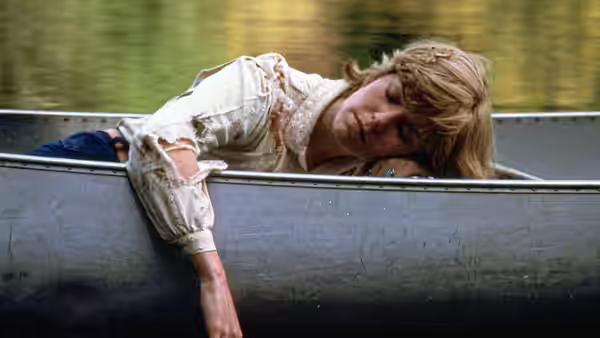
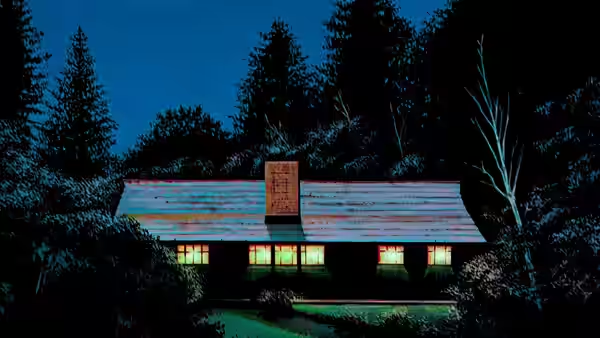
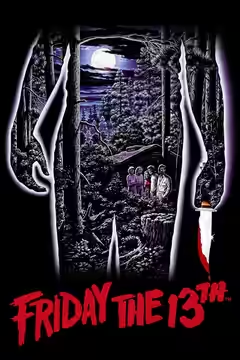
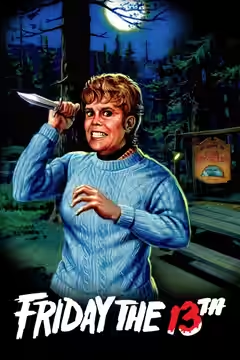
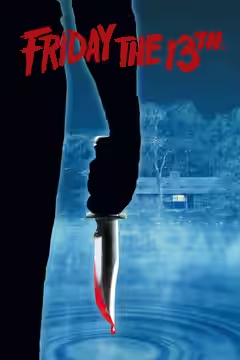
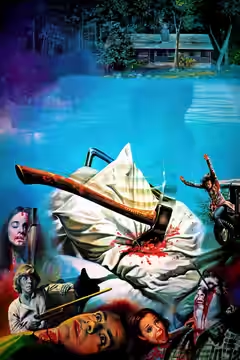
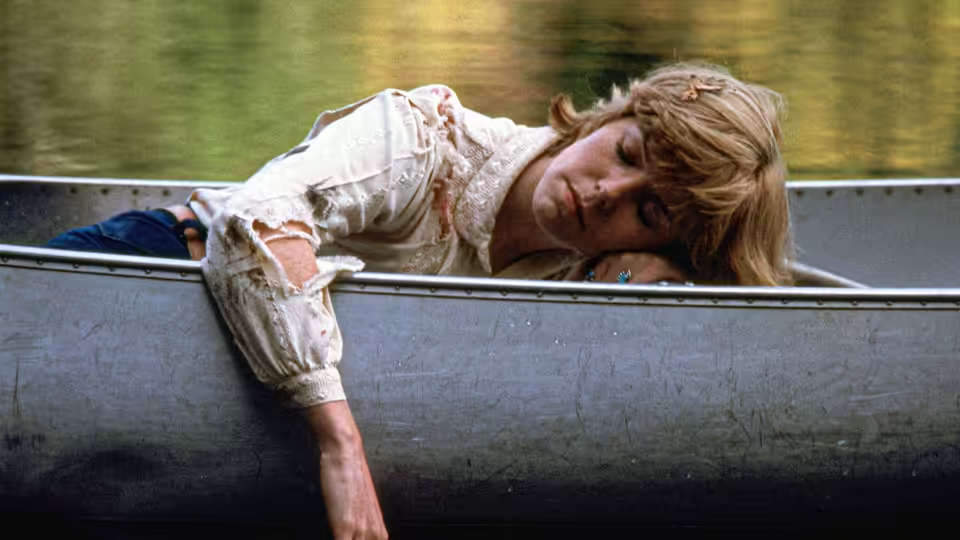
A woman lies slumped over the side of a boat on the lake
Film review

Friday the 13th

1980 · Directed by Sean S. Cunningham · 1h 35m · KAVI K-18

In a sentenceSix counsellors, one lake, and a camera that spends most of the night hiding in the bushes

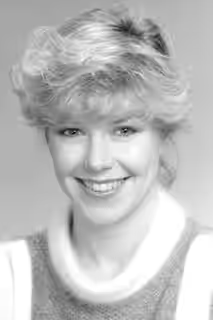
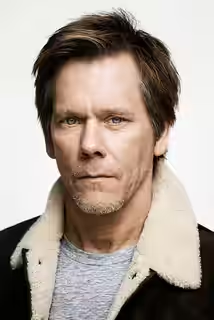
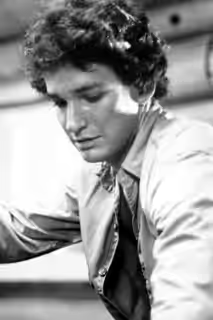
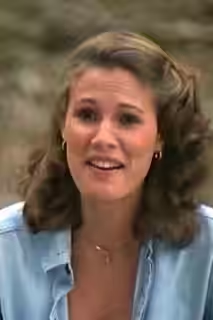
In 1958, two counsellors at Camp Crystal Lake slip away from a campfire singalong and are killed by someone they seem to know. Years later, Steve Christy (Peter Brouwer) is reopening the camp and has hired a crew of young counsellors to repair it before the season starts. Annie (Robbi Morgan), the new cook, hitchhikes in and is warned in town that the place is cursed; a truck driver (Rex Everhart) drops her at a crossroads, and she never arrives. Up at the lake, Alice (Adrienne King), Bill (Harry Crosby), Jack (Kevin Bacon), Marcie (Jeannine Taylor), Brenda (Laurie Bartram) and Ned (Mark Nelson) paint cabins, swim and clear a snake out of a bunkhouse while a storm builds. Steve drives into town for supplies, and somebody is watching from the trees.

Plays from YouTube when you press play; nothing loads from them until then.

Fi1m review

Sean S. Cunningham’s cheap camp slasher has a lake, a whispering score and one proper performance that arrives with twenty minutes to go. The killings are nasty and well made; everything in between is waiting. For the curious and the committed only.

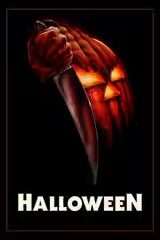
Sean S. Cunningham had produced The Last House on the Left (1972) for Wes Craven, and by 1980 he had seen what John Carpenter’s Halloween (1978) did on a small budget. Friday the 13th is his attempt at the same trick with a lake instead of a suburb. Steve Christy (Peter Brouwer) is reopening Camp Crystal Lake, which the town calls Camp Blood, and has hired six counsellors to paint the cabins before the children come. Someone in the trees does not want it reopened. That is the plot, and Victor Miller’s screenplay does not add much to it. It is a mixed film: a handful of frightening minutes, a long stretch of waiting, and a performance at the end that nearly justifies the rest.

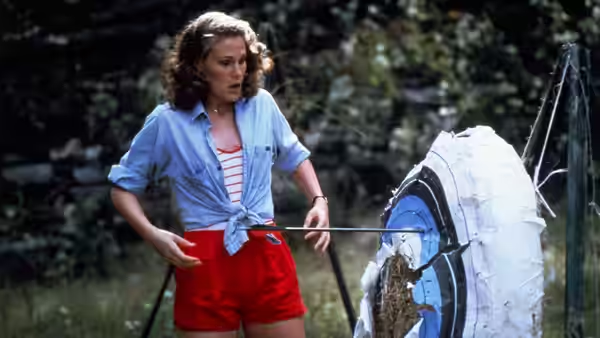
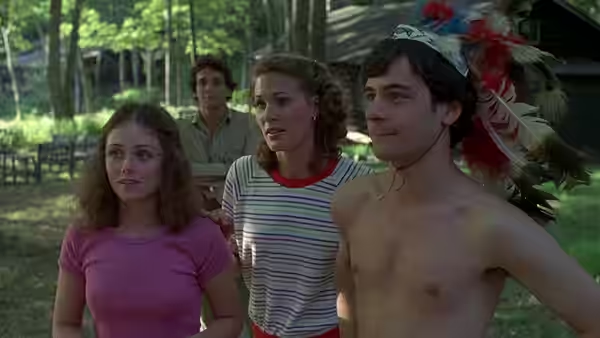
The waiting is the problem. Between killings the counsellors swim, shoot arrows, play strip Monopoly and listen to Ned (Mark Nelson) do voices, and none of it tells us anything about them we could not have guessed from the casting. Kevin Bacon, as Jack, is young and pleasant and given nothing to do. Harry Crosby’s Bill fixes a generator. Jeannine Taylor’s Marcie has a nightmare about rain that is the one line in the script with anything going on behind it. We were bored, honestly, from about the thirty-minute mark until the storm arrives, and Bill Freda’s editing, which is patient when the camera is stalking, is slack when it is watching people talk.

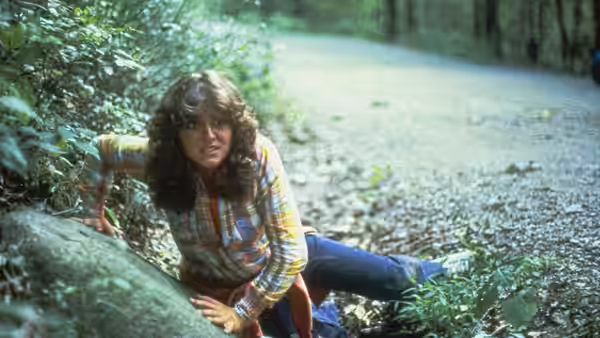
When the camera is stalking, the film works. Barry Abrams shoots much of it from the killer’s eyeline, handheld, moving through branches and past cabin windows, so the woods seem to be looking in. Annie (Robbi Morgan), the cook who never reaches camp, is chased through the trees in daylight, and the chase frightened us more than any of the night scenes, because it is shot plainly, at a run, with nobody in the frame but her. Harry Manfredini’s score does the rest: strings that stab on the cuts, and a chopped, whispered syllable on the soundtrack that tells us the killer is close before the picture does. It is the most useful thing in the film and the one thing from it that has lasted.

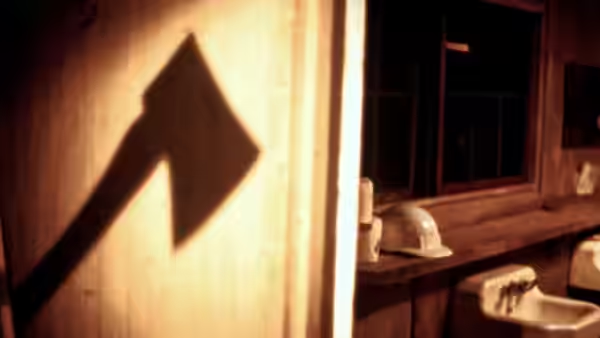
The killings themselves are nasty and carefully built, prosthetic throats and faces that look wet and wrong in the lamplight, and the film stops to show them. Cunningham telegraphs most of them, the camera settling behind a shoulder and holding there, and the critics who called this a failure of suspense are not wrong. It is a different kind of film from Carpenter’s. His killer has a plan; this one has a list.

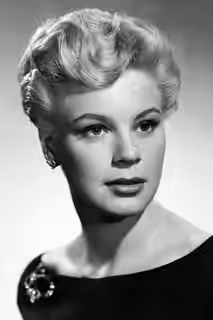
Then, with the night nearly over, Betsy Palmer arrives, and we will not say as whom or why. She gives the film its one performance, pitched somewhere between a bake-sale organiser and something much worse, talking to Adrienne King’s Alice in a sweet, reasonable voice while the music does the opposite. King, who has been plain and sympathetic for an hour without much to play, suddenly has an opponent, and the last twenty minutes are the picture the rest of it was waiting to be. There is one more trick after the climax, and it got us.

Virginia Field’s production design has the right cheapness: paint tins, bunk frames, a generator shed, a kitchen with the chairs still stacked. Caron Coplan’s costumes are shorts and work shirts and a bandanna, and they place the thing better than any title card. The town, with its diner and its prophet on a bicycle, is two streets, and Rex Everhart’s truck driver and Ronn Carroll’s Sergeant Tierney give it more character in a scene apiece than the counsellors manage in an hour.

The 18 certificate is for the killings and not much else. Most critics have been harder on this than we are, and we can see why; the film does little that Halloween had not done better two years earlier, and it does it with fewer ideas. But it does three or four things well, it runs 95 minutes, and the lake is nice. Anyone who wants to know where the next ten years of this came from can watch it for the Manfredini score and stay for Palmer. Everyone else can sleep through the middle, which is what the counsellors are doing.
Critical consensus AI synthesised

34
Positive
0
Mixed
3
Negative
3

Nobody is much impressed, and nobody is surprised. Most critics treat the film as a cheap, crude slasher whose main achievement is the splatter cycle it helped start, and the praise, such as it is, clusters on the prosthetics and the sheer nastiness of the killings. Several reviews allow that Sean S. Cunningham can stage a gory shock and build a little sympathy for the counsellors before they are dispatched, and the makeup effects are the one department consistently singled out.

The reservations are about everything else. Variety faults the direction for telegraphing each murder and never building suspense, Empire calls it pallid and derivative with an ending that does not land, and The Hollywood Reporter simply finds it sickening. The spread is narrow: from indifferent to hostile, with no outright defenders. The most generous reading comes from Radio Times, which credits it as trail-blazing, and The Guardian, which finds the film oddly slow and innocent and suggests the faithful will get the most from it.

Radio Times
★★★ · Alan Jones
60

Jones describes the film as a cheap but trail-blazing slasher that helped launch the 1980s splatter trend. He praises Cunningham’s skill in building gory scares and audience sympathy for the counsellors.

Read the full review →
Slant Magazine
4 February 2009 · ★★/4 · Jeremiah Kipp
50

The critic views the film as a minimalist slasher that relies more on nostalgia and exploitative thrills than craft. He singles out Betsy Palmer’s late-arriving performance as Mrs. Voorhees as memorable high camp.

Read the full review →
The Guardian
12 October 2023 · Peter Bradshaw
50*

Bradshaw finds some bizarre fun in the film but suggests its fanbase will get the most from revisiting it. He singles out the gruesome prosthetics and the film’s unexpectedly slow, almost innocent feel.

Read the full review →
Empire
1 January 2000 · Kim Newman
25*

Newman considers the film a pallid, derivative slasher with a botched ending. He praises its chilling nastiness and singles out the memorable mattress-arrow killing of Kevin Bacon.

Read the full review →
The Hollywood Reporter
1 November 2014 · Ron Pennington
10*

The critic condemns the film as exploitative and sickening, finding little to recommend. He singles out its grisly violence and shock value as its defining qualities.

Read the full review →
Variety
31 December 1979 · Variety Staff
10*

The critic pans the film as technically inadequate and lacking talent or intelligence. They fault Cunningham for telegraphing the murders and failing to build suspense or tension.

Read the full review →

Straight answers AI written, from our review

Is Friday the 13th worth watching?
Friday the 13th is worth watching only for the curious and the committed, and we scored it 48. The killings are nasty and well made, Harry Manfredini's whispering score is the one thing that has lasted, and Betsy Palmer gives it a proper performance with twenty minutes to go; the hour before that is mostly counsellors swimming and waiting.
How long is Friday the 13th, and what is it rated?
Friday the 13th runs 1h 35m and is rated K-18 by the KAVI in Finland. It is a horror film.
Where can I watch Friday the 13th in Finland?
Friday the 13th is streaming on HBO Max in Finland. Availability is checked daily; the links above go straight to each service.
How violent or frightening is Friday the 13th, and is it suitable for children?
Friday the 13th carries an 18 certificate and is not suitable for children. The certificate is for the killings, which are shown in close, wet prosthetic detail, and there is a daylight chase through the trees that frightened us more than any night scene. Between those moments the film is slow rather than scary, so the squeamish should expect long lulls broken by short, graphic bursts.
How does Friday the 13th compare to Halloween?
Friday the 13th is the lesser film, copying what Halloween did two years earlier with fewer ideas and a lake instead of a suburb. Carpenter's killer has a plan and his framing is patient; Cunningham's killer has a list and telegraphs most of its kills. Watch Halloween for suspense and someone worth worrying about, and this one for the score and Betsy Palmer's last twenty minutes.
What should I watch after Friday the 13th?
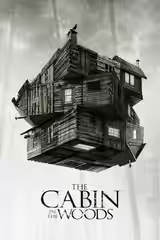
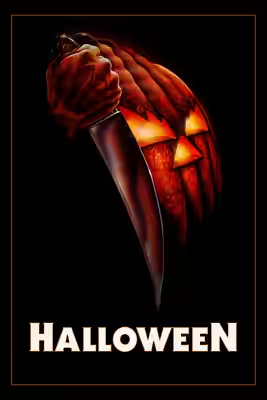
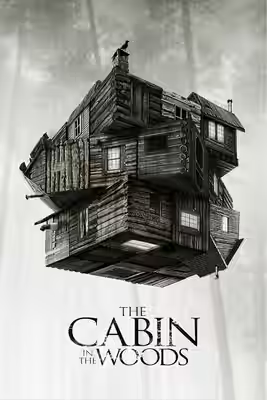
After Friday the 13th, try Halloween (1978, Fi1m 88): The film this one is copying, with a plan where this has a list. Then The Cabin in the Woods (2012, Fi1m 80): Takes every rule this film invented and asks who is enforcing them.

Part of · 1 of 1

Friday the 13th

1 film on Fi1m · 1980–1980 · best Friday the 13th 48

All 1 in order

Cast

Awards

Golden Raspberry Award for Worst Picture, 1981

Nominated
Golden Raspberry Award for Worst Picture

Golden Raspberry Award for Worst Supporting Actress, 1981

Nominated
Golden Raspberry Award for Worst Supporting Actress

If you liked this, try…

  1. Halloween (1978, Fi1m 88)The film this one is copying, with a plan where this has a list.

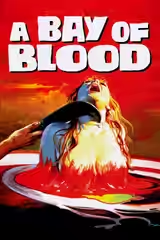
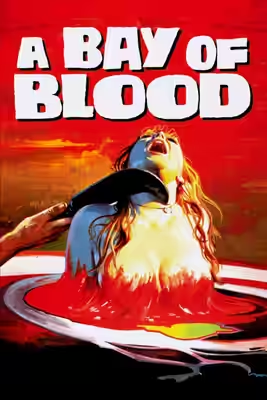
  2. A Bay of Blood (1971) · not reviewed yetMario Bava’s lakeside body count, which got here first and with more wit.

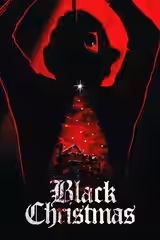
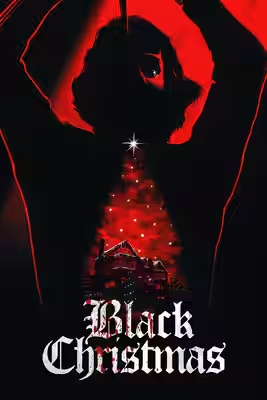
  3. Black Christmas (1974) · not reviewed yetA Canadian sorority house, an unseen caller, and the stalking camera done properly.

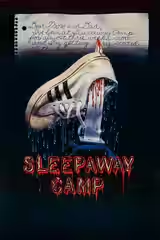
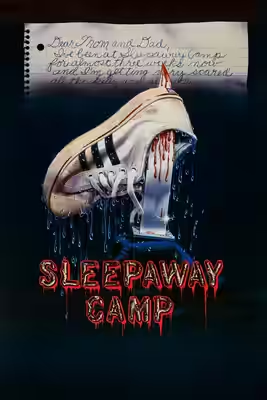
  4. Sleepaway Camp (1983) · not reviewed yetAnother summer camp, cheaper and stranger, with an ending people still argue about.

  5. The Cabin in the Woods (2012, Fi1m 80)Takes every rule this film invented and asks who is enforcing them.

Free account

Know what to watch tonight

Two lists that know where things are streaming, collections you can share, your own score beside ours, and Discover that remembers what you have seen.

  • Want to see, sorted by what is streaming now
  • Seen, with your score out of ten
  • No adverts, ever