Mohsen Makhmalbaf’s Gabbeh makes a slight love story worth our attention through colour, sound and its young lead. The storytelling can feel thin, especially when the images have already made their point.
At 72 minutes, Gabbeh asks for a modest amount of our time and a fair amount of patience with a story that will not hurry. Mohsen Makhmalbaf directs a romance built around youthful longing, allowing magic into its telling without making the magic a puzzle to solve. We recommend it for the conviction with which it makes colour and sound carry feeling. There is little narrative urgency, and anyone who needs each scene to advance the love story may find that patience tested. We occasionally did.
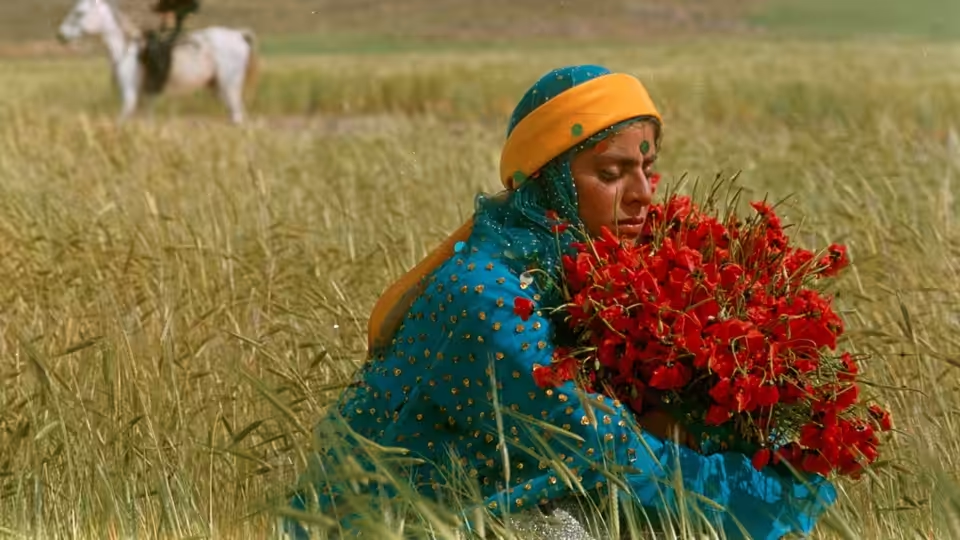
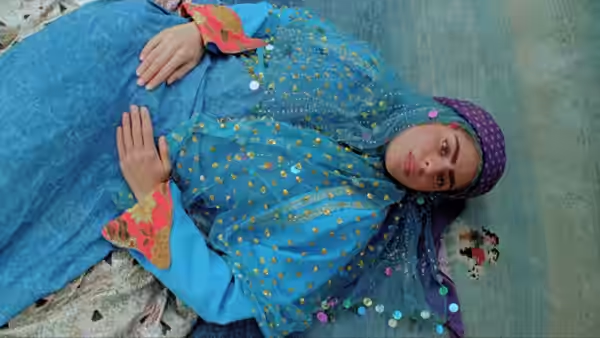
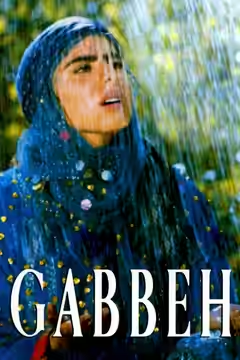
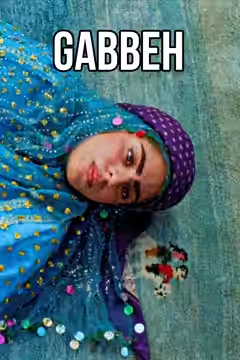
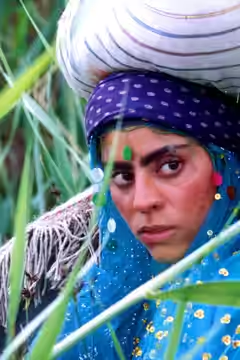
Shaghayeh Djodat plays Gabbeh, and her presence gives the film someone to care about whenever its pictures threaten to become the main attraction. The young woman’s story is connected to an elderly couple, played by Hossein Moharami and Rogheih Moharami, which changes how we understand her longing. We were moved by having youth and old age held so close together. The connection makes the young woman’s feelings seem vulnerable, even when the film around her is confident and bright.
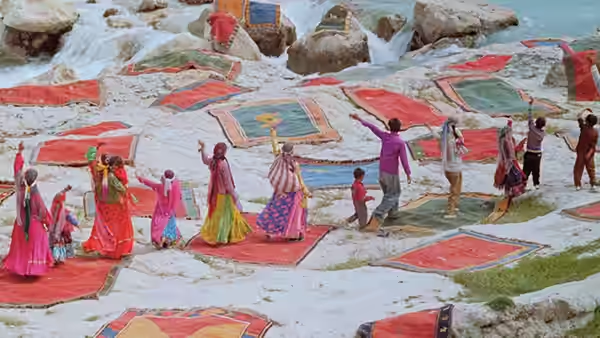
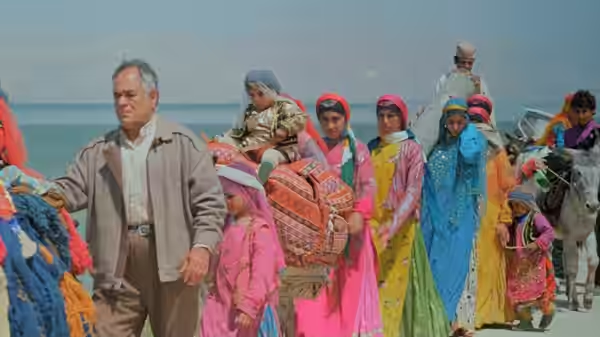
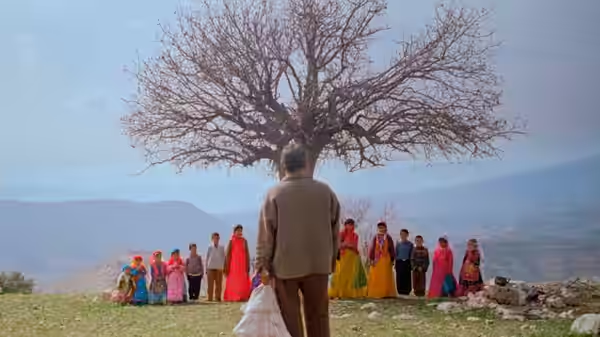
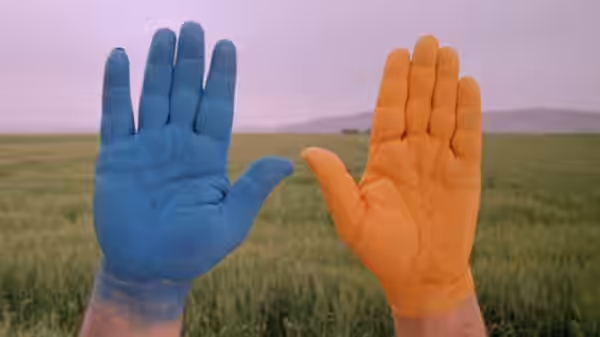
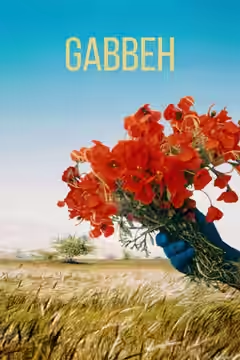
Mahmoud Kalari’s cinematography is the clearest reason to watch. The vivid colour tells us where to look and gives the compositions much of their force; there is pleasure in simply taking in how an image is arranged. The production design, also credited to Mohsen Makhmalbaf, supports that concentration on colour, with a consistency that helps the magical elements feel at home. Occasionally the beauty becomes so insistent that we begin to notice the effort behind it. Mostly, though, these pictures reward the attention they ask for.
Mohsen Makhmalbaf is also the editor, and his willingness to let imagery lead the telling gives Gabbeh its unusual rhythm. The film provides fewer of the prompts with which a conventional romance tells us to anticipate a complication or expect a resolution. That can be refreshing, but it leaves some passages feeling underfed by the story. With so little forward pressure, an image has to do considerable work to justify our attention. A few ask us to admire them for longer than we want.
Hossein Alizadeh’s music helps sustain our attention through that slower movement. It belongs to a use of sound that is as deliberate as the use of colour, and deserves to be listened to with the same care. The music has enough character to draw attention without making us forget the people we are watching. What matters is how picture and sound keep the young woman’s longing present, including when the plot offers little fresh encouragement. Watching while doing something else would make this a thinner experience than it needs to be.
Within romance, Gabbeh is unusually willing to leave the plot waiting while it attends to what longing feels like. Its magic-realist approach suits that interest, though we understand why a viewer might prefer more ordinary behaviour and firmer consequences. The modest length helps, and so does Shaghayeh Djodat, who keeps us interested in Gabbeh amid all that colour. Choose it for an evening when nobody needs to keep asking what happens next.