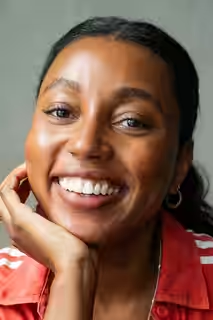
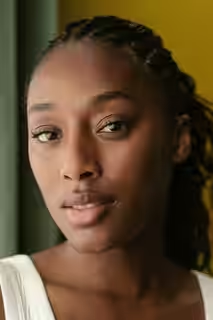
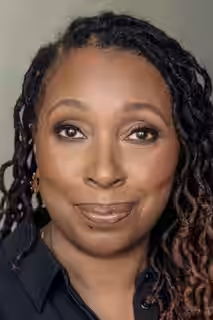
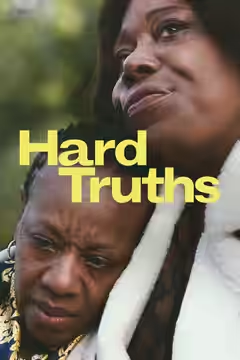
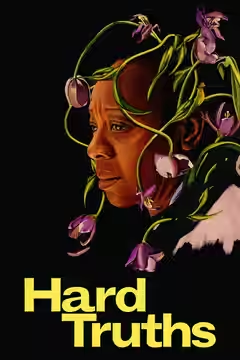
Marianne Jean-Baptiste is ferocious and then unbearably sad as a woman who cannot stop attacking everyone she meets. Mike Leigh’s film around her is spare, funny and honest, and a little thin where the men are concerned. We recommend it warmly.
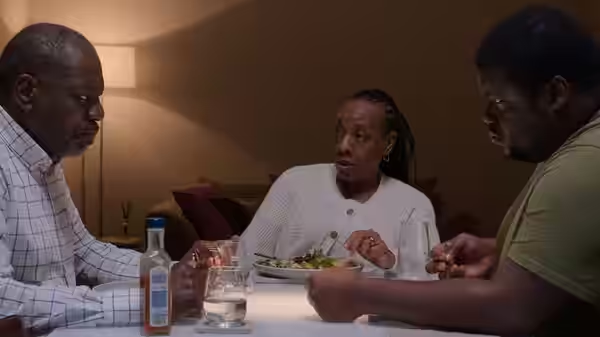
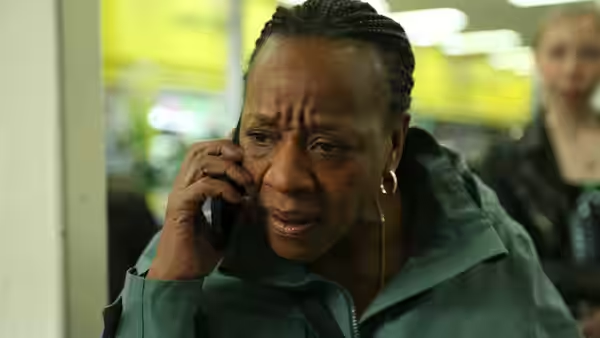
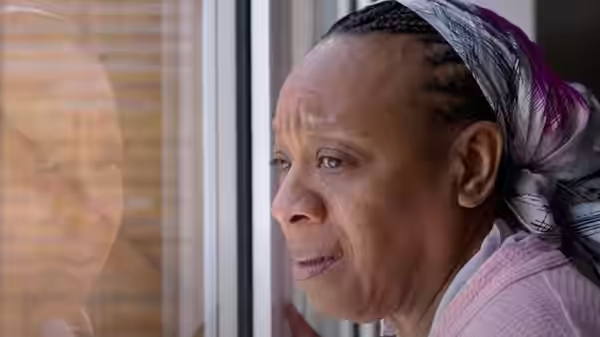
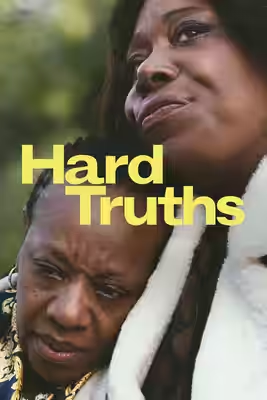
Pansy wakes up screaming. That is how Mike Leigh begins, with a woman jolting upright in a clean, bright bedroom as though she has been dropped there, and it sets the day. Over the next hour and a half she will find fault with a dentist, a shop assistant, a woman on a supermarket checkout and a man in a car park who has done nothing but stand near her car. She lives with Curtley (David Webber), a plumber who has learned not to answer, and Moses (Tuwaine Barrett), a grown son who leaves the house each morning to walk and says almost nothing to anyone. Hard Truths is Leigh’s first film set in the present day since Another Year in 2010, and he has come back to it with his method intact: no script on paper until the actors have built the people.
We liked it a great deal, and we recommend it with one caveat, which is that it is a film about a performance and the film around the performance is thin in places. Marianne Jean-Baptiste, whom Leigh last directed in Secrets & Lies in 1996, plays Pansy at full volume from the first scene and still finds room to go further. Every complaint has its own logic. She wants to know why a baby needs pockets. She resents a dog for grinning at her. She is not stupid and she is not wrong about everything, which is what makes her so hard to be near.
We laughed a great deal for the first twenty minutes, and then Leigh cut to Pansy back in bed in the afternoon with the duvet pulled to her chin and the curtains open, and the laughing stopped. That is the film’s shape: a joke, and then the cost of it. Nobody on screen knows what is wrong with her, and Leigh will not tell us.
Dick Pope lights the house flat and even, with nothing on the walls and every surface wiped, and Suzie Davies has furnished it like a show home nobody moved into: a sofa with the cushions squared, a kitchen with no food left out. Chantelle’s flat and salon are the opposite, crowded with people and colour and something always on the go. Jacqueline Durran dresses Pansy in beige and grey and a buttoned coat and her sister in prints, so you can tell who is happy from across the street. Gary Yershon’s score is a few bars of strings between scenes and nothing inside them; the rooms are left with the sound of Pansy’s voice. Tania Reddin cuts the tirades so that we watch the victim as much as the attacker, a checkout girl or a dentist deciding whether to answer, and the pauses are where the comedy lives.
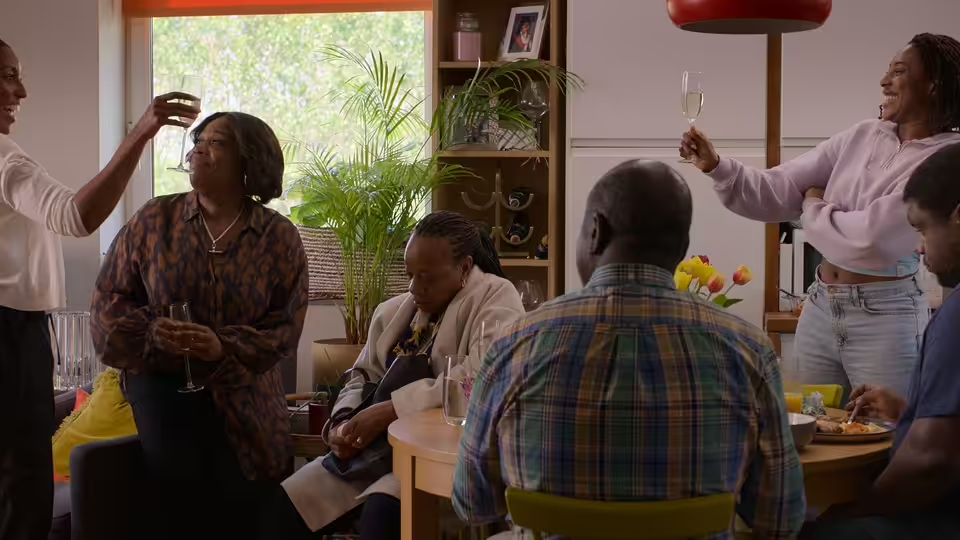
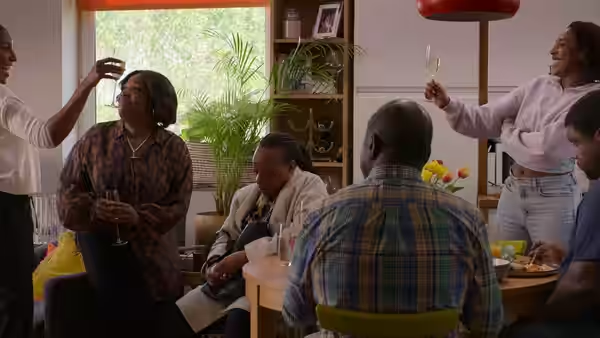
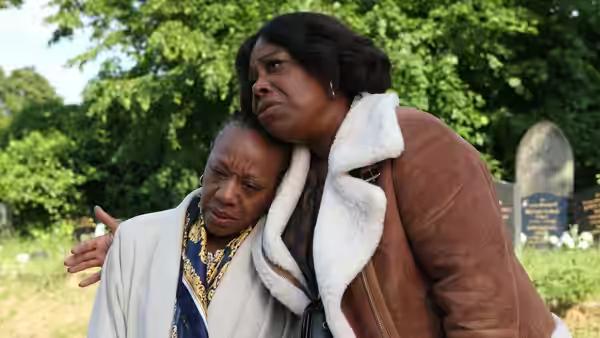
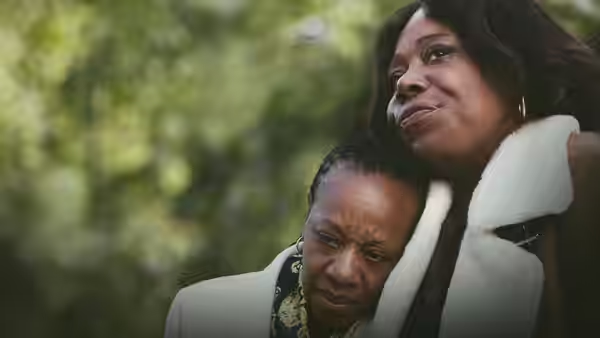
Michele Austin is the other half of the film, and the salon scenes are its pleasure. Her clients (Jo Martin and Llewella Gideon among them) talk over one another about men and mothers while she works, and her daughters Kayla (Ani Nelson) and Aleisha (Sophia Brown) come and go with jobs and complaints of their own. Austin plays a woman who has decided to love her sister whatever it costs, and the scenes where she keeps ringing, keeps inviting, keeps saying yes to a woman who says no to everything moved us more than any of the rants did. The film is finally about the two of them.
The men are the problem. Webber and Barrett are given almost nothing to say, and Leigh has made that a choice, but a choice is not the same as a character; we know as little about Curtley at the end as at the start, and Moses’s long walks through the city are handsomely photographed and lead nowhere in particular. The second half gathers the family for Mother’s Day and takes a turn we will not describe, except to say that anyone waiting for a diagnosis, a cause or a cure will not get one. Most critics have been warm, and one found the whole thing too bleak to sit through. We think the refusal to explain is the honest thing, and also that it leaves the last quarter of an hour feeling slightly unfinished.
It is 97 minutes and a 12A. Watch it with a sibling if you have one. You will both think of someone, and it will not be the same person.