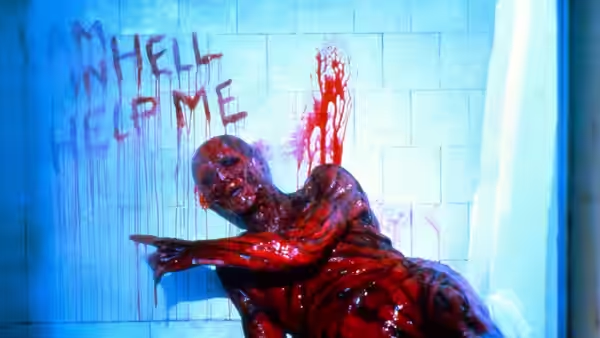
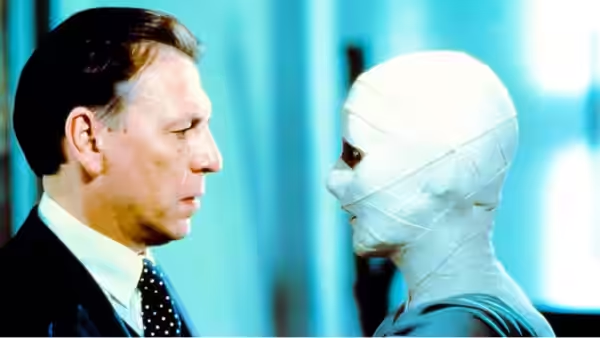
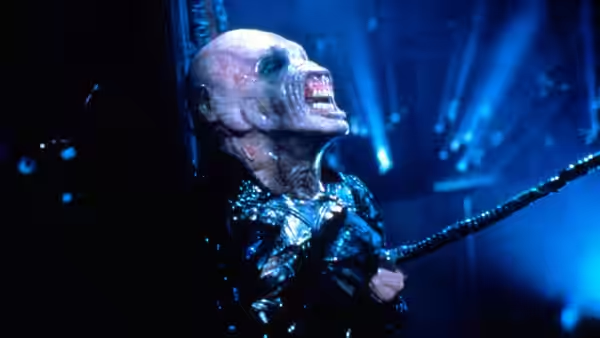
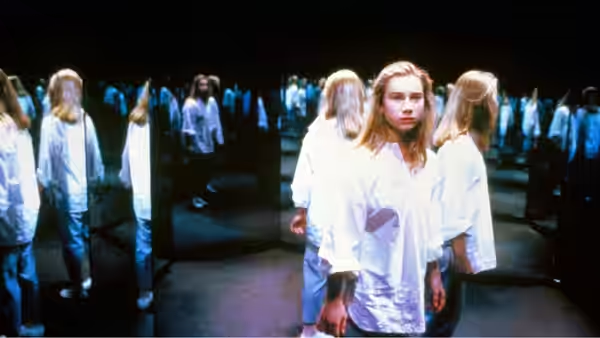
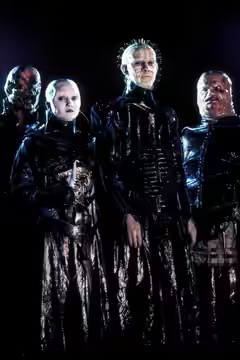
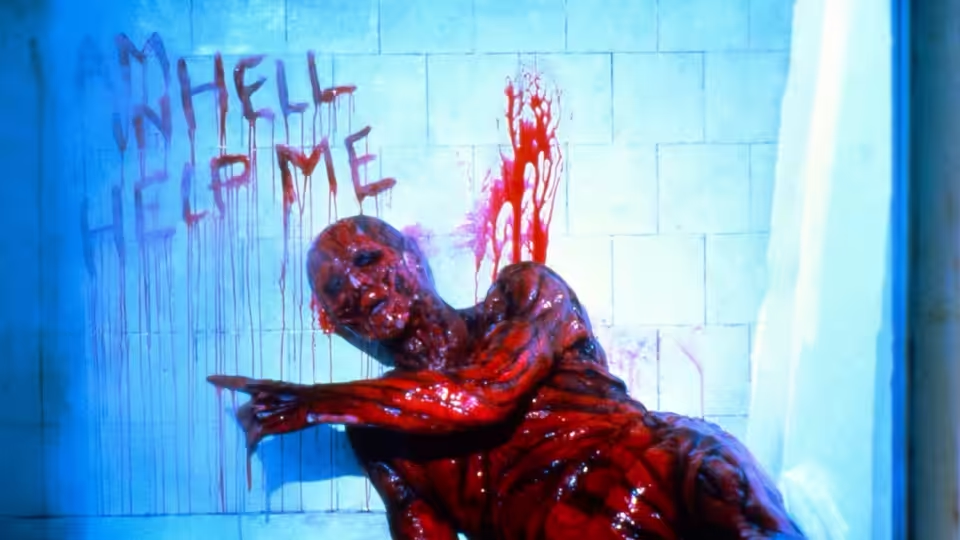
Frank Cotton (Sean Chapman) points beside HELP ME scrawled in blood on tiled walls
Film review

Hellbound: Hellraiser II

1988 · Directed by Tony Randel · 1h 37m

In a sentenceHell has impressive sets and nobody keeping track of the rules

An asylum provides the human setting for encounters with the Cenobites. Kirsty Cotton (Ashley Laurence), Julia Cotton (Clare Higgins) and Dr. Philip Channard (Kenneth Cranham) are central figures, alongside Tiffany (Imogen Boorman) and Kyle MacRae (William Hope). Pinhead (Doug Bradley) is among the supernatural figures. Medical malpractice makes the asylum a place of bodily harm rather than protection, while the Cenobites connect that cruelty to hell. The story moves between the medical setting and a supernatural realm where flesh is subjected to further mutilation.

Plays from YouTube when you press play; nothing loads from them until then.

Fi1m review

Tony Randel’s sequel is poor, despite Clare Higgins and Michael Buchanan’s elaborate sets. Its escalating gore soon becomes tiresome, while the muddled storytelling leaves too little to fear.

Hellbound: Hellraiser II has plenty of ways to damage a body and too few reasons to make us care whose body it is. Director Tony Randel pushes the horror towards extravagant action and gives the Cenobites more mythology, with the result that the film grows busier without becoming more frightening. It is a poor sequel, intermittently eerie and helped by Clare Higgins, but persistently muddled. The appetite for another grotesque spectacle keeps interrupting what little tension has accumulated.

The asylum material is where it comes closest to working, because medical malpractice gives the cruelty a recognisable human setting. We were sickened by the abuse there: people associated with care become another source of bodily harm, and the setting makes the violence harder to dismiss. That is a sound starting point for horror. Peter Atkins’s screenplay, from a story by Clive Barker, soon has so much supernatural business to explain that the simpler fear of being at somebody else’s mercy gets crowded out.

Clare Higgins, playing Julia Cotton, supplies the performance most worth watching, giving the grotesquerie a human presence that holds our attention. There is pleasure in seeing an actor take this material seriously without draining it of its lurid appeal. Ashley Laurence plays Kirsty Cotton, Kenneth Cranham plays Dr. Philip Channard, and Doug Bradley is Pinhead, but the screenplay’s muddle makes it difficult to stay interested in how its human and supernatural figures fit together. Higgins gives us something to follow when the explanations do not.

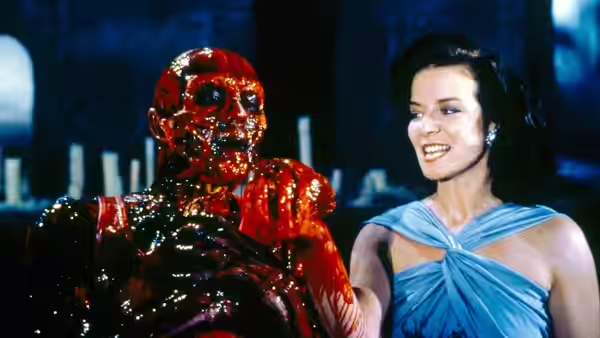
Michael Buchanan’s production design gives the film one persuasive reason to keep looking: the sets have an elaboration that suits its extravagant view of hell. They remain interesting even when the action staged within them becomes tiresome. Robin Vidgeon’s cinematography has plenty of grotesque material to work with, although the images seldom make us apprehensive about what might appear next. The elaborate effects deserve acknowledgement, too, even as their repeated demands on our attention begin to feel routine.

Richard Marden and Tony Randel’s editing keeps the film moving quickly, but speed does little to disguise the lapses in logic. We need enough understanding of a threat to anticipate it, and the explanations here never seem to settle that question. Christopher Young’s score does more to sustain the atmosphere than the plotting does, though music cannot clear up a confused story. The 97-minute running time is manageable, but the repetition of gruesome displays makes it feel longer.

For a horror sequel, there is nothing inherently wrong with adding monsters, effects or a larger supernatural setting. The difficulty is that explaining the Cenobites diminishes their capacity to disturb, while the increasingly adventurous action gives us less time to dread them. The occasional eerie passage shows that Randel can achieve something quieter, which makes the reliance on escalating gore more frustrating. Admirers of elaborate sets and bodily mutilation may find enough to occupy them here; anyone hoping to be frightened should be more cautious.

Critical consensus AI synthesised

36
Positive
0
Mixed
2
Negative
6

Most critics find Hellbound: Hellraiser II a disappointing sequel, with more gore and less effective horror than its predecessor. The reviews repeatedly describe a film whose elaborate effects and grotesque imagery struggle to compensate for weaker scares and confused storytelling. Praise is scattered rather than sustained, clustering around moments of disturbing eeriness and the physical surroundings. Eye for Film singles out Clare Higgins’s performance and the set design as welcome strengths in an otherwise poor sequel.

The main division concerns how much pleasure the excess provides. Slant Magazine finds the film enjoyably lurid despite its diminished potency, while Variety treats the escalating gruesomeness as its defining failure. Elsewhere, reservations centre on lapses in logic, overexplaining and a shift towards campier spectacle. The spread runs from qualified enjoyment to outright rejection, but the consensus remains firmly negative: the expanded mythology and increased bloodshed do not make the sequel more frightening.

RogerEbert.com
64*

The page is blocked, so the critic’s verdict cannot be determined. No praise or complaint is discernible from the available page content.

Read the full review →
Slant Magazine
20 April 2009 · ★★/4 · Eric Henderson
50

Henderson finds the sequel over-the-top and less potent than the original, though enjoyably lurid. He singles out its grotesque asylum malpractice imagery and unmoored brimstone-and-flesh excess.

Read the full review →
Radio Times
★★ · Alan Jones
40

Jones finds the sequel less allegorical and more gory, with routine direction and illogicalities. He notes some disturbing eeriness amid the blood-soaked inconsistencies.

Read the full review →
Los Angeles Times
23 December 1988 · CHRIS WILLMAN
35*

Willman finds the sequel faster and campier than its predecessor, but less unsettling and weakened by lapses in logic. He singles out its shift toward extravagant, action-adventure spectacle as a letdown for fans of Clive Barker’s darker imagination.

Read the full review →
The New York Times
23 December 1988 · Janet Maslin
30*

The review is negative about the sequel. It singles out its elaborate effects while finding the film’s horror less effective.

Read the full review →
Time Out
· NF
30*

The review describes the sequel as disappointing. It notes an effort to expand the Cenobite mythology, but says the film falls short of the original.

Read the full review →

Straight answers AI written, from our review

Is Hellbound: Hellraiser II worth watching?
Hellbound: Hellraiser II is a poor sequel that we score 44/100, with most to offer admirers of elaborate horror sets and grotesque effects. Clare Higgins gives us a performance worth following, but muddled supernatural explanations and repetitive gore leave too little tension for anyone chiefly hoping to be frightened.
How long is Hellbound: Hellraiser II, and what is it rated?
Hellbound: Hellraiser II runs 1h 37m. It is a horror and thriller film.
Where can I watch Hellbound: Hellraiser II in Israel?
Hellbound: Hellraiser II is not on any streaming or rental service in Israel at the moment. It is available in 17 other countries; change your country at the top of the page to see where. Availability is checked daily.
How violent or frightening is Hellbound: Hellraiser II, and is it suitable for children?
Hellbound: Hellraiser II carries a UK 18 certificate and is unsuitable for children, with repeated bodily mutilation, escalating gore and medical abuse. We find the asylum cruelty sickening because those associated with care become a source of harm, though the later spectacle grows tiresome rather than more frightening; squeamish viewers should avoid it.
How does Hellbound: Hellraiser II compare to Eyes Without a Face?
Hellbound: Hellraiser II is the weaker choice beside Eyes Without a Face, which we recommend for making medical cruelty frightening through restraint, precise images and lingering grief. The sequel offers elaborate sets and repeated mutilation, but little sustained dread; Franju’s film is more affecting and frightening, provided its occasionally sluggish pace is not a barrier.

Cast

If you liked this, try…

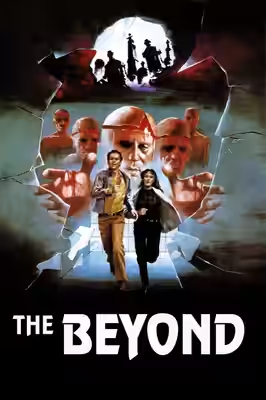
  1. The Beyond (1981) · not reviewed yetFor another descent into hell where gruesome invention outpaces sensible plotting.

  2. Eyes Without a Face (1960, Fi1m 86)For medical cruelty made frightening through restraint, precise images and lingering grief.

  3. Event Horizon (1997) · not reviewed yetAnother elaborate hell, this time reached through a spacecraft rather than an asylum.

  4. A Tale of Two Sisters (2003) · not reviewed yetFor carefully built interiors and family distress that keeps its power to unsettle.

  5. Possession (1981) · not reviewed yetMarital misery and bodily horror, with performances that make the anguish matter.

Free account

Know what to watch tonight

Two lists that know where things are streaming, collections you can share, your own score beside ours, and Discover that remembers what you have seen.

  • Want to see, sorted by what is streaming now
  • Seen, with your score out of ten
  • No adverts, ever