Kenny Ortega’s High School Musical is sweet enough to survive its flat dialogue and predictable story. Zac Efron and Vanessa Hudgens make it worth a family evening, provided the adults expect little bite.
Kenny Ortega’s High School Musical is a cheerful, limited family musical, worth an evening when sweetness matters more than surprise. It takes the anxieties of adolescence seriously enough to reassure a younger audience, without making those anxieties particularly difficult to resolve. That is a reasonable ambition for this kind of entertainment, and the film is easy to like on those terms. Peter Barsocchini’s screenplay is less easy to defend: the familiar story would be less of a problem if the dialogue had more life.
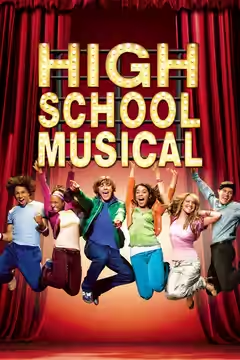
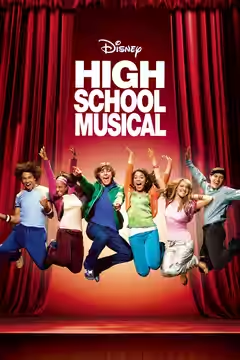
Zac Efron’s Troy Bolton and Vanessa Hudgens’s Gabriella Montez supply the chief reason to stay with it. Their partnership has a sweetness that needs little explanation, and neither performance seems embarrassed by the material’s innocence. We found ourselves smiling at them, even when the lines themselves gave us little cause to. Their ease together makes the central romance worth our attention without giving it a weight the writing cannot support.
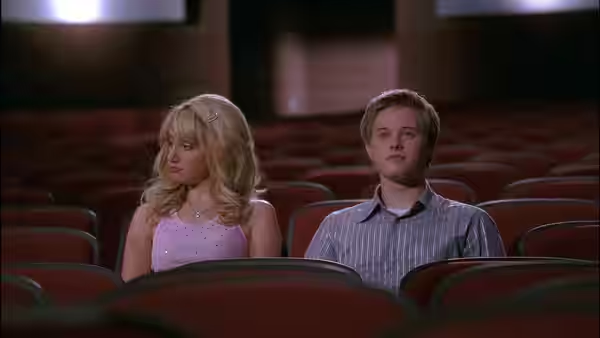
The supporting performances suit the broad approach. Ashley Tisdale’s Sharpay Evans and Lucas Grabeel’s Ryan Evans are enjoyable within the limits of characters who need to register quickly and clearly. There is nothing inherently wrong with recognisable types in a musical, and the ensemble gives the film a useful buoyancy. The difficulty is that the writing rarely makes those types more interesting once we have recognised them, leaving the performers to supply much of the pleasure themselves.
Gordon Lonsdale’s cinematography makes the musical performances readable, allowing us to enjoy the ensemble without having to work to follow it. Mark Hofeling’s production design is similarly useful without becoming much of an attraction in itself. The surroundings give the young cast sufficient prominence, though we would have welcomed a stronger sense of somewhere inhabited rather than prepared for a performance. It is an agreeable presentation, but the images offer little to hold our interest independently of the people in them.
The music supplies the necessary lift. David Nessim Lawrence’s contribution helps maintain the light tone, although the musical numbers are more persuasive than the conversations around them. Seth Flaum’s editing also feels more assured when there is a performance to organise; between numbers, the film can seem longer than its 98 minutes suggest. Singing gives the cast a freedom that the dialogue seldom offers, and the improvement is enough to keep the evening moving.
As a family musical, it deserves credit for taking encouragement seriously. The trouble is its limited curiosity about popularity: the central couple’s appeal makes acceptance seem rather easier than it is likely to feel to the children most in need of reassurance. We do not need a harsh lesson in social exclusion, but a little more awkwardness would have made the kindness more convincing. A predictable story is forgivable here; the film’s easy treatment of belonging is a more substantial reservation.
For younger viewers, the warmth and the central performances should count for more than those limitations. Adults can enjoy the same things, though we would not promise them much wit to carry them through the stretches without music. There is no need to demand cynicism from a film this innocent, only a little more care with what people say. Choose it for a family evening when nobody is hoping to be surprised.