A warm, worthwhile conclusion, with expressive dragons and rather too many people talking. The quiet courtship wins our affection, though the thin villain and crowded plot keep the adventure from matching its tenderest scenes.
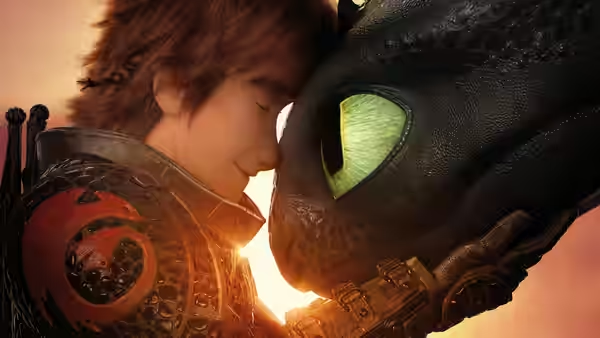
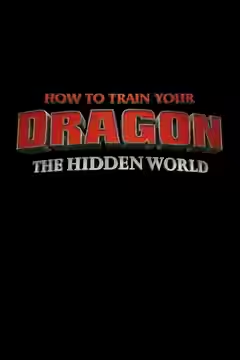
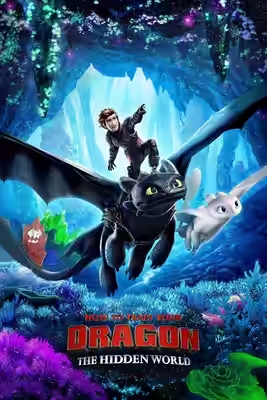
Writer-director Dean DeBlois finishes this animated trilogy with a good family film that becomes more engaging whenever the dragons take over. How to Train Your Dragon: The Hidden World wants to make growing up feel consequential, even with flying creatures available to distract everyone. The friendship between Hiccup and Toothless gives it something worth caring about, and the film takes changes in that friendship seriously. The poacher plot supplies danger, but it is often the least interesting thing happening.
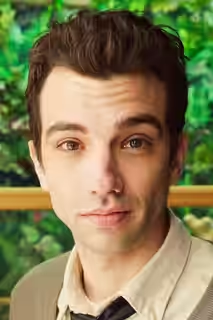
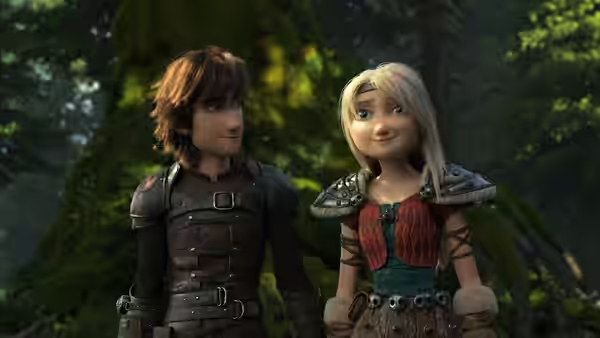
Jay Baruchel gives Hiccup an uncertainty that suits someone struggling with change, although the character is less immediately appealing than his dragon. America Ferrera’s Astrid helps keep the human exchanges grounded, and the film benefits when those exchanges concern something more pressing than the next joke. The script is less successful at finding useful work for the supporting characters. Their banter crowds scenes that would be better served by letting a feeling settle.
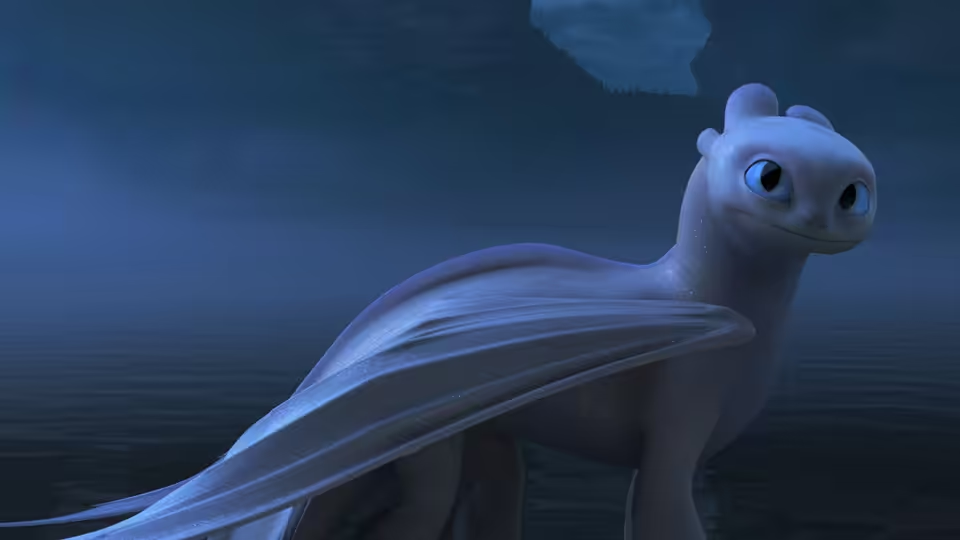
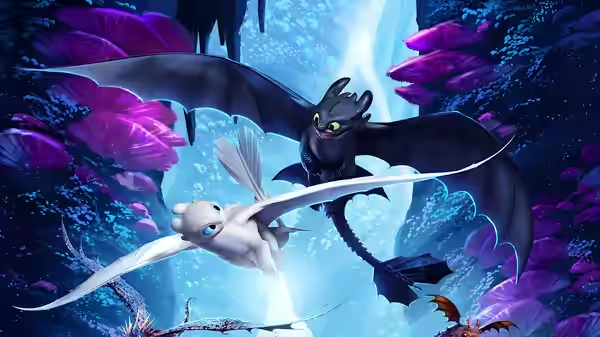
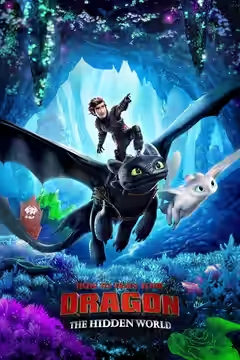
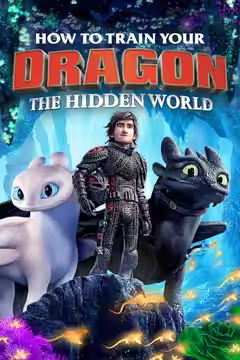
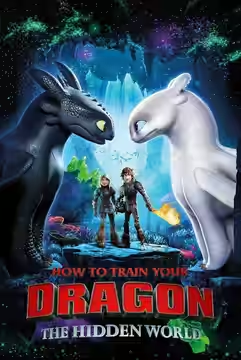
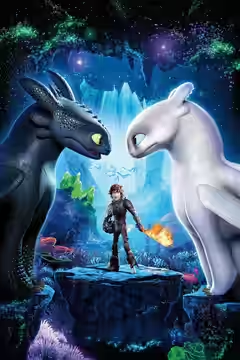
We laughed at Toothless trying to impress the Light Fury, then found ourselves taking his awkwardness seriously. The nearly wordless courtship gives attraction and embarrassment time to register through the creatures’ movements. Nobody needs to explain why trying so hard can be funny and touching at once. The animation makes these dragons expressive enough for us to recognise the feelings, while retaining the pleasure of watching animals respond to one another.
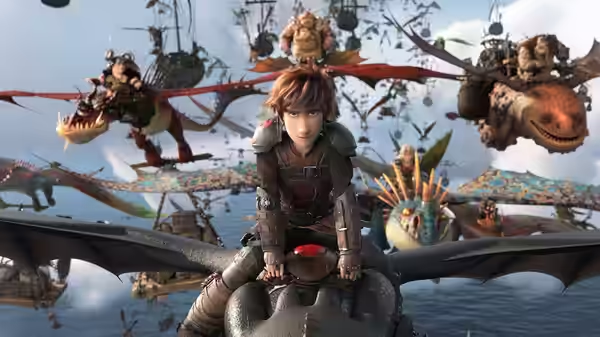
Gil Zimmerman’s cinematography uses light to give the dragons a convincing physical presence, especially in flight. Their movement is more enjoyable because they seem to have weight, and the surrounding space feels deep enough to explore. Pierre-Olivier Vincent’s production design gives that exploration plenty to reward the eye, with environments detailed enough to invite attention beyond the immediate action. The creatures and their surroundings remain appealing even when the story starts to feel overfilled.
John K. Carr’s editing is most persuasive when the courtship has room to develop without another interruption from the human story. The noisier action is less satisfying, and the competing plot threads make the film feel busier than its central relationship requires. John Powell’s music helps sustain the pleasure of flight, giving those passages a warmth the busier action sometimes lacks. It works because the creatures have already given us a reason to care.
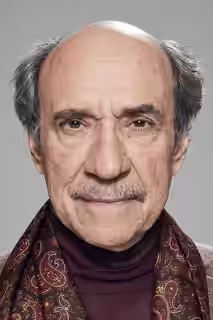
F. Murray Abraham makes Grimmel sound threatening, but the character is thinly written. A poacher story can provide a serviceable threat, but Dean DeBlois never makes this villain as absorbing as the dragons he endangers. We know where to place our sympathies and are given little else to consider. That simplicity might have suited a leaner adventure; here, the supporting comedy and extra plot business make it feel unnecessarily laboured.
As a family adventure, the film is on firmer ground with changing attachments than with its familiar pursuit and peril. In its quieter passages, it trusts young audiences to care about a friendship without needing a joke to make the concern acceptable. At 104 minutes, it could still lose some chatter, but the creatures repay the attention. Give it an evening for the dragons, with some patience set aside for their human company.