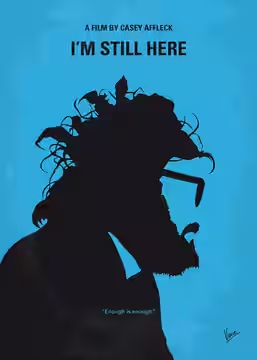
Casey Affleck’s staged record of Joaquin Phoenix’s retreat into rap is a committed piece of pretending, funny in bursts and cruel to bystanders, and its single joke is stretched well past the point where it stops paying. For the curious rather than the sceptical.
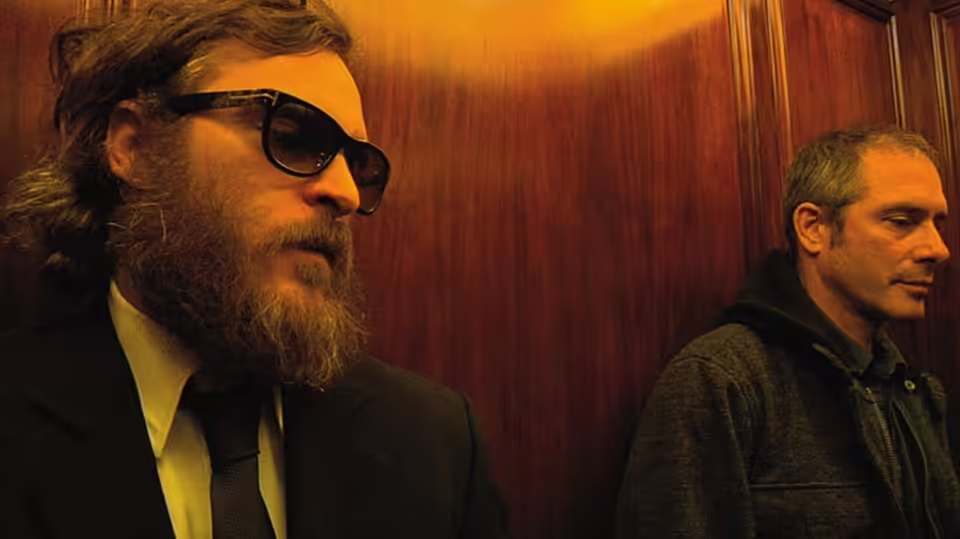
In late 2008 Joaquin Phoenix told a reporter at a charity event that he was giving up acting to make hip-hop records, and for more than a year he went about in a beard and dark glasses, mumbling, looking like a man who had lost a bet with himself. Casey Affleck was beside him with a camera. I’m Still Here is what Affleck filmed, cut to 107 minutes, and it is a hoax; he said so the week it came out. Knowing that changes the film. You stop worrying about the man and start asking what the film is for, and the film is not always sure.
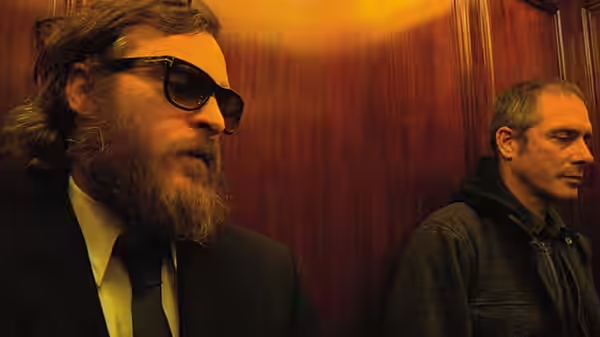
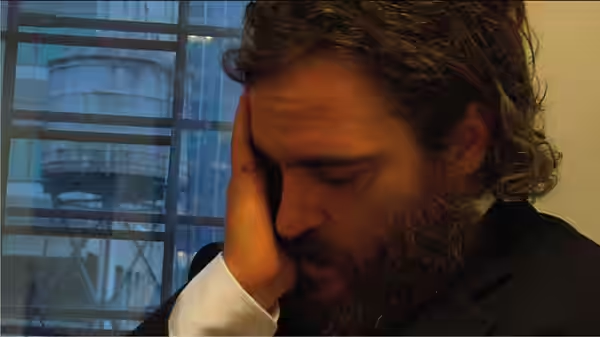
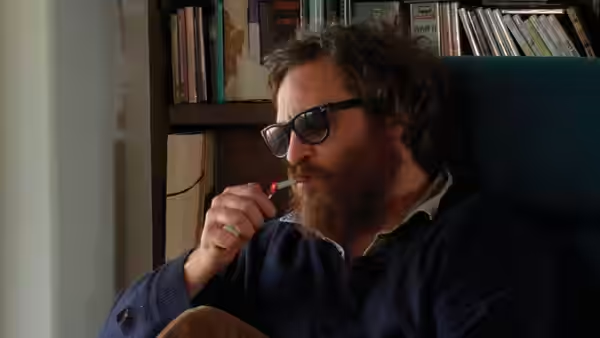
Phoenix is the whole show and he does not stint. He puts on weight, gives up shaving, chain-smokes, and delivers every line as if from the bottom of a well. He has played a musician before, Johnny Cash in Walk the Line, and here he plays a man who cannot be one: the rhymes are bad, the delivery is worse, and he performs them with total conviction. His rages land on Anton (Antony Langdon) and Larry McHale (Larry McHale), the friends he employs, who wear the flat, careful look of people who have stopped arguing back. Whether they knew the script is a question the film never settles. Langdon in particular gives a performance, if it is one, of real patience.
Affleck and Magdalena Górka shoot it on small cameras in hotel rooms, car back seats and a dim home studio, with the focus slipping and the whites blowing out, and it looks exactly like the footage it claims to be. That is the film’s best trick. Affleck and Dody Dorn cut it so that other people’s reactions are held a beat longer than comfort allows, and those beats are where the comedy lives. Marty Fogg’s music is kept to a minimum. Most of what we hear is Phoenix’s own beats, which are the joke and also, for long stretches, the soundtrack.
The scenes that work best are the ones in which Phoenix carries his demo out of the house and plays it to people who make records for a living, then waits for a verdict. They listen with the face of someone deciding how to be kind to a man who may be ill. We laughed, hard, and then felt slightly ashamed, because they were behaving well and the film was using that against them. The same happens whenever he sits down to be interviewed: he chews gum, says almost nothing, and lets the other person do the work. The joke is always on whoever was not told.
That is also the trouble. For an hour and three quarters the film has one joke, a famous man being awful to people paid to put up with him, and it does not find a second. The cameos do not help: Jack Nicholson, Billy Crystal, Danny Glover, Bruce Willis, Robin Wright and Danny DeVito all pass through, none for long, none asked to do more than be recognised. Around the eighty-minute mark we were bored, and then cross about being bored by something so strenuously performed. The film wants to show how much we enjoy watching famous people fall apart. Its method is to give us ninety minutes of exactly that, and we did not need the lesson to notice.
There is a real question underneath, and Affleck brushes against it more than once: what a star owes the people around him, and what a camera does to a room. But the film keeps choosing the gag over the question. The assistants are treated as furniture. One late scene in a hotel room is so nasty that the film’s claim to be satire rather than spectacle gives way, and we will not describe it.
This Is Spinal Tap (1984) understood that the people being mocked have to be liked. Affleck and Phoenix have not tried to make Phoenix likeable, which is brave, and it means that when the joke runs dry there is nobody left to stay for. See it if you remember the fuss and want to know what was behind it. Watch it at home, where you can leave during the rapping and miss nothing that matters.